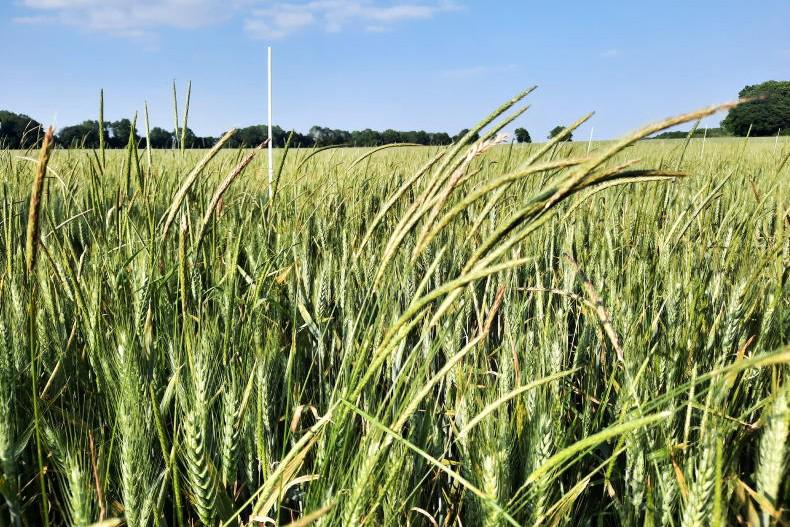
Back in June, the Irish Farmers Journal visited Agrii’s Olde Appleton Italian ryegrass trial site in Yorkshire England on the farm of Roger and Mark Mills.
In 2019, Agrii, which provides agronomic advice, was challenged by its agronomists to begin tackling grass weeds other than blackgrass, leading to a quest to research the best strategies for the control of Italian ryegrass, which can get of hand rapidly.
This site was chosen because of high levels of the weed at the start of the project, numbers reached 500 ears/m2.
At levels of infection over 100 ears/m2, the grass weed smothers out the cash crop and eventually pulls it to the ground, reducing the crop’s yield to zero.
While the correct use of selective herbicides is important to ensure control of these grass weeds, this week we take a look at some of the cultural control methods and the use of glyphosate in the battle against Italian ryegrass.
Steve Corbett, Agrii’s trial manager, explained that the plough is still the best cure for a bad grass weed infestation. However, he noted that if you are ploughing every year, grass weeds will become dispersed through the soil profile and it will not be as effective.
Steve commented that in a bad situation, grass weed numbers should inform your crop rotation and drilling date.
He is more than happy to drill two cereals back-to-back or to drill early in the autumn if grass weed numbers are low, as he realises the pressures farmers can be under to get through the work.
However, if grass weed numbers are high, there should be a strict policy of delaying drilling and planting spring crops where possible.
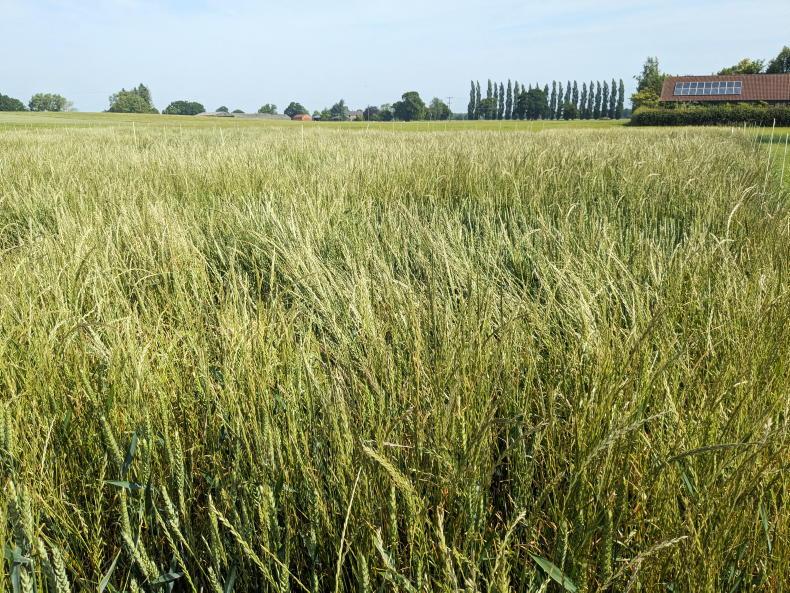
The Agrii trial site had heavy infestations of Italian ryegrass, providing an ideal setting to trial different control methods.
Margins
Agrii’s trials look at the impact of different crops and cultivations systems on grass weed numbers and margins.
The highest-yielding treatment at the trial site was ploughed winter barley (10.83t/ha).
However, this was not the best margin. This went to ploughed spring barley (£1,185/ha), while the lowest margin was direct drilled winter barley (-£156/ha).
Steve noted that it’s the combination of crop, ie using a spring crop and cultivation system that leads to the high margins on a grass weed-infested site.
Soil conditions
The structure and condition of the soil have proved to be critical to controlling grass weeds at the Yorkshire site too.
With a high silt content, the soil tends to become very hard and blocky after a winter of rainfall. This allows grass weeds like Italian ryegrass to thrive, as the cash crop struggles to get roots down into the soil, and cannot cope with the waterlogging, in which the grass weeds often seem to thrive. Steve stressed that soil structure should be the first port of call when tackling Italian ryegrass.
Pre-harvest cover crops
Trial work is also ongoing on cover crops at the site. Agrii is trialling a special cover crop mix for broadcasting into a crop up to four weeks before harvest. Steve recommends doing this just before a heavy rain event to improve germination. A coating has been applied to the seed in this mixture, which ensures it can be spread uniformly by a fertiliser spreader.
While the soil structure needs to be quite good, Steve says that they have had some success with this mixture.
Some readers may have had poor experiences with vetch as a cover crop in the past, but Steve says that the earlier planting in this situation gives it a great head start in warmer temperatures, leading to strong growth and increased nitrogen fixation potential. Trials into different cover crop species are also ongoing, such as different vetches, and Ethiopian mustard which does not flower as quickly as white mustard, which is often found in cover crop mixtures.
Phacelia in beans
One interesting observation made by Steve this season was in a field of winter beans; one area had phacelia volunteers coming through from a previous cover crop. Winter beans are a notoriously patchy crop and the phacelia only came through strongly in these empty patches.
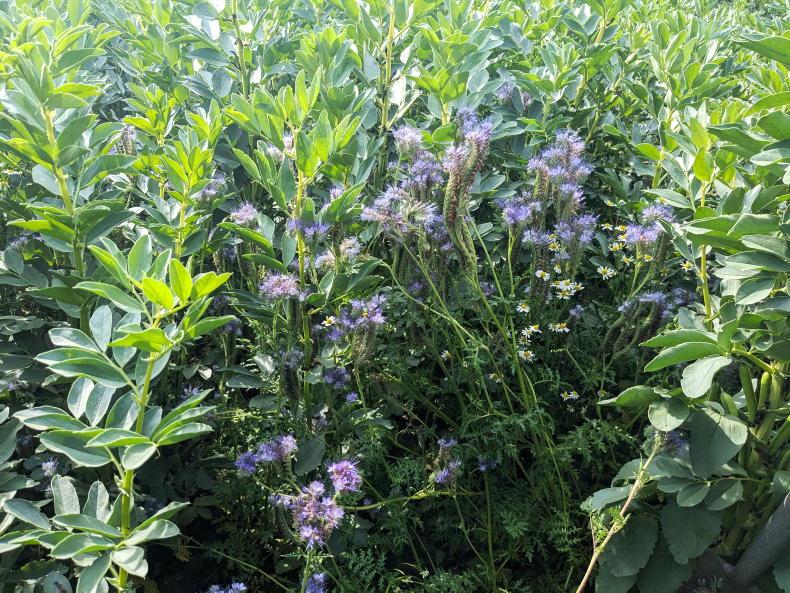
Some phacelia in winter beans provided ground cover, improved soil condition, and attracted bees to improve pollination.
The phacelia provided a multitude of benefits. The empty patches were filled, preventing grass weeds from emerging and thriving in the empty spaces. The soil in the areas with phacelia was extremely friable compared to blockier soil under beans.
The phacelia also attracted lots of pollinators into the field just before the beans started to flower. Steve thinks that this helped the speed and amount of pollination in the beans.
While Steve is not advocating that farmers do this intentionally, he says it is something that piqued his interest and may lead to future field trials, to see whether companion crops would provide benefits in beans, but also in other crops from a grass weed control point of view.
Back in June, the Irish Farmers Journal visited Agrii’s Olde Appleton Italian ryegrass trial site in Yorkshire England on the farm of Roger and Mark Mills.
In 2019, Agrii, which provides agronomic advice, was challenged by its agronomists to begin tackling grass weeds other than blackgrass, leading to a quest to research the best strategies for the control of Italian ryegrass, which can get of hand rapidly.
This site was chosen because of high levels of the weed at the start of the project, numbers reached 500 ears/m2.
At levels of infection over 100 ears/m2, the grass weed smothers out the cash crop and eventually pulls it to the ground, reducing the crop’s yield to zero.
While the correct use of selective herbicides is important to ensure control of these grass weeds, this week we take a look at some of the cultural control methods and the use of glyphosate in the battle against Italian ryegrass.
Steve Corbett, Agrii’s trial manager, explained that the plough is still the best cure for a bad grass weed infestation. However, he noted that if you are ploughing every year, grass weeds will become dispersed through the soil profile and it will not be as effective.
Steve commented that in a bad situation, grass weed numbers should inform your crop rotation and drilling date.
He is more than happy to drill two cereals back-to-back or to drill early in the autumn if grass weed numbers are low, as he realises the pressures farmers can be under to get through the work.
However, if grass weed numbers are high, there should be a strict policy of delaying drilling and planting spring crops where possible.
The Agrii trial site had heavy infestations of Italian ryegrass, providing an ideal setting to trial different control methods.
Margins
Agrii’s trials look at the impact of different crops and cultivations systems on grass weed numbers and margins.
The highest-yielding treatment at the trial site was ploughed winter barley (10.83t/ha).
However, this was not the best margin. This went to ploughed spring barley (£1,185/ha), while the lowest margin was direct drilled winter barley (-£156/ha).
Steve noted that it’s the combination of crop, ie using a spring crop and cultivation system that leads to the high margins on a grass weed-infested site.
Soil conditions
The structure and condition of the soil have proved to be critical to controlling grass weeds at the Yorkshire site too.
With a high silt content, the soil tends to become very hard and blocky after a winter of rainfall. This allows grass weeds like Italian ryegrass to thrive, as the cash crop struggles to get roots down into the soil, and cannot cope with the waterlogging, in which the grass weeds often seem to thrive. Steve stressed that soil structure should be the first port of call when tackling Italian ryegrass.
Pre-harvest cover crops
Trial work is also ongoing on cover crops at the site. Agrii is trialling a special cover crop mix for broadcasting into a crop up to four weeks before harvest. Steve recommends doing this just before a heavy rain event to improve germination. A coating has been applied to the seed in this mixture, which ensures it can be spread uniformly by a fertiliser spreader.
While the soil structure needs to be quite good, Steve says that they have had some success with this mixture.
Some readers may have had poor experiences with vetch as a cover crop in the past, but Steve says that the earlier planting in this situation gives it a great head start in warmer temperatures, leading to strong growth and increased nitrogen fixation potential. Trials into different cover crop species are also ongoing, such as different vetches, and Ethiopian mustard which does not flower as quickly as white mustard, which is often found in cover crop mixtures.
Phacelia in beans
One interesting observation made by Steve this season was in a field of winter beans; one area had phacelia volunteers coming through from a previous cover crop. Winter beans are a notoriously patchy crop and the phacelia only came through strongly in these empty patches.
Some phacelia in winter beans provided ground cover, improved soil condition, and attracted bees to improve pollination.
The phacelia provided a multitude of benefits. The empty patches were filled, preventing grass weeds from emerging and thriving in the empty spaces. The soil in the areas with phacelia was extremely friable compared to blockier soil under beans.
The phacelia also attracted lots of pollinators into the field just before the beans started to flower. Steve thinks that this helped the speed and amount of pollination in the beans.
While Steve is not advocating that farmers do this intentionally, he says it is something that piqued his interest and may lead to future field trials, to see whether companion crops would provide benefits in beans, but also in other crops from a grass weed control point of view.





SHARING OPTIONS