Ballycotton, Co Cork
It has been a busy few weeks in Cork, and with only 3mm falling on Sunday night, Brian was expecting combines to get back going quite quickly earlier this week.
The winter barley got Brian off to a good start. The Integral seed crop yielded 4.3t/ac at 14.9% moisture and a hectolitre weight of 65. There was 2,150kg/ac of straw on the crop too.
The KWS Tardis yielded 3.9t/ac at 17% moisture and a KPH of 68. Finally, the Craft winter malting barley disappointed Brian, just scraping 3t/ac. He says winter malting barley will not be grown again on the farm unless a more reliable variety emerges. The crop had been sown at a high seeding rate as Brian says Craft is a poor variety to tiller, but it still did not perform.
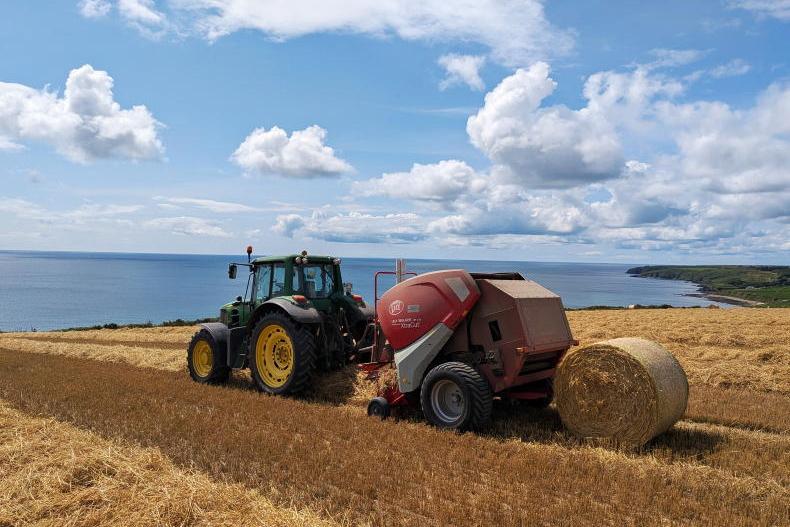
Spring barley was next to be cut. Brian says he has never seen so much spring barley cut in July, with just 26ac left to be harvested on the farm. The weather has been a pleasure, especially being able to bale the straw the day after harvest.
The Laureate malting barley yielded 3t/ac at 16-19% moisture and a KPH of 67-69. The SY Amity did even better, yielding 3.4t/ac at a similar moisture content and hectolitre weight. Straw yielded around 1,500kg/ac for the spring barley. Brian is quite happy with these crops, especially as they suffered a good bit during the very dry periods in the growing season and looked like they would yield poorly at that time.
The winter oilseed rape was harvested over the bank holiday weekend. The variety was LG Armada and it yielded a satisfactory 2.1t/ac. The moisture content started off around 10% but soon dropped to 8%.
The focus is turning to spring oats and winter wheat this week, which will hopefully just leave the spring wheat and beans after that. The beans have remained green a lot longer than Brian expected and look to be full of promise.
Muff, Co Donegal
Donald just caught the edge of storm Floris on Monday, but it was not too bad and it has not affected the farm too much.
The vegetable harvest began on the farm nearly two weeks ago. This was two weeks ahead of schedule due to good growing conditions over the past couple of months.
The first to be harvested is the pointed cabbage. It is doing well and grew much quicker than was expected.
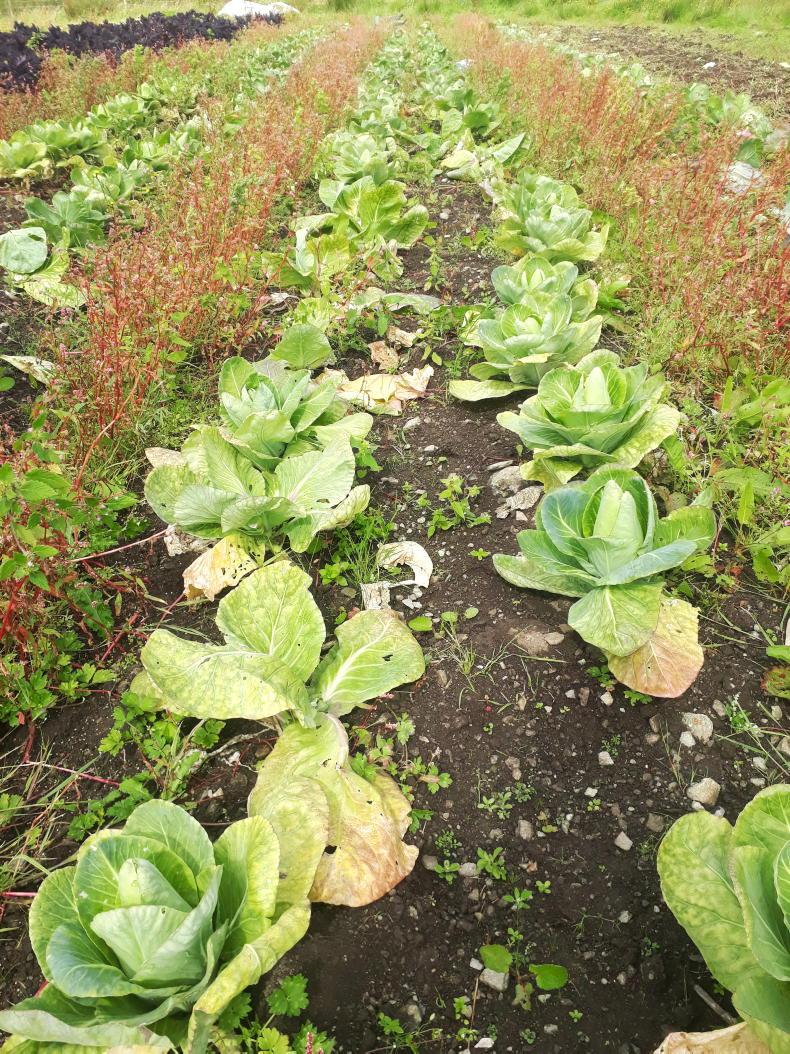
Donald has started to harvest his pointed cabbage in Donegal.
The cauliflower and broccoli are coming along very nicely too. The heads are beginning to form and they have been covered with a fleece to prevent pigeon grazing, which can decimate a crop in very little time.
Donald has noticed that the cost of living seems to be starting to hit people recently.
He says that money seems to be drying up, so people are less likely to buy organic food straight from a farmer, and are instead reverting to conventional vegetables.
The potatoes on the farm are doing OK. Donald says that there is a complete reversal this year to what would be expected. The poorer and wetter soils are producing a better crop of potatoes because of the prolonged dry period. The drier soil, which Donald says is good growing soil, is struggling a bit more.
The same can be seen with Donald’s mixed crop. The beans are not coping well on the lighter soils, with pods only going halfway up the plants, with some pod abortion occurring.
He has noticed that ground after potatoes, or two years out of potatoes, is doing much better and coped with the dry weather very well.
Donald expects to be harvesting his mixed crop in the last week of August or the first week of September. The oats is a week off being ripe, and the barley a bit behind that, but it will be the end of the month before all components are fit.
Faithlegg, Co Waterford
Harvest has been progressing at a fast pace this year, and so far the weather at the Seedtech trial site has been favourable.
The winter barley was finished on 12 July, which is very early given that it hadn’t started by then in past years. Winter barley plots averaged 4.1t/acre, with the highest doing 4.7 tonnes. Straw was baled with ease, and the fields have since been disced and stale seedbeds created.
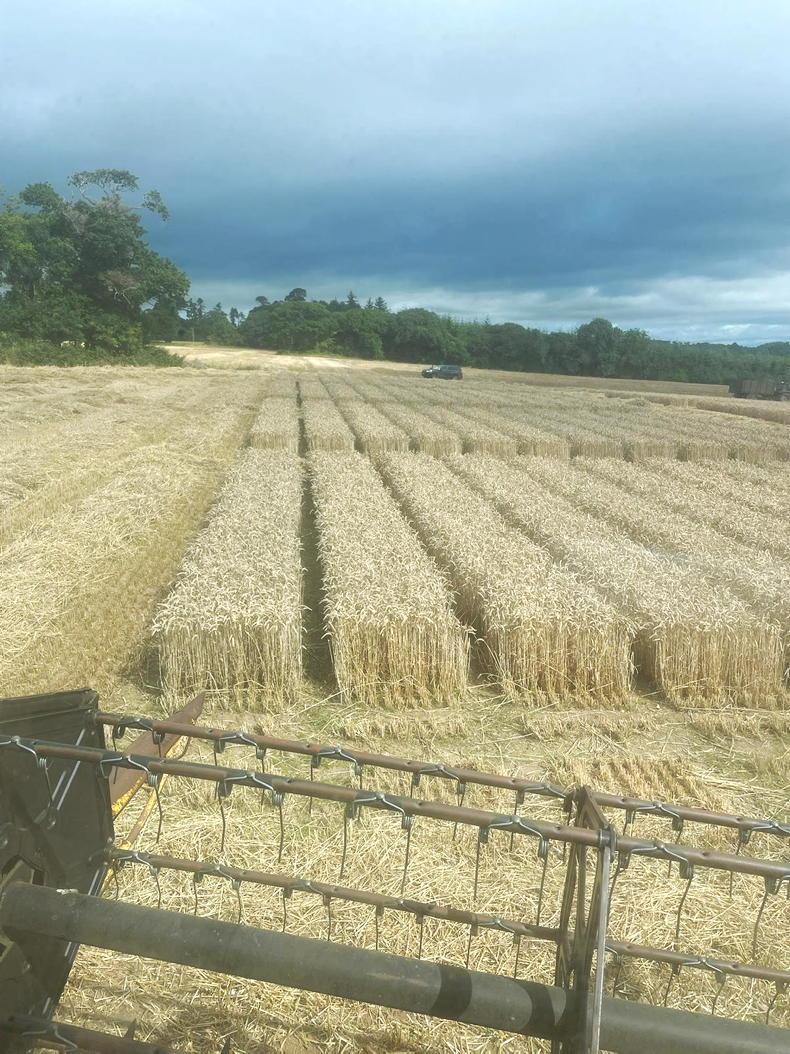
Denis harvested the winter wheat plots at the Seedtech trial site over the weekend.
Winter oilseed rape was harvested on 18 July and the average plot yield was 2.5t/acre. The moistures were between 10 and 11% moisture which made for an easy harvest. The highest yielding variety was a new coded line which did 3t/acre which is very impressive and shows that new genetics are delivering and oilseed rape is becoming a stable crop to grow.
Winter wheat was also harvested last week. It was finished just before the turn in the weather at the weekend. Given how fast it had ripened in, Denis was happy with a yield of 4.3t/acre, with new lines touching 5t in the plots. Moistures were around the 19-20% mark and the straw was baled before the rain.
Spring barley and winter rye is next. Both crops are ripe now and hopefully will make use of this current dry spell which is forecast to get them wrapped up. The spring barley was slow to ripen according to Denis, so he’s hoping that’s a positive sign as it is also looking like it has some good potential.
Spring wheat and oats are 10 days to harvest and spring beans will be at the end of the month. They still have plenty of colour but have begun to turn over the last few days. Focus for the second half of the month will turn to sowing cover crops after the spring barley and hopefully getting the oilseed rape sown this month.
Ballycotton, Co Cork
It has been a busy few weeks in Cork, and with only 3mm falling on Sunday night, Brian was expecting combines to get back going quite quickly earlier this week.
The winter barley got Brian off to a good start. The Integral seed crop yielded 4.3t/ac at 14.9% moisture and a hectolitre weight of 65. There was 2,150kg/ac of straw on the crop too.
The KWS Tardis yielded 3.9t/ac at 17% moisture and a KPH of 68. Finally, the Craft winter malting barley disappointed Brian, just scraping 3t/ac. He says winter malting barley will not be grown again on the farm unless a more reliable variety emerges. The crop had been sown at a high seeding rate as Brian says Craft is a poor variety to tiller, but it still did not perform.
Spring barley was next to be cut. Brian says he has never seen so much spring barley cut in July, with just 26ac left to be harvested on the farm. The weather has been a pleasure, especially being able to bale the straw the day after harvest.
The Laureate malting barley yielded 3t/ac at 16-19% moisture and a KPH of 67-69. The SY Amity did even better, yielding 3.4t/ac at a similar moisture content and hectolitre weight. Straw yielded around 1,500kg/ac for the spring barley. Brian is quite happy with these crops, especially as they suffered a good bit during the very dry periods in the growing season and looked like they would yield poorly at that time.
The winter oilseed rape was harvested over the bank holiday weekend. The variety was LG Armada and it yielded a satisfactory 2.1t/ac. The moisture content started off around 10% but soon dropped to 8%.
The focus is turning to spring oats and winter wheat this week, which will hopefully just leave the spring wheat and beans after that. The beans have remained green a lot longer than Brian expected and look to be full of promise.
Muff, Co Donegal
Donald just caught the edge of storm Floris on Monday, but it was not too bad and it has not affected the farm too much.
The vegetable harvest began on the farm nearly two weeks ago. This was two weeks ahead of schedule due to good growing conditions over the past couple of months.
The first to be harvested is the pointed cabbage. It is doing well and grew much quicker than was expected.
Donald has started to harvest his pointed cabbage in Donegal.
The cauliflower and broccoli are coming along very nicely too. The heads are beginning to form and they have been covered with a fleece to prevent pigeon grazing, which can decimate a crop in very little time.
Donald has noticed that the cost of living seems to be starting to hit people recently.
He says that money seems to be drying up, so people are less likely to buy organic food straight from a farmer, and are instead reverting to conventional vegetables.
The potatoes on the farm are doing OK. Donald says that there is a complete reversal this year to what would be expected. The poorer and wetter soils are producing a better crop of potatoes because of the prolonged dry period. The drier soil, which Donald says is good growing soil, is struggling a bit more.
The same can be seen with Donald’s mixed crop. The beans are not coping well on the lighter soils, with pods only going halfway up the plants, with some pod abortion occurring.
He has noticed that ground after potatoes, or two years out of potatoes, is doing much better and coped with the dry weather very well.
Donald expects to be harvesting his mixed crop in the last week of August or the first week of September. The oats is a week off being ripe, and the barley a bit behind that, but it will be the end of the month before all components are fit.
Faithlegg, Co Waterford
Harvest has been progressing at a fast pace this year, and so far the weather at the Seedtech trial site has been favourable.
The winter barley was finished on 12 July, which is very early given that it hadn’t started by then in past years. Winter barley plots averaged 4.1t/acre, with the highest doing 4.7 tonnes. Straw was baled with ease, and the fields have since been disced and stale seedbeds created.
Denis harvested the winter wheat plots at the Seedtech trial site over the weekend.
Winter oilseed rape was harvested on 18 July and the average plot yield was 2.5t/acre. The moistures were between 10 and 11% moisture which made for an easy harvest. The highest yielding variety was a new coded line which did 3t/acre which is very impressive and shows that new genetics are delivering and oilseed rape is becoming a stable crop to grow.
Winter wheat was also harvested last week. It was finished just before the turn in the weather at the weekend. Given how fast it had ripened in, Denis was happy with a yield of 4.3t/acre, with new lines touching 5t in the plots. Moistures were around the 19-20% mark and the straw was baled before the rain.
Spring barley and winter rye is next. Both crops are ripe now and hopefully will make use of this current dry spell which is forecast to get them wrapped up. The spring barley was slow to ripen according to Denis, so he’s hoping that’s a positive sign as it is also looking like it has some good potential.
Spring wheat and oats are 10 days to harvest and spring beans will be at the end of the month. They still have plenty of colour but have begun to turn over the last few days. Focus for the second half of the month will turn to sowing cover crops after the spring barley and hopefully getting the oilseed rape sown this month.





SHARING OPTIONS