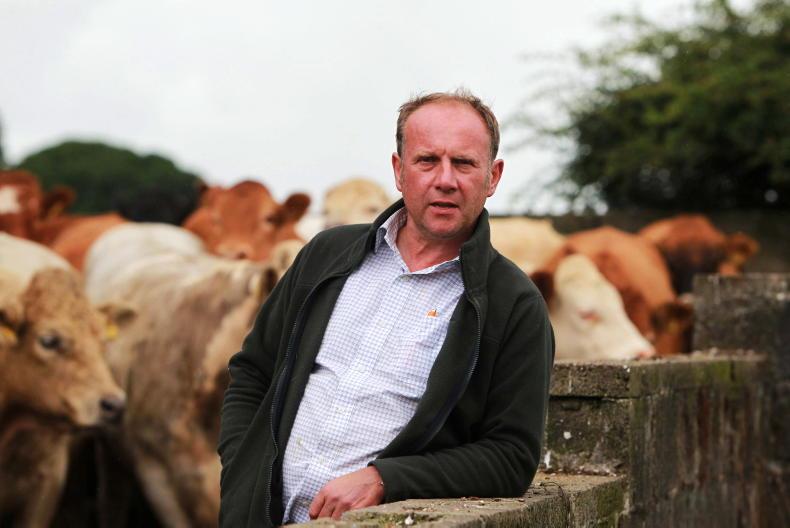
Tom Murray
O’Shea Farms, Piltown, Co Kilkenny
Conditions have been ideal in Kilkenny for most of the past month, allowing for the potato harvest to be wrapped up and for all winter cereals to be drilled.
The potato harvest finished up two weeks ago. While this is earlier than usual, Tom says that they were digging for the same amount of time as usual but had an early start, especially with the salad potatoes. The potatoes were harvested warm and dry, which is making it easier on the storage side. Some potatoes are already down to temperature, some are on the way down and some of the crop are still curing.
The carrot harvest continues on the farm. The mild temperatures have allowed Tom to delay laying out straw on the carrots, but this will be done in the next couple of weeks.
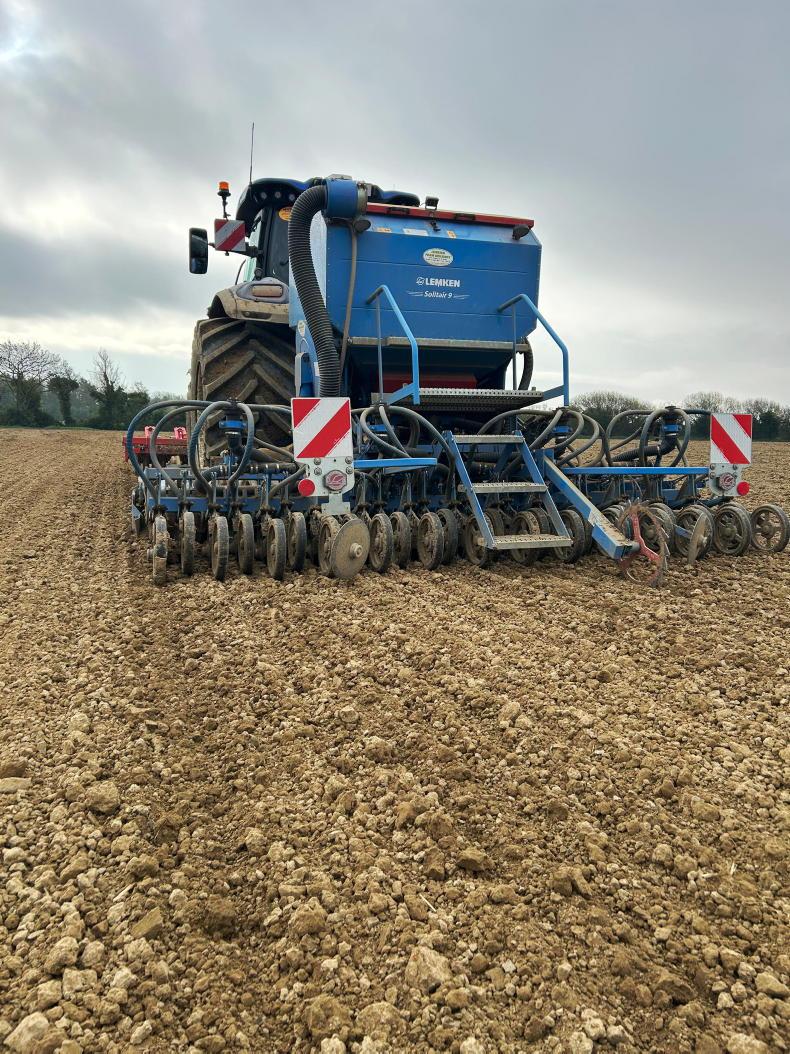
The maize harvest was finished last Friday. Tom agrees that it has been a great year for maize and he’s quite happy. The maize will be tested in the pit to determine its nutritional quality. All of the winter cereals are planted. Tom started with the winter barley, where SY Canyon was the variety of choice. Husky winter oats were planted, while the winter wheat area was 90% Champion – with Tom trying out RGT Hexton on the remaining area. The last of the wheat was planted on Monday and Tuesday, where the maize was harvested from last week.
Defy and DFF were applied to the winter barley fields two days after drilling as a pre-emergence herbicide, while it is being applied to the winter wheat this week a few days after planting. The cover crops on the farm have done quite well in the mild temperatures of early October. Tom says you can really see the benefits of sowing the cover crops early this year. The forage rye that was planted has emerged and is at the two to three leaf stage.
Gary Gillespie
UCD Lyons Farm, Celbridge, Co Kildare
The weather has been quite good in Kildare in the past few weeks, except for a few days around storm Amy. This has allowed for the winter oilseed rape plots to be planted on 26 September. It is a bit later than Gary would have hoped, but he had been planning to have a very late planting date of some of the plots as a trial, so he will at least have these plots to analyse.
The plots were planted at different seeding rates and will be studied throughout the growing season. No pre-emergence herbicide was applied to the plots, but Belkar will be applied once the plants are strong enough to tidy up a few weeds.
The winter cereal plots will be planted next week. In the demonstration plots, Gary will plant winter barley, wheat, oats, rye and spelt (a primitive form of wheat with lower gluten and higher protein). A couple of plots of spring barley and wheat will also be planted as a teaching aid for students, showing how they react when planted in the winter. Winter beans will also be planted this autumn at different seeding rates.
The last of the alternative crops were harvested during the second half of September. The buckwheat was the standout crop, yielding 6t/ha, but this was at a high enough moisture content. The true yield will be known once an oven moisture test is completed. Gary says the global average yield of buckwheat is 1t/ha, so Ireland looks to have a yield advantage with this crop too.
Some of the more exotic crops such as amaranth, sunflower and quinoa showed promise, but did not quite make it to harvest due to a later-than-normal sowing date.
However, small areas of these crops were hand-harvested and then left to dry in order to analyse the grain quality of the samples.
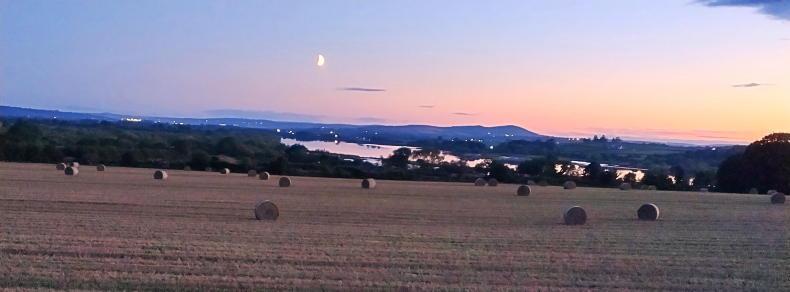
Dusk over the river Foyle as Victor continued his harvest.
Victor Love
Strabane, Co Tyrone
Storm Amy caused a lot of damage in Tyrone, with Victor saying there were a lot of trees blown down or even a few that just snapped a few feet up off the ground. The storm also stopped Victor’s harvest in its tracks, but he did get a good bit done.
All of the spring wheat was harvested. The weather was so good before the storm that Victor was able to get the grain harvested at 16% moisture content at the end of September. Despite the low moisture and a lovely sample of grain, Victor says the issue was that there was not enough of it. The crop did not yield as well as he had hoped and he will probably not grow spring wheat again. He did manage to bale the straw in dry conditions.
Victor also harvested most of his spring barley, with only a couple of fields left, which are being cut this week. The barley is coming in at 17% moisture content. He is not sure of the yield as it has not all been weighed, but Victor says it is yielding well and he is very pleased with the crop considering how late it is. The weather broke before Victor got the straw baled, but says he should be able to this week if there’s any bit of a breeze to dry it out.
The spring beans are leaning over badly after storm Amy, and Victor says it will be tricky cutting. He hopes to get them cut this week.
Victor still hopes to plant some winter cereals too. At the moment, the plan is to plant winter oats after the spring wheat and winter wheat after the beans.
Victor says it is getting a bit late for direct drilling now and he will have to be careful with the crows which are quite bad in his area.
Tom Murray
O’Shea Farms, Piltown, Co Kilkenny
Conditions have been ideal in Kilkenny for most of the past month, allowing for the potato harvest to be wrapped up and for all winter cereals to be drilled.
The potato harvest finished up two weeks ago. While this is earlier than usual, Tom says that they were digging for the same amount of time as usual but had an early start, especially with the salad potatoes. The potatoes were harvested warm and dry, which is making it easier on the storage side. Some potatoes are already down to temperature, some are on the way down and some of the crop are still curing.
The carrot harvest continues on the farm. The mild temperatures have allowed Tom to delay laying out straw on the carrots, but this will be done in the next couple of weeks.
The maize harvest was finished last Friday. Tom agrees that it has been a great year for maize and he’s quite happy. The maize will be tested in the pit to determine its nutritional quality. All of the winter cereals are planted. Tom started with the winter barley, where SY Canyon was the variety of choice. Husky winter oats were planted, while the winter wheat area was 90% Champion – with Tom trying out RGT Hexton on the remaining area. The last of the wheat was planted on Monday and Tuesday, where the maize was harvested from last week.
Defy and DFF were applied to the winter barley fields two days after drilling as a pre-emergence herbicide, while it is being applied to the winter wheat this week a few days after planting. The cover crops on the farm have done quite well in the mild temperatures of early October. Tom says you can really see the benefits of sowing the cover crops early this year. The forage rye that was planted has emerged and is at the two to three leaf stage.
Gary Gillespie
UCD Lyons Farm, Celbridge, Co Kildare
The weather has been quite good in Kildare in the past few weeks, except for a few days around storm Amy. This has allowed for the winter oilseed rape plots to be planted on 26 September. It is a bit later than Gary would have hoped, but he had been planning to have a very late planting date of some of the plots as a trial, so he will at least have these plots to analyse.
The plots were planted at different seeding rates and will be studied throughout the growing season. No pre-emergence herbicide was applied to the plots, but Belkar will be applied once the plants are strong enough to tidy up a few weeds.
The winter cereal plots will be planted next week. In the demonstration plots, Gary will plant winter barley, wheat, oats, rye and spelt (a primitive form of wheat with lower gluten and higher protein). A couple of plots of spring barley and wheat will also be planted as a teaching aid for students, showing how they react when planted in the winter. Winter beans will also be planted this autumn at different seeding rates.
The last of the alternative crops were harvested during the second half of September. The buckwheat was the standout crop, yielding 6t/ha, but this was at a high enough moisture content. The true yield will be known once an oven moisture test is completed. Gary says the global average yield of buckwheat is 1t/ha, so Ireland looks to have a yield advantage with this crop too.
Some of the more exotic crops such as amaranth, sunflower and quinoa showed promise, but did not quite make it to harvest due to a later-than-normal sowing date.
However, small areas of these crops were hand-harvested and then left to dry in order to analyse the grain quality of the samples.
Dusk over the river Foyle as Victor continued his harvest.
Victor Love
Strabane, Co Tyrone
Storm Amy caused a lot of damage in Tyrone, with Victor saying there were a lot of trees blown down or even a few that just snapped a few feet up off the ground. The storm also stopped Victor’s harvest in its tracks, but he did get a good bit done.
All of the spring wheat was harvested. The weather was so good before the storm that Victor was able to get the grain harvested at 16% moisture content at the end of September. Despite the low moisture and a lovely sample of grain, Victor says the issue was that there was not enough of it. The crop did not yield as well as he had hoped and he will probably not grow spring wheat again. He did manage to bale the straw in dry conditions.
Victor also harvested most of his spring barley, with only a couple of fields left, which are being cut this week. The barley is coming in at 17% moisture content. He is not sure of the yield as it has not all been weighed, but Victor says it is yielding well and he is very pleased with the crop considering how late it is. The weather broke before Victor got the straw baled, but says he should be able to this week if there’s any bit of a breeze to dry it out.
The spring beans are leaning over badly after storm Amy, and Victor says it will be tricky cutting. He hopes to get them cut this week.
Victor still hopes to plant some winter cereals too. At the moment, the plan is to plant winter oats after the spring wheat and winter wheat after the beans.
Victor says it is getting a bit late for direct drilling now and he will have to be careful with the crows which are quite bad in his area.





SHARING OPTIONS