Farmers have numerous types of records to keep. Grain farmers must, first of all, comply with conditionality and be able to pass a Department of Agriculture inspection.
A large number of farmers must also comply with the Irish Grain Assurance Scheme’s (IGAS) requirements and pass inspections regularly, while anyone with Bord Bia inspections will also need some pesticides records for this inspection.
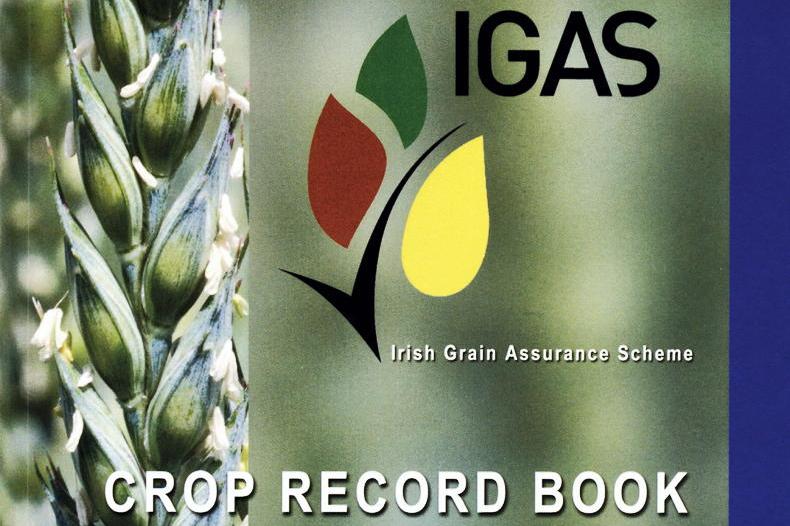
The IGAS records are probably the most comprehensive. The book provided by IGAS is covers all bases and while you can provide your records electronically, it is definitely worth a look through as it has some good ideas on keeping records of machinery maintenance.
Pesticide stocks and costs
It also outlines a table for pesticide stocks and encourages you to include the costs of these products on that list, putting into perspective what sort of investment is in your store.
Very importantly, for those temporarily storing or holding grain, there is a maintenance record sheet to record power washing and cleaning.
Those drying and storing grain need to undergo a separate inspection and have records of grain intake, drying, cleaning or storage and driers and of vermin control.
IGAS requirements
The field name.LPIS number.Previous crop.Current crop.Seed supplier.Variety.Sowing date.Seed rate.Seed lot no.Seed dressing.Seed dressing contractor (where applicable).Harvest date.Where the crop was sold to.What it was sold for – feed, malting, etc.Date of harvest.Tonnage delivered.Who it was delivered by.The dates of application.The growth stage of the crop when applied.Fertiliser applied on each date.The rate applied.The units applied.The date of application.Water rate applied.Growth stage of the crop
when applied.Product name.PCS number.Rate applied.Reason for use.Comments (for own use).There is also a space to record
non-chemical control measures
used.Department of
Agriculture records
The Department of Agriculture’s provides record sheets on the PCS website. These details should be recorded on every farm and need to be supplied in an inspection.
The first survey is easy to fill out and provides some food for thought on what you are doing to improve integrated pest management strategies and gives you some ideas on what you could start to do. You simply tick the box beside the practice that you’re implementing on your farm.
Department pesticide records
The pesticide application records require the following details:
The date the product was applied.Product name.PCS number.Crop/situation – eg, this is either a crop or a situation refers to a yard or other area like this, it could be a store.Location/LPIS number.Area/tonnage treated.Application rate.Water volume used.Method of application (boom sprayer, knapsack, weed wiper, etc).Buffer zone applied (m).Nozzle type (only if using STRYPE on a boom sprayer).IPM rationale/reason for use.Professional user number of the person who applied the product.Sprayer cert number (a sprayer should be tested at three-year intervals).Buffer zones
All plant protection products now have a requirement in the EU not to be sprayed within 3m of a drain or watercourse. Farmers are supposed to have a 3m margin that is not planted beside a watercourse. Beside other drains, product should not be sprayed within 3m.
This is the minimum buffer and even for products with labels that do not require a buffer beside water, you must implement a 3m buffer. Some products require a larger buffer beside a watercourse than 3m. These buffer zones are outlined on the product labels.
Farmers have numerous types of records to keep. Grain farmers must, first of all, comply with conditionality and be able to pass a Department of Agriculture inspection.
A large number of farmers must also comply with the Irish Grain Assurance Scheme’s (IGAS) requirements and pass inspections regularly, while anyone with Bord Bia inspections will also need some pesticides records for this inspection.
The IGAS records are probably the most comprehensive. The book provided by IGAS is covers all bases and while you can provide your records electronically, it is definitely worth a look through as it has some good ideas on keeping records of machinery maintenance.
Pesticide stocks and costs
It also outlines a table for pesticide stocks and encourages you to include the costs of these products on that list, putting into perspective what sort of investment is in your store.
Very importantly, for those temporarily storing or holding grain, there is a maintenance record sheet to record power washing and cleaning.
Those drying and storing grain need to undergo a separate inspection and have records of grain intake, drying, cleaning or storage and driers and of vermin control.
IGAS requirements
The field name.LPIS number.Previous crop.Current crop.Seed supplier.Variety.Sowing date.Seed rate.Seed lot no.Seed dressing.Seed dressing contractor (where applicable).Harvest date.Where the crop was sold to.What it was sold for – feed, malting, etc.Date of harvest.Tonnage delivered.Who it was delivered by.The dates of application.The growth stage of the crop when applied.Fertiliser applied on each date.The rate applied.The units applied.The date of application.Water rate applied.Growth stage of the crop
when applied.Product name.PCS number.Rate applied.Reason for use.Comments (for own use).There is also a space to record
non-chemical control measures
used.Department of
Agriculture records
The Department of Agriculture’s provides record sheets on the PCS website. These details should be recorded on every farm and need to be supplied in an inspection.
The first survey is easy to fill out and provides some food for thought on what you are doing to improve integrated pest management strategies and gives you some ideas on what you could start to do. You simply tick the box beside the practice that you’re implementing on your farm.
Department pesticide records
The pesticide application records require the following details:
The date the product was applied.Product name.PCS number.Crop/situation – eg, this is either a crop or a situation refers to a yard or other area like this, it could be a store.Location/LPIS number.Area/tonnage treated.Application rate.Water volume used.Method of application (boom sprayer, knapsack, weed wiper, etc).Buffer zone applied (m).Nozzle type (only if using STRYPE on a boom sprayer).IPM rationale/reason for use.Professional user number of the person who applied the product.Sprayer cert number (a sprayer should be tested at three-year intervals).Buffer zones
All plant protection products now have a requirement in the EU not to be sprayed within 3m of a drain or watercourse. Farmers are supposed to have a 3m margin that is not planted beside a watercourse. Beside other drains, product should not be sprayed within 3m.
This is the minimum buffer and even for products with labels that do not require a buffer beside water, you must implement a 3m buffer. Some products require a larger buffer beside a watercourse than 3m. These buffer zones are outlined on the product labels.





SHARING OPTIONS