


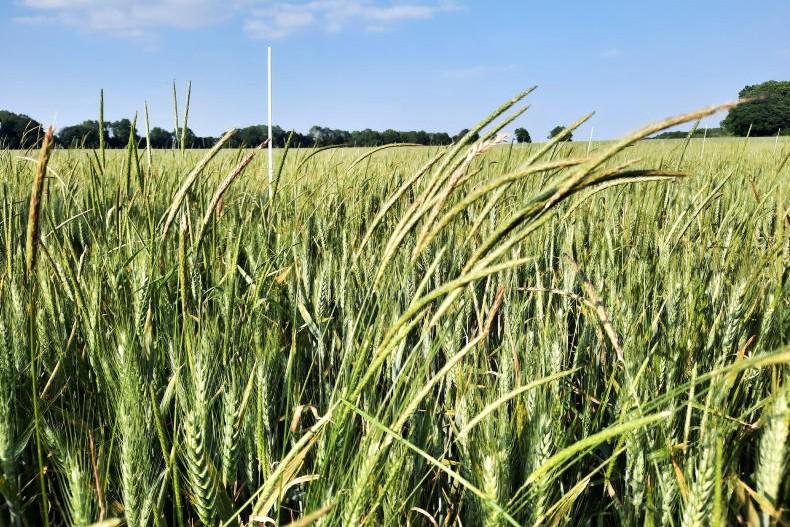
Pre-emergence herbicides are vital in the battle against grass weeds. This was one of the messages from the weeds workshop at the National Tillage Conference.
However, a show of hands from the crowd indicated that very few people were routinely using pre-emergence herbicides.
John Cussans of ADAS told the crowd that UK farmers will not plant a winter wheat crop if they cannot apply a pre-emergence herbicide, and he advised farmers to “stop drilling if you can’t spray the crop just drilled”.
Despite their importance, Cussans warned that pre-emergence herbicides can not be left to tackle grass weeds on their own, with crop rotation and a very low tolerance for seed return playing important roles too.
Italian ryegrass
Cussans also warned that blackgrass is not the worst grass weed to have in your fields, Italian ryegrass can be much harder to control. “It doesn’t respond to cultural control in the same way. You get high seed returns in spring crops as well as winter crops,” he said, “once Italian ryegrass becomes a problem, the solution is much more difficult”.
Farmer’s view
Adrian Joynt, a retired UK farm manager, said that English farmers “are doing more now for blackgrass control than they have in the past 20 years”. However, this has come at a stage where blackgrass is quite widespread.
He said that farmers did not change their ways until the chemistries stopped working, which left them on the back foot.
On his own farm, he put a crop rotation into place, planted spring crops in problem fields, sprayed out areas with large populations, and blew down the combine and baler every day.
Despite this focus on cultural control practices in England in recent years, Joynt commented that glyphosate rates are still too low on many farms.
“Glyphosate is one of the cheapest herbicides out there. Why be mean with the rates?” he said. A reduction in glyphosate rates can lead to the survival of grass weeds, the buildup of resistance against glyphosate, and a much more costly problem down the line.




SHARING OPTIONS