


The result of China’s investigation on beef imports has arrived with the new year and will mean additional safeguard measures from 1 January for the next three years.
These will take the form of an additional 55% tariff on beef imports that are outside of quotas allocated to the countries that supply the majority of China’s beef imports.
Overall, they are broadly aligned with import patterns in 2025, but as Table 1 shows, Brazil and Australia are notable exceptions.
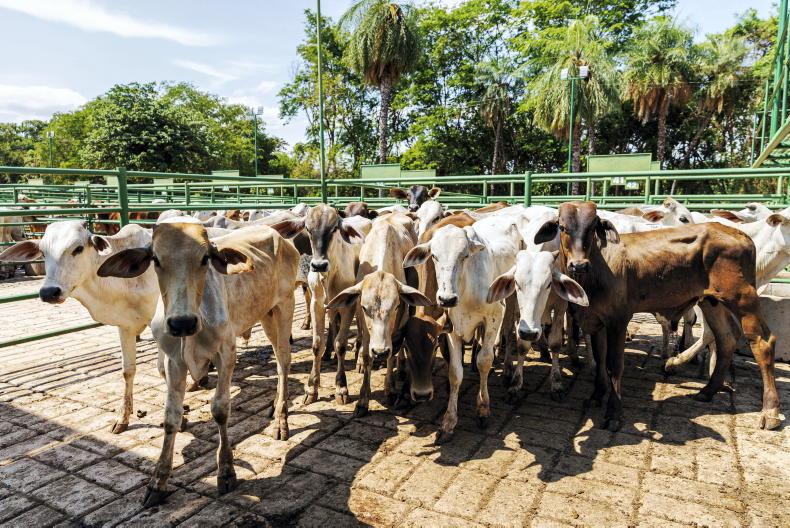
Brazil, the world’s largest beef exporter and supplier of almost half of China’s beef imports, has been given a quota of 1.106m tonnes for 2026.
This is 223,000t less than it supplied for the first 11 months of 2025 and under the new safeguard measures would be liable for the additional 55% tariff.
Australia is the second-largest beef exporter in the world and up to the end of November 2025 it supplied 295,000t of beef imported by China. This is 70,000t above the quota that has been allocated to it for all of 2026 and would be subject to a 55% safeguard tariff.
All of the other countries that supply significant quantities of beef imported by China have been given quotas for 2026 in excess of volumes supplied in 2025.
There are small annual increases provided for in the two subsequent years, during which the safeguard quota will remain in place, with overall volumes increasing from 2.688m tonnes in 2026 6o 2.797m tonnes in 2028.
Reaction in Australia and Brazil
The announcement has not been well received in either Australia or Brazil.
The Australian Meat Industry Council (AMIC), which represents processors, has described it as “not fair, appropriate or reflective of the long-standing, mutually beneficial trade relationship Australia has with China.”
It says that the new restrictions have the potential to “reduce Australia’s beef exports to China by about one third compared to the last 12 months – a trade worth over A$1bn” (€565m).
ABIEC, which represent Brazilian exporters, issued a statement saying that “adjustments are necessary throughout the entire chain, from production to export, to avoid broader impacts”.
It has also committed to “working directly with the Brazilian government and Chinese authorities to reduce the damage that this surcharge will cause to Brazilian livestock farmers and exporters, and to preserve the historically practiced trade flow”.
No direct impact on Ireland at present
As Irish beef exports to China are currently suspended due to an atypical BSE incident, there are no direct consequences.
China has allocated a 172,000t quota for 2026 that can be used by other countries, which would include Ireland if exports are cleared to resume.
Reason for safeguard measures
China commenced an investigation on the impact of beef imports on its domestic industry in December 2024.
The date for publication of the investigation results was pushed back twice in 2025 and had not now been expected before February, though it became apparent in recent days that its release was imminent.
It follows on from an investigation on EU pork and dairy exports, which were published late in 2025 and led to additional tariffs being imposed. The beef investigation was different in that it extended to global suppliers, not just those from the EU.





SHARING OPTIONS