


At the time of going to press, there are increasing signs that the Trump administration is trying to extricate itself from the conflict in Iran.
The US has reportedly sent, via intermediaries, a 15-point plan to Iran to facilitate the end of hostilities.
Commodity markets reacted with cautious optimism to the news, with oil dipping below $100 a barrel and European gas futures trading under €50/MW.
There have also been developments in the key shipping route through the Strait of Hormuz.
Iranian authorities sent a letter to member countries of the International Maritime Organisation saying that “non-hostile vessels” could transit the waterway “in co-ordination with Iranian authorities”.
The number of ships crossing the strait had dropped to fewer than five per day, down from more than 120 per day before the conflict began. If some marine traffic can start passing again, that would come as a huge relief to global commodity markets.
However, as we have previously written on these pages, even if there is a successful end to the conflict and a full opening of shipping routes, it will still be some time before we see a return to ‘normal’ prices for oil and gas.
There is every chance that the price of fertiliser will stay above pre-conflict levels for a very long time.
The damage caused to key infrastructure in the region already will take many months to repair, with some reports suggesting it could take years before Qatar’s mammoth liquefied natural gas facility is back to full capacity. This shortage of supply means that some of the increase in prices which have been seen could prove to be very sticky.
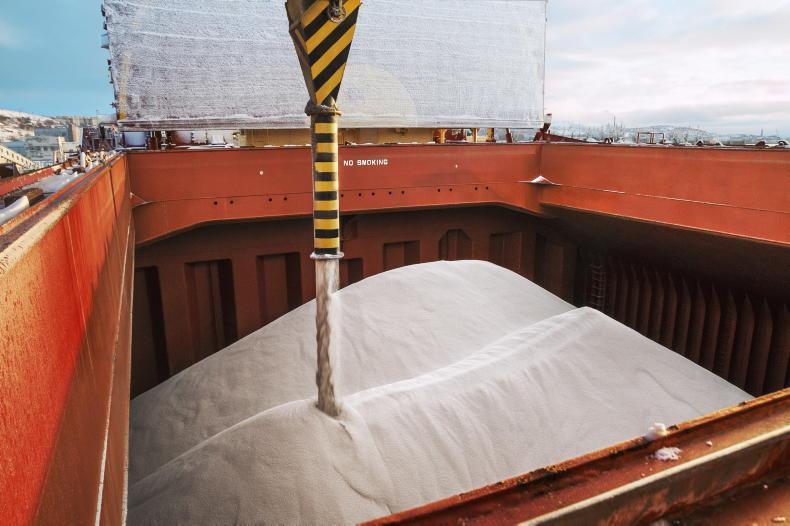
On fertiliser prices, the conflict has completely upended supply chains. Asian countries, which traditionally have relied on the Gulf region for their huge import needs, have starting trying to source more supplies from North Africa, the source of much of Ireland’s supply. We have also seen the US looking into importing more fertiliser from Morocco.
This week Russia announced it was stopping ammonium nitrate exports for one month, putting further pressure on global availability. China had already banned the export of fertilisers.
Further adding to the supply squeeze are reports that Algeria is reducing production as the flow from the country’s gas field is diverted away from fertiliser manufacturing to take advantage of the high prices available for gas in Europe.
CBAM
If all of those tangled fertiliser supply chains can be sorted out, then there still is a sting in the tail for Ireland as the much-maligned carbon border adjustment mechanism (CBAM) remains in place.
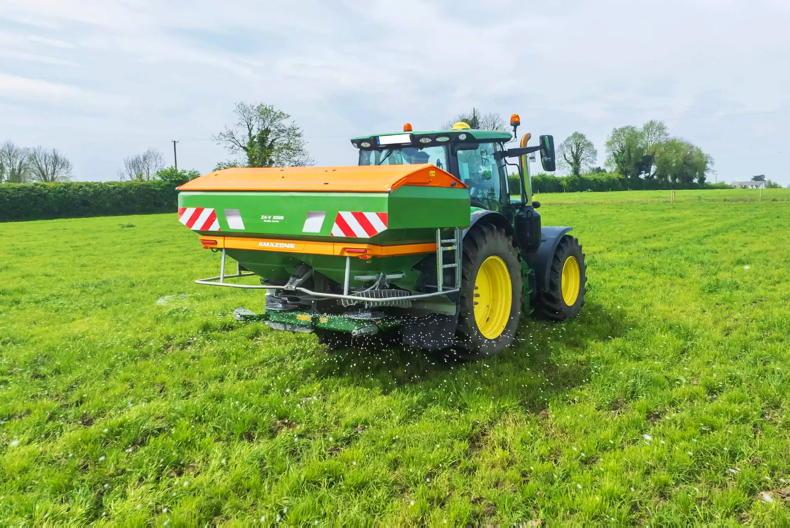
The tax on fertiliser imports from outside the European Union will add between €115/t and €130/t to the price of CAN, and up to €60/t for urea.
The introduction of CBAM at the start of the year had led to considerably more fertiliser being purchased than usual at the end of 2025. This buying to get ahead of the introduction of the tax has proved to be a lucky break for Irish supplies.
However, that thin silver lining will soon wear off and Ireland will be left with higher prices, no matter what happens in the Middle East.
At the time of going to press there are some hopeful signs that a deescalation of the conflict may be happening as the US tries to get peace talks underway and Iran starts to allow ships through the Strait of Hormuz.
The Government introduced limited measures to provide some relief from the worst effects of the surge in fuel prices, although there was only a 5c/l drop for green diesel due to the low level of excise that had prevailed for that product.
Even if events in the Middle East return to relative calm, and production is resumed at pre-conflict levels, Irish farmers will still face the permanent price escalation from CBAM.
This carbon tax has been championed by the European fertiliser manufacturing industry as the higher prices it causes for imports means more money can be charged for EU production.
It is, effectively, an import tariff on fertiliser introduced to protect the European industry. While having domestic fertiliser production makes strategic sense for the EU, by using tariffs to protect it, the EU is passing the cost of protecting that industry straight on to farmers.
A European fertiliser industry is seen as important as it ensures continuity of supply in the case of disruption.
The lesson from the Russian invasion of Ukraine was that a surge in fertiliser prices will feed through to food prices, and general inflation.
If the EU wants to avoid another hike in food prices, then introducing a policy which guarantees that fertiliser will be more expensive in future seems like a very odd way to achieve that goal.




SHARING OPTIONS