The Pasture Profit Index (PPI) is a perennial ryegrass grass variety selection tool which ranks varieties in economic terms based on their agronomic performance. The agronomic performance is measured through a number of traits, including seasonal herbage production, herbage quality, silage yield, persistency and grazing utilisation. For each of the traits in the PPI, the agronomic advantage for the trait value is expressed in the economic value of the trait in the index.
The agronomic advantage of a variety is the performance greater (or less) than the base value. The values for each trait are summed to give the overall PPI value. This value is expressed as the increase in profit/ha by sowing each variety on PPI compared to the base values.
There have been some updates to the PPI 2026. These include changes to base values in seasonal yield, quality and silage yield based on genetic gain over the last number of years and available data from the recommended list trials from the previous four years across two sites.
These updates are more aligned with the current performance of perennial ryegrass varieties and account for advances that have been achieved through genetic gain.
Grazing utilisation
Previously, the grazing utilisation trait was presented on the PPI using a star rating system, whereby superior varieties were given five stars and inferior varieties were given one star. Stars are assigned based on the additional (or reduced) herbage utilised as calculated from a variety’s residual grazed height (RGH) score.
Residual grazed height is calculated from the perennial ryegrass variety grazing studies in Teagasc Moorepark. This compares varieties post-grazing sward height to the predicted post-grazing height, which is calculated based on the pre-grazing herbage yield and sward height. Varieties which are grazed below their RGH will receive a negative value and are more grazing efficient while varieties that do not achieve their predicted post-grazing height are less grazing efficient.
To create more cohesion between all traits in the PPI, this trait is now expressed as an economic value and, therefore, can contribute to a variety’s total PPI value. This value will be calculated across the five summer rotations when differences in grazing utilisation typically occur.
The value of grass during these five rotations is €0.04 and as such is the economic value used to calculate the grazing utilisation value within the PPI. Herbage density is assumed at 250kg of DM/ha per cm, as this value is commonly used in grassland research and grassland management calculations.
Thresholds are assumed as the biological significance of superior/inferior grazing utilisation beyond a certain point is assumed. These limits are +€30 to -€30.
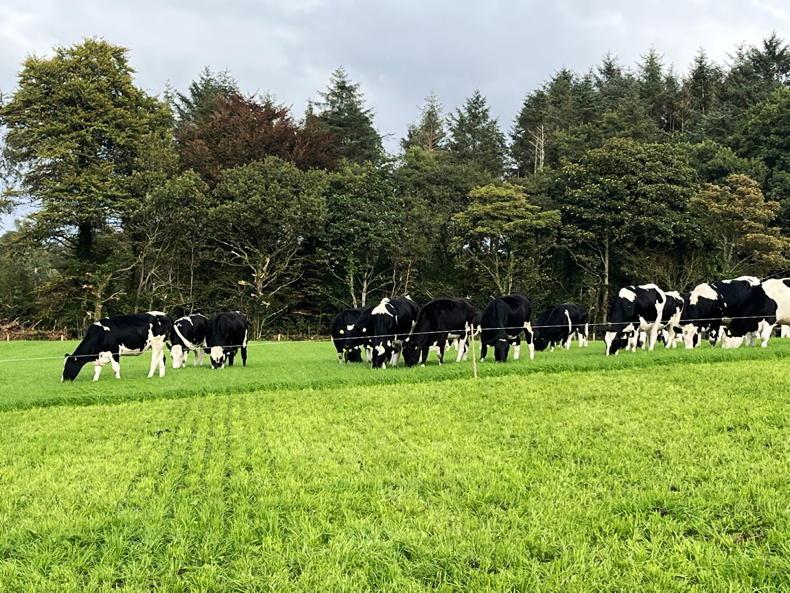
Grazing utilisation of a sward now carries an economic value in the index.
Importance of variety evaluation
Reseeding is essential to improve farm performance by increasing herbage yield, quality and utilisation, leading to up to 8% more milk output per hectare compared to permanent pasture. It also creates more responsive, productive swards and allows high-performing perennial ryegrass and white clover mixtures, such as those selected using the PPI, to establish and deliver long-term benefits.
Using the PPI helps take the guesswork out of that decision, by identifying varieties that have been independently proven to perform under Irish conditions.
All varieties within the PPI have been evaluated across a total of four harvest years across five sites around the country, which encompasses a variety of soil types and climatic conditions.
The PPI is the only evidence available of the potential performance of grass cultivars in Ireland. Choosing varieties from the PPI reduces the risk of selecting underperforming grasses and gives farmers greater confidence that the new sward will deliver strong growth, persist well over time, and ultimately pay back the cost of reseeding through improved productivity and utilisation.
Persistency
There have been changes to the economic values for persistency, to account for increased reseeding costs, which is currently valued at €1,100/ ha. This equates to €92/ha/year across the expected 12-year lifetime of a sward and is based on the ground score change of the variety within the DAFM protocol.
On-farm evaluation
On-farm variety evaluation has been carried out on over 100 farms across Ireland since 2013 and from this study there is clear varietal differences in terms of herbage production and number of grazing events per year.
Data from this study has investigated varieties for up to 10 years post-sowing, with 1,915 kg DM/ha between the best- and poorest-performing varieties. This equates to an extra grazing rotation per year by choosing the correct varieties at sowing. This data also shows that varieties within the PPI are persistent as reduction in herbage production between year 1 and year 10 post sowing was modest (- 8% on average).
Varieties which exhibit high grazing utilisation values within the PPI are also associated with a greater number of grazing events per year and those with poor grazing utilisation have a greater number of silage events per year.
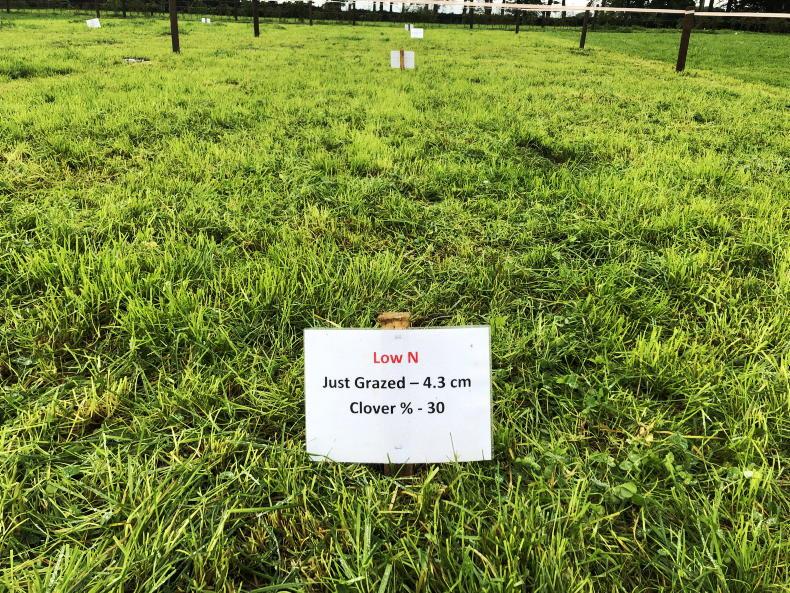
Trial plots at Moorepark were used to find the utilisation rate of swards.
How to use the PPI
Firstly, it is important to select varieties based on the use for the paddock. For example, a paddock on the milking platform will have varieties chosen based on grazing traits including spring and autumn herbage production, quality and grazing utilisation.
Paddocks which are primarily used for silage will be sown with varieties based on spring herbage production, silage yield and quality. The PPI also allows for selection of varieties which perform well in both grazing and silage systems and can be sown in paddocks which are used for both purposes.
For swards containing white clover it is also recommended to choose varieties with good grazing utilisation, as this can improve the clover proportion within the sward through lower post-grazing sward heights, which allows more light to the base of the sward. Teagasc research has shown that mixtures of varieties tend to perform as the average of the component varieties, therefore, by averaging the value of each trait for the varieties chosen you can accurately predict how that mix will perform.
The ploidy of each variety is also listed on the PPI (diploid; D and Tetraploid: T). It is important to note that ploidy doesn’t have an impact on the persistence of swards, however, ploidy will impact the growth habits of the sward and some traits within the PPI.
Diploids have a denser growth habit compared to tetraploids which influences grazing utilisation, while tetraploids typically have higher digestibility. It is notable that tetraploids are generally better grazed than diploids. The most important aspect of choosing grass mixtures is that farmers use varieties on the Irish recommended lists with a PPI value.
Sowing rates
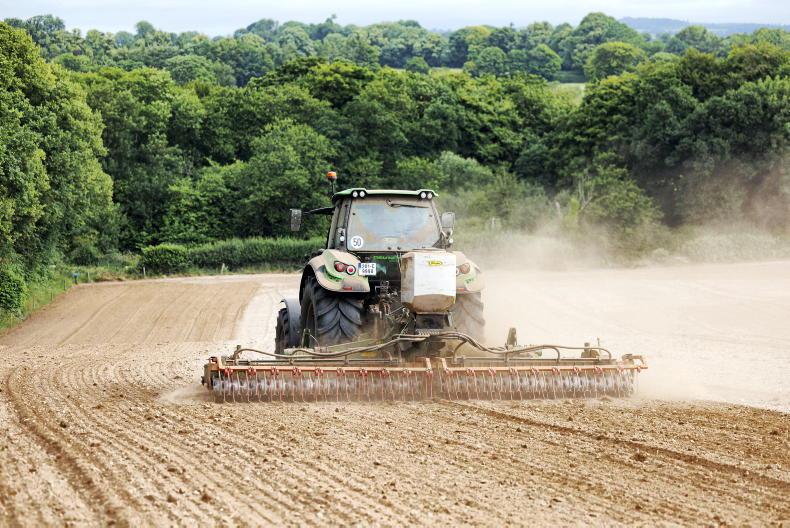
Getting the sowing rate right is essential to establish a dense, productive sward. For perennial ryegrass, a typical recommendation is to sow 12-14 kg per acre (30-35 kg/ha) in a full reseed, adjusting slightly depending on ploidy and mixture. There should be no more than three to four varieties in a grass mix.
A lower seeding rate is recommended for diploids due to their denser growth habit compared to tetraploids.
To achieve a sward with more than 20% white clover, which research has proven necessary for adequate nitrogen fixation levels to reduce nitrogen inputs, include 4-5 kg/ha (1.5-2 kg/ac) of white clover seed in the mix when reseeding.
Choosing the correct varieties at reseeding (those with the traits required for your farm), particularly those ranked highly on the PPI, is key to maximising return on investment and setting the foundation for long-term improvements in grass production and farm performance.
The Pasture Profit Index (PPI) is a perennial ryegrass grass variety selection tool which ranks varieties in economic terms based on their agronomic performance. The agronomic performance is measured through a number of traits, including seasonal herbage production, herbage quality, silage yield, persistency and grazing utilisation. For each of the traits in the PPI, the agronomic advantage for the trait value is expressed in the economic value of the trait in the index.
The agronomic advantage of a variety is the performance greater (or less) than the base value. The values for each trait are summed to give the overall PPI value. This value is expressed as the increase in profit/ha by sowing each variety on PPI compared to the base values.
There have been some updates to the PPI 2026. These include changes to base values in seasonal yield, quality and silage yield based on genetic gain over the last number of years and available data from the recommended list trials from the previous four years across two sites.
These updates are more aligned with the current performance of perennial ryegrass varieties and account for advances that have been achieved through genetic gain.
Grazing utilisation
Previously, the grazing utilisation trait was presented on the PPI using a star rating system, whereby superior varieties were given five stars and inferior varieties were given one star. Stars are assigned based on the additional (or reduced) herbage utilised as calculated from a variety’s residual grazed height (RGH) score.
Residual grazed height is calculated from the perennial ryegrass variety grazing studies in Teagasc Moorepark. This compares varieties post-grazing sward height to the predicted post-grazing height, which is calculated based on the pre-grazing herbage yield and sward height. Varieties which are grazed below their RGH will receive a negative value and are more grazing efficient while varieties that do not achieve their predicted post-grazing height are less grazing efficient.
To create more cohesion between all traits in the PPI, this trait is now expressed as an economic value and, therefore, can contribute to a variety’s total PPI value. This value will be calculated across the five summer rotations when differences in grazing utilisation typically occur.
The value of grass during these five rotations is €0.04 and as such is the economic value used to calculate the grazing utilisation value within the PPI. Herbage density is assumed at 250kg of DM/ha per cm, as this value is commonly used in grassland research and grassland management calculations.
Thresholds are assumed as the biological significance of superior/inferior grazing utilisation beyond a certain point is assumed. These limits are +€30 to -€30.
Grazing utilisation of a sward now carries an economic value in the index.
Importance of variety evaluation
Reseeding is essential to improve farm performance by increasing herbage yield, quality and utilisation, leading to up to 8% more milk output per hectare compared to permanent pasture. It also creates more responsive, productive swards and allows high-performing perennial ryegrass and white clover mixtures, such as those selected using the PPI, to establish and deliver long-term benefits.
Using the PPI helps take the guesswork out of that decision, by identifying varieties that have been independently proven to perform under Irish conditions.
All varieties within the PPI have been evaluated across a total of four harvest years across five sites around the country, which encompasses a variety of soil types and climatic conditions.
The PPI is the only evidence available of the potential performance of grass cultivars in Ireland. Choosing varieties from the PPI reduces the risk of selecting underperforming grasses and gives farmers greater confidence that the new sward will deliver strong growth, persist well over time, and ultimately pay back the cost of reseeding through improved productivity and utilisation.
Persistency
There have been changes to the economic values for persistency, to account for increased reseeding costs, which is currently valued at €1,100/ ha. This equates to €92/ha/year across the expected 12-year lifetime of a sward and is based on the ground score change of the variety within the DAFM protocol.
On-farm evaluation
On-farm variety evaluation has been carried out on over 100 farms across Ireland since 2013 and from this study there is clear varietal differences in terms of herbage production and number of grazing events per year.
Data from this study has investigated varieties for up to 10 years post-sowing, with 1,915 kg DM/ha between the best- and poorest-performing varieties. This equates to an extra grazing rotation per year by choosing the correct varieties at sowing. This data also shows that varieties within the PPI are persistent as reduction in herbage production between year 1 and year 10 post sowing was modest (- 8% on average).
Varieties which exhibit high grazing utilisation values within the PPI are also associated with a greater number of grazing events per year and those with poor grazing utilisation have a greater number of silage events per year.
Trial plots at Moorepark were used to find the utilisation rate of swards.
How to use the PPI
Firstly, it is important to select varieties based on the use for the paddock. For example, a paddock on the milking platform will have varieties chosen based on grazing traits including spring and autumn herbage production, quality and grazing utilisation.
Paddocks which are primarily used for silage will be sown with varieties based on spring herbage production, silage yield and quality. The PPI also allows for selection of varieties which perform well in both grazing and silage systems and can be sown in paddocks which are used for both purposes.
For swards containing white clover it is also recommended to choose varieties with good grazing utilisation, as this can improve the clover proportion within the sward through lower post-grazing sward heights, which allows more light to the base of the sward. Teagasc research has shown that mixtures of varieties tend to perform as the average of the component varieties, therefore, by averaging the value of each trait for the varieties chosen you can accurately predict how that mix will perform.
The ploidy of each variety is also listed on the PPI (diploid; D and Tetraploid: T). It is important to note that ploidy doesn’t have an impact on the persistence of swards, however, ploidy will impact the growth habits of the sward and some traits within the PPI.
Diploids have a denser growth habit compared to tetraploids which influences grazing utilisation, while tetraploids typically have higher digestibility. It is notable that tetraploids are generally better grazed than diploids. The most important aspect of choosing grass mixtures is that farmers use varieties on the Irish recommended lists with a PPI value.
Sowing rates
Getting the sowing rate right is essential to establish a dense, productive sward. For perennial ryegrass, a typical recommendation is to sow 12-14 kg per acre (30-35 kg/ha) in a full reseed, adjusting slightly depending on ploidy and mixture. There should be no more than three to four varieties in a grass mix.
A lower seeding rate is recommended for diploids due to their denser growth habit compared to tetraploids.
To achieve a sward with more than 20% white clover, which research has proven necessary for adequate nitrogen fixation levels to reduce nitrogen inputs, include 4-5 kg/ha (1.5-2 kg/ac) of white clover seed in the mix when reseeding.
Choosing the correct varieties at reseeding (those with the traits required for your farm), particularly those ranked highly on the PPI, is key to maximising return on investment and setting the foundation for long-term improvements in grass production and farm performance.






SHARING OPTIONS