


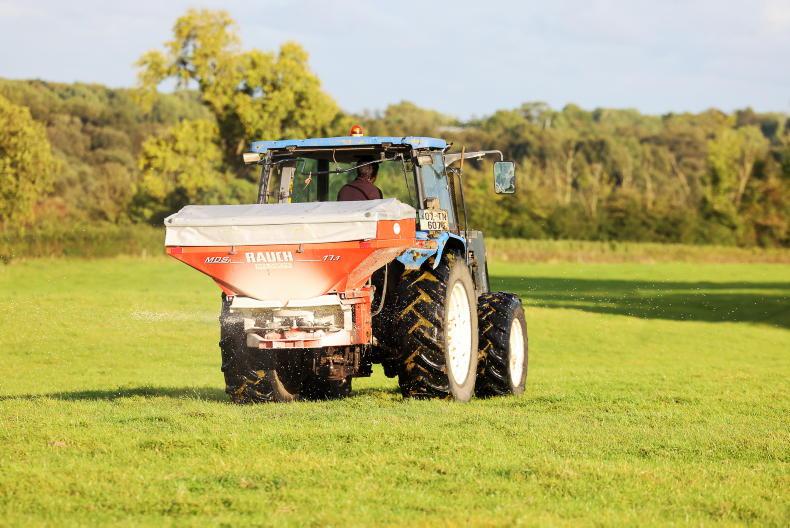
Fertiliser: there has been much talk in the last few days about fertiliser supplies and price increases.
The best advice that I can give is to try to secure product that will see you through the first two rounds and cover any ground for first cut silage, and hopefully the situation will have stabilised by then. Protected urea appears to be trading from €610 to €640/tonne delivered, while 18-6-12 is trading €80 to €90/tonne below this in the main.
Drier weather over the last week may have given ground a chance to soak out and give an opportunity for farmers to get the first round of fertiliser out on ground. If prioritising ground on which to spread, aim for any ground that has received no slurry this spring or ground unlikely to receive any in the next two weeks.
Where grass supplies are tight, the greatest return on fertiliser will be seen on ground that already has a nice covering of grass on it (700kg DM/ha +).
Aim to spread 20 units/acre to kick off grass growth.
You must wait at least one week between spreading slurry and then applying chemical fertiliser to prevent nitrogen being locked up.
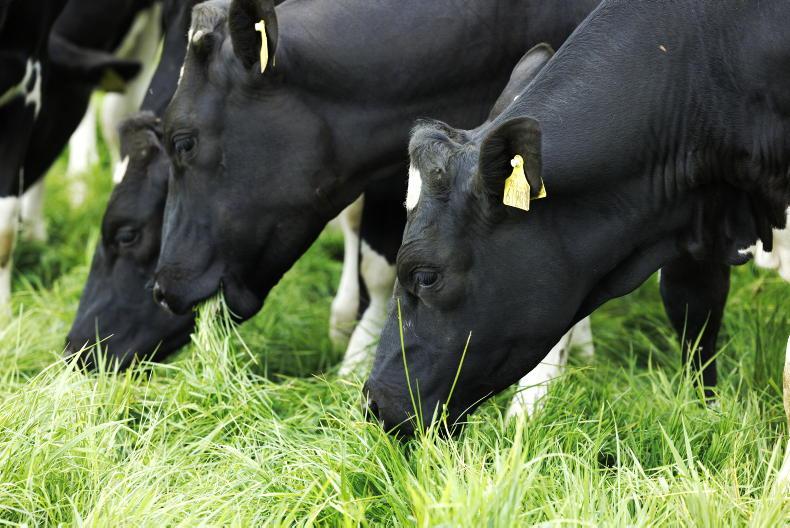
Turn out: with the recent improvement in weather and ground conditions, some farmers have tentatively turned out cattle in the last few days. Grass supplies do not seem overly huge on farms, with dry fields even less so, so prioritising what stock group goes out in essential.
For spring calving suckler herds, first calving heifers will hopefully have been the first to calve down, and with their calves now three or four weeks old in many cases, these should be the priority.
Sheltered paddocks close to the yard with medium covers of grass have hopefully been held over the winter for these. If grass supplies are extremely tight, or ground conditions still tricky, turning out by day and back in the shed by night, or giving free access to cows and calves to go from the paddock to the shed is optimal.
Doing the above will help ease the burden on shed space at the minute, while also helping to reduce disease build up in sheds as calving ramps up pressure.
Calf health: this week in our 10-week calf series focus, Daire Cregg sits down with Catherine McAloon, a vet and calf health expert. The impact that the first few weeks of a calf’s life has on its lifetime performance can not be overstated.
One of the issues discussed on p34 is colostrum management – something that is out of the control of the dairy beef farmers purchasing calves – but having a relationship with a farmer that is managing and feeding colostrum correctly will alleviate this.
The same can be said regarding scours to a certain extent; calves from vaccinated dams will have reduced incidence of scour, but the onus is also on the dairy beef farmer to keep a clean, dry bed under the calves in question.
For more information, see week 4 of our calf series on page 34.






SHARING OPTIONS