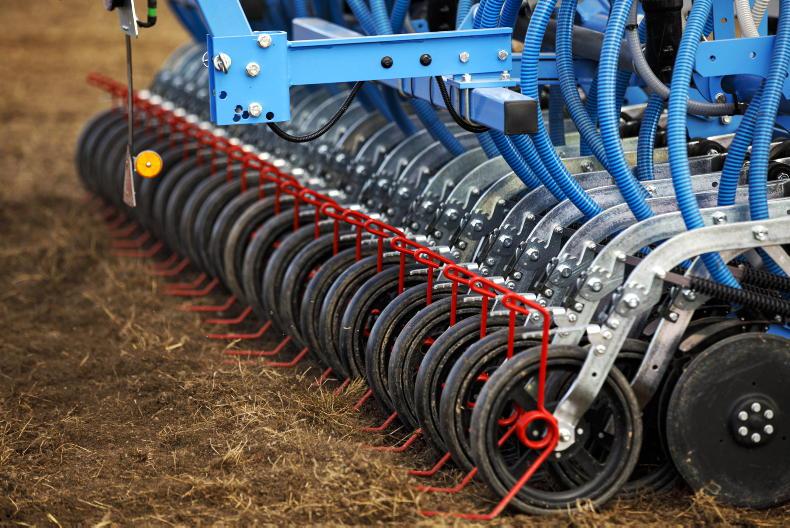
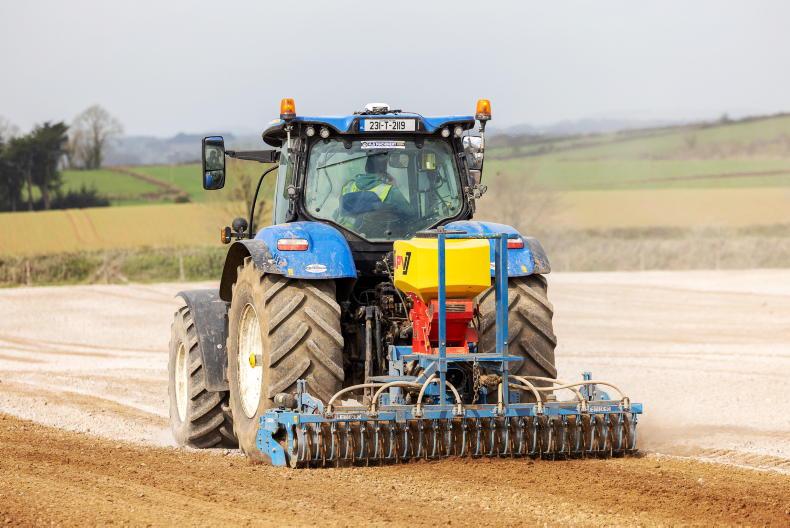
Reseeding: Over the last decade, the Pasture Profit Index (PPI) has become the bible when it comes to picking grass seeds, as Teagasc put an economic value on the traits identified under the Department of Agriculture variety testing programme.
Over the last year, some seed companies have attempted to undermine the relevance of the PPI. For example, the grass variety Vast is being marketed heavily in Ireland, despite the fact it failed to get on to the recommended list. In other words, the Department of Agriculture variety testing programme says it should not be recommended for use in Ireland.
Teagasc and the Department of Agriculture are independent arbitrators, and farmers shouldn’t equate some on-farm testing by a private company with the work carried out by the Department and Teagasc.
There are lots of great varieties on the PPI, including plenty sold by DLF, who also sell Vast.
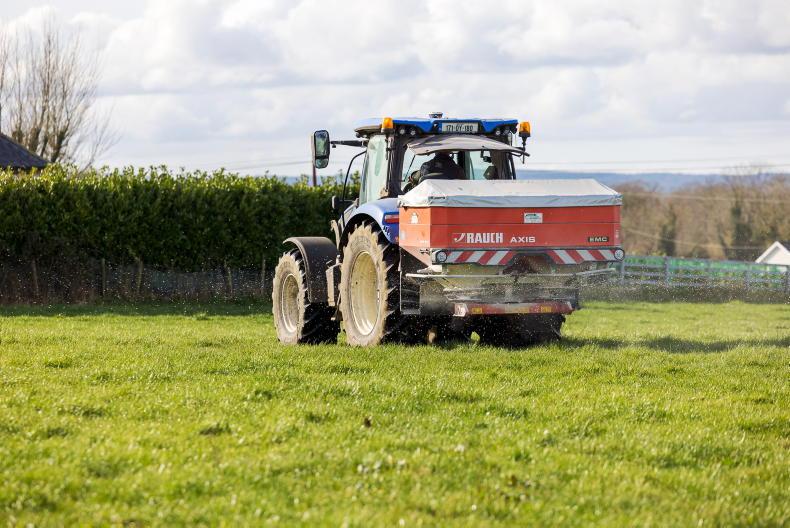
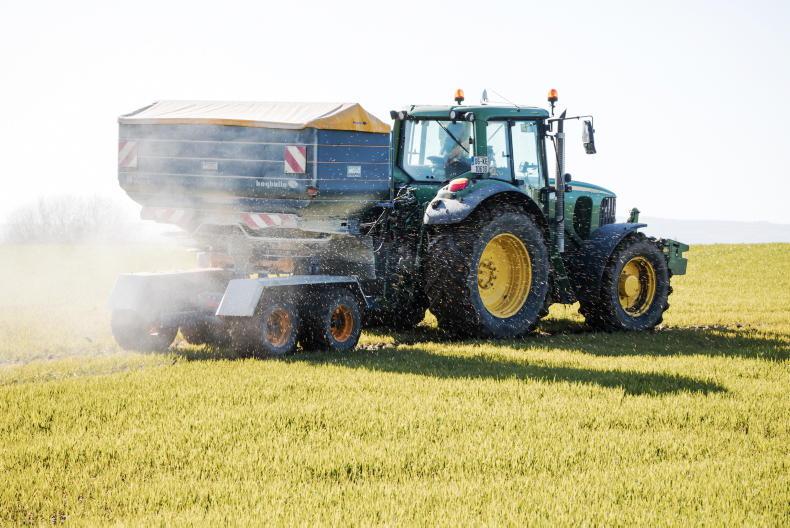
Fertiliser: Concerns over the future availability and price of fertilisers continues to grow. Despite that, there seems to be a lot of fertiliser moving, and if farmers need nitrogen they can get it.
The difference in price is stark. Before Christmas protected urea was available for about €540/t, but it’s now around €850/t. On a price per kilo of N basis, it has gone from €1.17/kg N to €1.85/kg N, which is a 58% increase in price per unit.
For someone spreading 200kg N/ha annually, the price per hectare for nitrogen has gone from €234/ha to €370/ha.
Some farmers are asking if they are better off buying CAN instead of urea as it is cheaper per tonne than urea. On a cost per kilo of N basis, CAN at €540/t is costing €2/kg N, so is more expensive than urea at current prices. Urea would need to be costing over €920/t before CAN would be more economical at current CAN prices.
As we head towards April, attention will be turning to compound fertiliser. Traditionally, paddocks that did not get any slurry so far would receive two bags/acre of 18:6:12 in April.
Many farmers now only have a small allowance for P, if any. However, there are no limits on K or sulphur and both of these are critically important for good grass growth as we head into the mid-season. There are plenty of compounds available containing N, K and S.
Calves: As the oldest of the calves are approaching the eight-week mark, there is a tendency to think the high risk rearing phase is over, but it is not. Diseases like cryptosporidium, coccidiosis and pneumonia can be fatal at any age, so don’t get complacent.
Probably the healthiest place for older calves when the weather is improving is outside. I see a good few farmers have turned calves out to grass and are feeding milk outdoors. The forecast for the coming week is largely OK, but shelter and a dry lie will be required.
A sheltered ditch or a series of big bales of straw in an X shape should suffice. Depending on history, a blackleg and pneumonia vaccine and coccidiosis dose may be required.
Reseeding: Over the last decade, the Pasture Profit Index (PPI) has become the bible when it comes to picking grass seeds, as Teagasc put an economic value on the traits identified under the Department of Agriculture variety testing programme.
Over the last year, some seed companies have attempted to undermine the relevance of the PPI. For example, the grass variety Vast is being marketed heavily in Ireland, despite the fact it failed to get on to the recommended list. In other words, the Department of Agriculture variety testing programme says it should not be recommended for use in Ireland.
Teagasc and the Department of Agriculture are independent arbitrators, and farmers shouldn’t equate some on-farm testing by a private company with the work carried out by the Department and Teagasc.
There are lots of great varieties on the PPI, including plenty sold by DLF, who also sell Vast.
Fertiliser: Concerns over the future availability and price of fertilisers continues to grow. Despite that, there seems to be a lot of fertiliser moving, and if farmers need nitrogen they can get it.
The difference in price is stark. Before Christmas protected urea was available for about €540/t, but it’s now around €850/t. On a price per kilo of N basis, it has gone from €1.17/kg N to €1.85/kg N, which is a 58% increase in price per unit.
For someone spreading 200kg N/ha annually, the price per hectare for nitrogen has gone from €234/ha to €370/ha.
Some farmers are asking if they are better off buying CAN instead of urea as it is cheaper per tonne than urea. On a cost per kilo of N basis, CAN at €540/t is costing €2/kg N, so is more expensive than urea at current prices. Urea would need to be costing over €920/t before CAN would be more economical at current CAN prices.
As we head towards April, attention will be turning to compound fertiliser. Traditionally, paddocks that did not get any slurry so far would receive two bags/acre of 18:6:12 in April.
Many farmers now only have a small allowance for P, if any. However, there are no limits on K or sulphur and both of these are critically important for good grass growth as we head into the mid-season. There are plenty of compounds available containing N, K and S.
Calves: As the oldest of the calves are approaching the eight-week mark, there is a tendency to think the high risk rearing phase is over, but it is not. Diseases like cryptosporidium, coccidiosis and pneumonia can be fatal at any age, so don’t get complacent.
Probably the healthiest place for older calves when the weather is improving is outside. I see a good few farmers have turned calves out to grass and are feeding milk outdoors. The forecast for the coming week is largely OK, but shelter and a dry lie will be required.
A sheltered ditch or a series of big bales of straw in an X shape should suffice. Depending on history, a blackleg and pneumonia vaccine and coccidiosis dose may be required.






SHARING OPTIONS