Drying off: this is the time of year that everyone loves and hates at the same time – drying off cows. It’s a time-consuming and difficult task to do right.
I see all of the vets now require milk samples from mastitis or high-SCC cows and the milk recording results before prescribing the type of dry cow therapy. If samples haven’t been kept from mastitis cases, then sample whatever cows had high SCC and weren’t treated since the last milk recording.
The vets will get these samples tested for culture and sensitivity, which will ensure that whatever bugs are causing the infection are known and the right drug can be prescribed. The rule of thumb when drying off is to do no more than 20 cows per person at any one time and don’t do it on an empty stomach.
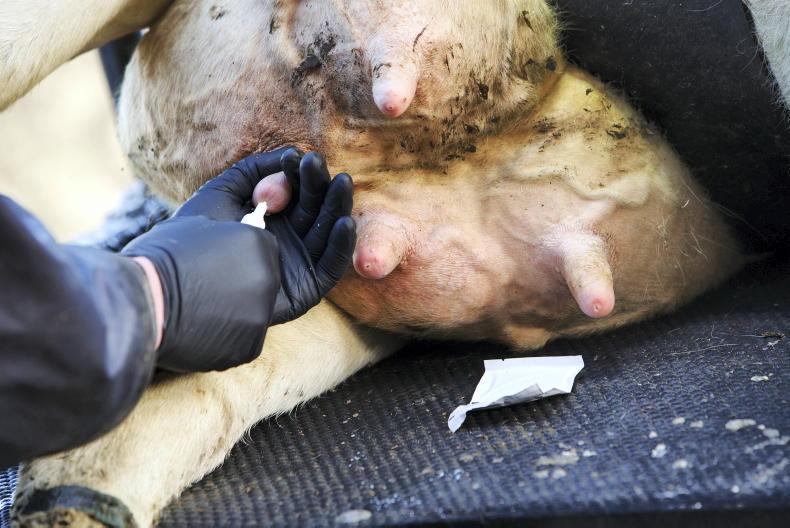
So if doing them after morning milking, have breakfast first. The next thing is to be organised and to have a system. Teats have to be wiped with either cotton wool soaked in methylated spirits, or the wipes that come with the tubes, but these aren’t always the most effective at cleaning dirty teats.
Clean the furthest away teats first and the closest teats last. Tube the closest teats first and the furthest away teats last. If using dry cow tube and sealer, use them one after the other on each teat. This protocol will help to prevent contaminating clean teats.
Silage: while silage is generally not scarce this winter, good quality silage is always scarce. Up to now, the best silage was targeted at the milking cows, but depending on availability, farmers may need to start saving what is left for spring. Having enough high-quality silage in spring for wet days or wet weeks is critical.
The lesson from spring 2024 is that we didn’t have enough good-quality silage to get through a really bad spring.
As a rough guide, a round bale of silage will feed one cow for about two weeks. How much of these good bales are needed for the spring depends on a number of factors, including ground conditions and grass availability. Those on dry land will get away with less, but for most the equivalent of one or 1.5 round bales will be needed to get through the spring.
The pinch point often comes in early April when nearly all cows are calved and feed demand is high. Putting in poor-quality silage at that stage is really damaging to cow performance. If grass in the diet can’t be guaranteed at that time, then there must be good silage available instead.
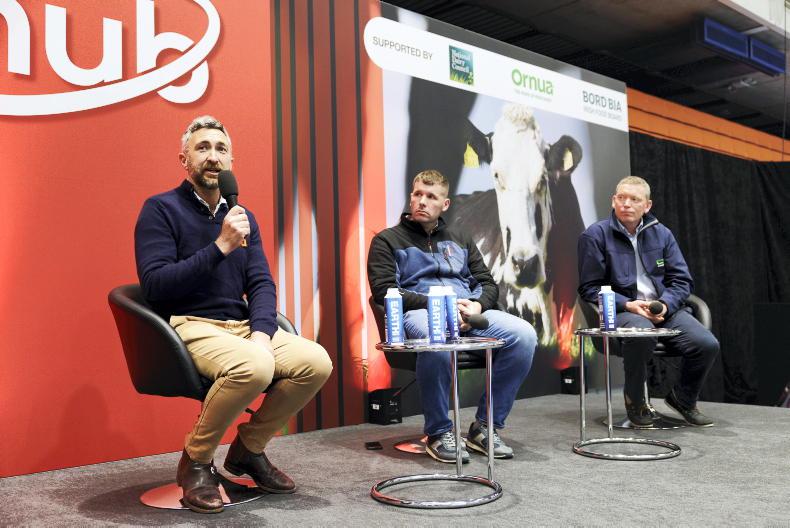
Dairy Day: speaking at Dairy Day, New Zealand farmer Simon Lynskey’s advice to those looking to reduce costs was to focus on grass first and milk production second.
He says his main concern on a day-to-day basis is making sure the pre- and post-grazing heights are met and that the herd is on the correct rotation length.
I would say that these are secondary concerns to most Irish dairy farmers, as we tend to associate good farm performance with good milk output. However, cost of production and the amount of grass utilised have the strongest relationship with profit, not milk yield per cow, or per hectare.
Drying off: this is the time of year that everyone loves and hates at the same time – drying off cows. It’s a time-consuming and difficult task to do right.
I see all of the vets now require milk samples from mastitis or high-SCC cows and the milk recording results before prescribing the type of dry cow therapy. If samples haven’t been kept from mastitis cases, then sample whatever cows had high SCC and weren’t treated since the last milk recording.
The vets will get these samples tested for culture and sensitivity, which will ensure that whatever bugs are causing the infection are known and the right drug can be prescribed. The rule of thumb when drying off is to do no more than 20 cows per person at any one time and don’t do it on an empty stomach.
So if doing them after morning milking, have breakfast first. The next thing is to be organised and to have a system. Teats have to be wiped with either cotton wool soaked in methylated spirits, or the wipes that come with the tubes, but these aren’t always the most effective at cleaning dirty teats.
Clean the furthest away teats first and the closest teats last. Tube the closest teats first and the furthest away teats last. If using dry cow tube and sealer, use them one after the other on each teat. This protocol will help to prevent contaminating clean teats.
Silage: while silage is generally not scarce this winter, good quality silage is always scarce. Up to now, the best silage was targeted at the milking cows, but depending on availability, farmers may need to start saving what is left for spring. Having enough high-quality silage in spring for wet days or wet weeks is critical.
The lesson from spring 2024 is that we didn’t have enough good-quality silage to get through a really bad spring.
As a rough guide, a round bale of silage will feed one cow for about two weeks. How much of these good bales are needed for the spring depends on a number of factors, including ground conditions and grass availability. Those on dry land will get away with less, but for most the equivalent of one or 1.5 round bales will be needed to get through the spring.
The pinch point often comes in early April when nearly all cows are calved and feed demand is high. Putting in poor-quality silage at that stage is really damaging to cow performance. If grass in the diet can’t be guaranteed at that time, then there must be good silage available instead.
Dairy Day: speaking at Dairy Day, New Zealand farmer Simon Lynskey’s advice to those looking to reduce costs was to focus on grass first and milk production second.
He says his main concern on a day-to-day basis is making sure the pre- and post-grazing heights are met and that the herd is on the correct rotation length.
I would say that these are secondary concerns to most Irish dairy farmers, as we tend to associate good farm performance with good milk output. However, cost of production and the amount of grass utilised have the strongest relationship with profit, not milk yield per cow, or per hectare.







SHARING OPTIONS