Sales of all the major nutrients (N, P and K) are down.
ADVERTISEMENT
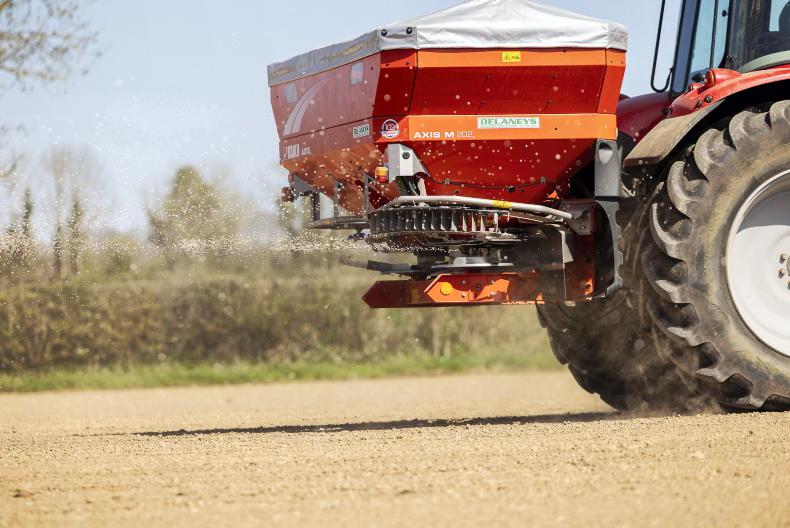
The Department of Agriculture has confirmed that fertiliser sales have decreased by 23% in 2022 when the first nine months of the fertiliser year (1 October to 30 June) are compared.
Those figures display a 19% decrease in nitrogen sales, but more worryingly sales of phosphorus and potassium have declined by 31% and 30% respectively.
The application of lime to soils low in pH and an increase in the use of clover have no doubt helped farmers to make this reduction in fertiliser nitrogen use.
ADVERTISEMENT
However, failing to maintain P and K levels at optimum levels will have a negative impact on production in the long term and is not sustainable.
While nitrogen is a source of nitrous oxide and the reduction in nitrogen fertiliser use will help to reduce emissions the main driver behind this reduction is most likely price as the price of nitrogen fertiliser has quadrupled in less than two years.
Protected urea
Very positively from an emissions reduction perspective, sales of protected urea have increased by 47% (8,017t of nutrient nitrogen) and now make up 16% of total nitrogen fertiliser sales. Protected urea prevents ammonia loss from urea, while a switch from calcium ammonium nitrate to protected urea reduces nitrous oxide emissions.
Protected urea so far this year accounts for 37.5% of total urea sales. The target set out by the Department of Agriculture in Ag Climatise is to have 100% of urea sold in protected form by the end of 2023.
Register for free to read this story and our free stories.
This content is available to digital subscribers and loyalty code users only. Sign in to your account, use the code or subscribe to get unlimited access.
The reader loyalty code gives you full access to the site from when you enter it until the following Wednesday at 9pm. Find your unique code on the back page of Irish Country Living every week.
CODE ACCEPTED
You have full access to the site until next Wednesday at 9pm.
CODE NOT VALID
Please try again or contact support.
The Department of Agriculture has confirmed that fertiliser sales have decreased by 23% in 2022 when the first nine months of the fertiliser year (1 October to 30 June) are compared.
Those figures display a 19% decrease in nitrogen sales, but more worryingly sales of phosphorus and potassium have declined by 31% and 30% respectively.
The application of lime to soils low in pH and an increase in the use of clover have no doubt helped farmers to make this reduction in fertiliser nitrogen use.
However, failing to maintain P and K levels at optimum levels will have a negative impact on production in the long term and is not sustainable.
While nitrogen is a source of nitrous oxide and the reduction in nitrogen fertiliser use will help to reduce emissions the main driver behind this reduction is most likely price as the price of nitrogen fertiliser has quadrupled in less than two years.
Protected urea
Very positively from an emissions reduction perspective, sales of protected urea have increased by 47% (8,017t of nutrient nitrogen) and now make up 16% of total nitrogen fertiliser sales. Protected urea prevents ammonia loss from urea, while a switch from calcium ammonium nitrate to protected urea reduces nitrous oxide emissions.
Protected urea so far this year accounts for 37.5% of total urea sales. The target set out by the Department of Agriculture in Ag Climatise is to have 100% of urea sold in protected form by the end of 2023.
If you would like to speak to a member of our team, please call us on 01-4199525.
Link sent to your email address
We have sent an email to your address. Please click on the link in this email to reset your password. If you can't find it in your inbox, please check your spam folder. If you can't find the email, please call us on 01-4199525.
ENTER YOUR LOYALTY CODE:
The reader loyalty code gives you full access to the site from when you enter it until the following Wednesday at 9pm. Find your unique code on the back page of Irish Country Living every week.







SHARING OPTIONS