



This story is taken from the KPMG-AgriBusiness Report available with this week's Irish Farmers Journal
The phrase “knowledge grows” sits on the wall in the lobby of Yara’s minimalist headquarters in Oslo. Intrigued, it seemed appropriate that the first question to Svein Tore Holsether, president and chief executive officer of Yara is to ask about its meaning.
He explains that the experience over the past three decades illustrates that there is a strong need for smarter farming. European farmers have substantially increased the efficiency of fertiliser use. For every kg of mineral nitrogen fertiliser applied today, they achieve about 50% higher yields compared with 1980. He says: “This means far less nutrients are lost to the environment, as well as a significantly reduced carbon footprint.”
Holsether, who took the reins of the world’s largest producer of nitrates, ammonia and NPKs last September, says “simply put, to grow more food to feed the expanding population we must either achieve higher yields – or expand farmland. But farmland expansion causes deforestation, which releases massive amounts of CO2.
He adds: “Gaining higher yields is essential to alleviate pressure on deforestation. But agriculture must also become more resource-efficient. Farmers must achieve bigger harvests from every kg of fertiliser, every drop of water and every hectare of land.”
He tells me that five crops (wheat, rice, maize, soyabean and barley) cover about 50% of current cropland and that, by 2050, the demand for these crops will increase by 30%.
Without any yield increase, covering the additional demand would take an added acreage of 220m ha. This is the size of most of western Europe, Germany, the Netherlands, Belgium, UK, Ireland, France, Italy, Spain and Portugal combined.
Converting natural land into arable land at this magnitude would trigger devastating amounts of greenhouse gas emissions, not to mention the local climate and biodiversity effects.
With regulators introducing increasingly tighter restrictions on nitrogen use, additional pressure is going to be put on the farmer.
He explains that nitrate-based fertilisers, such as CAN, are preferred from an environmental and also nutrient use efficiency point of view. In general, if a farmer uses urea-based fertilisers, they have to apply a higher amount to achieve the desired protein level than by using nitrates, making urea a less efficient option. In addition, urea-based fertilisers have a higher risk of losses to air through volatilisation.
By the numbers
Yara started more 100 years ago when Sam Eyde and Kristian Birkeland found a way of extracting nitrogen from the air to produce mineral fertilisers. Today, Yara has a worldwide presence, with close to 13,000 employees. It sells more than 26m tonnes of fertiliser to grow 240m tonnes of grains to feed 240m people. It works with 15m farmers, with operations in 60 countries and it sells to 150 countries.
It is the world’s largest producer of ammonia and nitrate (CAN and AN) fertiliser, with about 20% of global ammonia trade. It is listed on the Oslo Stock Exchange, has a market cap of NOK 88.4bn (€9.5bn) and revenues of NOK111.9bn (€12bn). It has earnings (EBITDA) of NOK 21.4bn (€2.3bn).
The company has a strong production and marketing base in Europe, and now a greatly extended presence in North and South America, having taken over Bunge’s Brazilian fertiliser operation last year.
Shortening the supply chain
Holsether says that the opening of a new import and bagging facility in Cork is a major step for Yara in Ireland. Although Yara had been operating from two locations in the North, he says that this site will give Yara a real presence in the south of the country.
‘‘This will enable us to get closer to farmers and bring knowledge and insights back to the company to develop and refine products suited to the market.
“I believe that our integrated business model is our key competitive advantage. Not only do we have large-scale production but we have people on farms that enable us to swiftly adapt to changing market conditions,” says Holsether.
The model that had operated in Ireland up to now was not typical of how Yara operates in other countries. He explains that it wants to be able to offer farmers much stronger advice, so that Yara can contribute to increase productivity on Irish farms.
“We want to support farmer profitability through knowledge, quality and productivity,” he adds. With over 700 agronomists worldwide, it certainly is investing in this area. Ireland is strategic for us as we have eight factories in the neighbourhood. We see it as a growth market and it is a natural market for our key factories in Europe.’’
Innovation
Over the past number of years, value-added products have constituted an increasing share of Yara’s total fertiliser deliveries, now making up more than 50% of the total. Holsether’s ambition is to further increase the value-added share of total sales, with less reliance on commodity swings.
“I think one of the most exciting trends we’ve seen in recent years is that of digital agriculture. I’m an innovation optimist. If you look at the history of Yara, it’s a story of innovation,” says Holsether.
Yara has developed fertilisers tailored to local conditions and farmers’ needs. To do this, we need to be at the forefront of innovation, explains Holsether. “We are developing solutions that combine knowledge, digital tools and services to both meet the farmer need against the backdrop of the environmental challenges.”
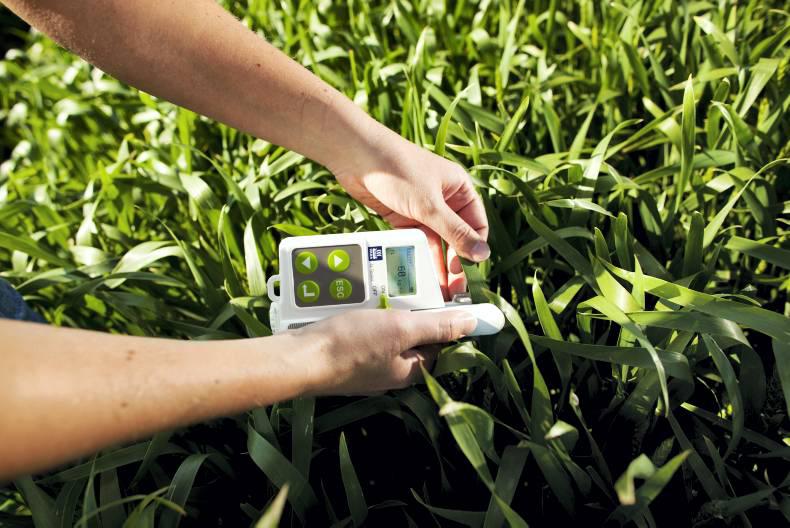
Yara has developed tools to measure the nitrogen status of a crop from the chlorophyll content of its leaves. From this, the agronomist can evaluate the additional nitrogen needed to meet target yields, and adjust fertiliser use accordingly.
Demand
2015 was more challenging for Yara, with total fertiliser deliveries of 26m tonnes. In Europe, fertiliser deliveries fell 4%, driven by lower NPK and urea deliveries. This fall was offset by a 4% increase in deliveries in Brazil, which is now its largest market for fertiliser.
Holsether says that demand for nitrogen fertiliser remained strong in 2015 and prices held up overall. However, he says that urea prices fell through most of the year, reflecting supply-driven market conditions.
He says that global nitrogen markets were supply-driven during 2015, with increases in production particularly from the Arab Gulf and North Africa. In China, export costs declined mainly due to lower coal prices and a weaker currency, and Chinese urea exports reached 14m t for the year, in line with 2014.
The highest-cost producers in China are now setting a floor. Holsether says that because urea is the largest-traded nitrogen fertiliser, it sets the global nitrogen commodity price. However, Yara sells most of its production to the more differentiated nitrate and NPK products. He says that last year, Yara’s average prices for urea fell by 12%, while nitrate prices fell by 14%.
Energy costs
While companies such as Total and BP reported significant revenue hits due to the collapse in the oil price, Yara showed the benefits of the falling cost of inputs such as natural gas. Its average oil and gas price fell by 20% in 2015, driven by a reduction in spot gas prices.
“Securing access to stable supplies of favourably priced natural gas is imperative to our competitiveness,” says Holsether. “As the largest industrial buyer of natural gas in Europe, it is our main raw material and represents our largest variable cost.”
Soft commodities
Holsether says that despite a third consecutive strong grain harvest globally, the US Department of Agriculture projects only a two-day increase in stocks-to-use, as consumption continues to grow. He says that while it may not look like the case right now in Europe, the global farm margin outlook and incentives for fertiliser application remain supportive overall, especially for key crop exporting regions such as Latin America where local currencies have depreciated relative to the US dollar.
Prices
Holsether says the nitrogen market is expected to remain supply-driven in the short to medium term, with export costs from China being the main price setter in the global market.
The export cost from China is a function of coal prices, high-quality anthracite coal in particular, but also natural gas prices, transport costs and trade policy measures.
He says that current export prices for urea in China are close to break-even for swing producers. In Europe, a weaker euro and lower gas prices have improved the relative competitiveness of domestic fertiliser manufacturers.
Industry outlook
The nitrogen fertiliser industry is highly competitive, with a large number of producers, according to Holsether, adding that market prices are influenced by several factors, not least the supply situation.
World capacity fertiliser additions are expected to come mainly in commodities. The main recent supply additions have come from China, Saudi Arabia and North Africa. However, China remains a high-cost producer, and is expected to remain the global swing producer in the near future.
China, development of energy prices and cost of capital will remain important drivers for global nitrogen pricing in the longer term. Due to lower natural gas prices in North America, there is considerable investment in nitrogen capacity in this region. Other regions where investments are planned, but where timing and volume are more unclear, are Sub-Saharan Africa, the former Soviet Union, Latin America and Iran.
Capacity increases from new investments are to a certain extent offset by reduced production from existing capacity, whether caused by political problems, gas supply issues or equipment age.
To read the full Agribusiness report, click here.





SHARING OPTIONS