There has been much talk in the last week of actions in the 2025 National Beef Welfare Scheme which is not surprising given its recent launch.
There are also a number of health related actions in both the Sheep Improvement Scheme (SIS) and the 2025 National Sheep Welfare Scheme that must be completed (if not already carried out) in the coming weeks.
This article aims to summarise these actions with further information available on www.farmersjournal.ie.
Lameness control
Under this action flock lameness assessments must be carried out five times during the calendar year as follows:
1. At least once between mating and lambing.
2. May/June.
3. July/August.
4. Prior to mating (August – September/October).
5. At one other time which the flock owner may chose depending on the requirements of the flock.
Treatment, including footbathing, must be carried out where appropriate. Accurately record the date of assessment, the number of sheep assessed, the number of sheep lame, the number of sheep treated, and the product used (if any) in your Scheme Action Record Book.
Parasite control – faecal egg count (FEC)
This action was open to both lowland and hill flocks. For lowland flocks parasite control (faecal egg count) must be carried out on lambs on two separate occasions between 1 June and 30 September annually.
Samples must be taken in sufficient time to allow for laboratory testing prior to 30 September annually for lowland flocks.
For hill flocks a FEC must be carried out once on lambs within four weeks of weaning and must be carried out at the latest by the 31st December annually. It is important to note that samples must be submitted to labs approved by the Department of Agriculture.
Flystrike control
Participants must adopt a flystrike programme for the ‘prevention of flies’ during the summer months. Farmers must incorporate mechanical means for the prevention of flies (eg. shearing, dagging etc) in addition to any chemical control measures adopted.
The timing of intervention and the number of sheep with dags removed must be recorded.
Sheep must be flocked at least once during the period from 1 June to 30 September and dagging is viewed through the scheme as critical to reduce the risk of flystrike occurring.
Mineral supplementation of lambs pre-weaning
An action for hill flocks, participants selecting this action are required to administer mineral supplementation at least once during the grazing season to assist in addressing mineral deficiencies in lambs in hill flocks.
Supplementation may take the form of injectables, boluses, drenches or liquid minerals. All mineral feeding stuffs must be sourced from approved feed business operators.
Mineral supplementation ewes post-mating
This is one of the most commonly selected actions in the SIS. All ewes, including ewe hoggets, joined with rams must be supplemented with mineral feedingstuffs post-mating. The minerals administered must provide cover for at least the first 60 days from the date of ram turnout.
A combination of mineral feedingstuffs (e.g. drench, bolus, buckets etc) can be used as long as there is no break in cover and at least the full 60-day duration is covered.
More than one breeding date can be recorded where there is split breeding dates within the flock.
Body condition scoring (BCS)
Farmers must carry out the practice of body condition scoring of ewes twice – the first between 15 April and 15 July 2025 and the second between 1 August and 15 October 2025. The assessments must take place at least eight weeks apart.
The terms and conditions advise that breeding ewes in the flock with a BCS score of one or two should be separated and given access to preferential feeding such as high-quality grass / forage.
The number of breeding ewes that were identified as thin (BCS 1 or 2) should be clearly recorded in the scheme action record sheets.
Clostridial vaccination
Farmers selecting this option must carry out vaccination of breeding ewes, or alternatively on lambs born to the payable number of ewes, before the deadline dates of 17 October/28 November.

\ Philip Doyle
Breeding ewes that have been vaccinated previously should be given an annual vaccination four to six weeks before the expected lambing date.
Where lambs are being vaccinated, they must be vaccinated from three weeks of age onwards and a second booster vaccination must be administered no later than four to six weeks after the first vaccination.
Documentary evidence includes scheme action record sheets and invoices to show the required volume of vaccine was bought.
Plunge dipping
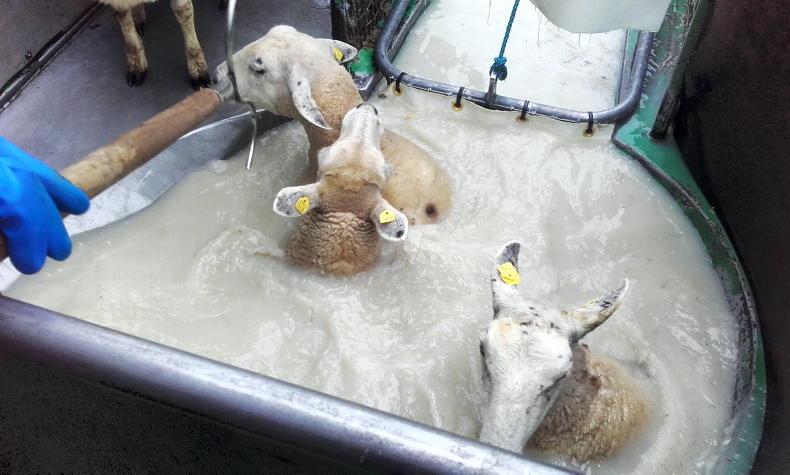
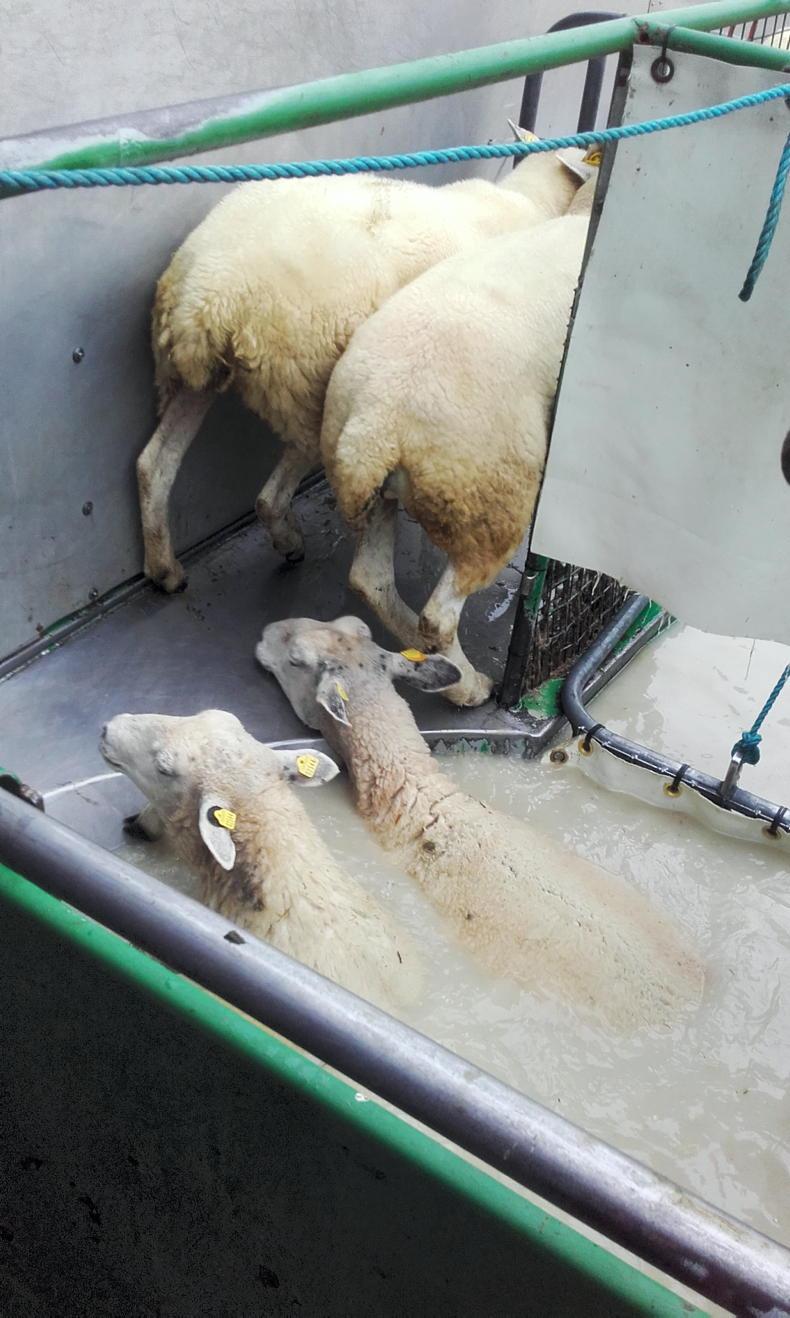
Dipping on the number of breeding ewes entered at application stage can be carried out on-farm where a dipping tank is present, or by a mobile plunge-dipping operator. Shower units will not be accepted as an alternative to plunge dipping.
Documentary evidence of its completion include completion of the scheme action record sheets, receipts from a contractor and/or receipts for the purchase of the appropriate volume of dipping material.
Footbathing
Footbathing should be carried out at least twice over the period from 1 April to 1 October, and a minimum of two weeks should be left between footbathing.
Documentary evidence will include, but is not limited to, completion of the scheme action record sheets, receipts from a contractor and/or receipts for the purchase of appropriate products.
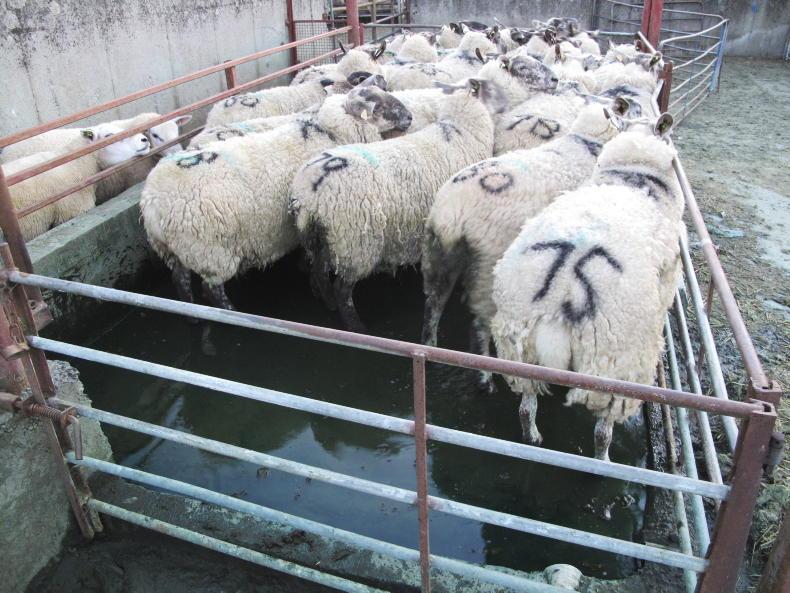
It is recommended that for footbathing to be successful, an effective facility needs to be in place with an appropriate solution to a depth of 5cm and ideally sheep first walking through a water bath before footbathing for five to 10 minutes.
There has been much talk in the last week of actions in the 2025 National Beef Welfare Scheme which is not surprising given its recent launch.
There are also a number of health related actions in both the Sheep Improvement Scheme (SIS) and the 2025 National Sheep Welfare Scheme that must be completed (if not already carried out) in the coming weeks.
This article aims to summarise these actions with further information available on www.farmersjournal.ie.
Lameness control
Under this action flock lameness assessments must be carried out five times during the calendar year as follows:
1. At least once between mating and lambing.
2. May/June.
3. July/August.
4. Prior to mating (August – September/October).
5. At one other time which the flock owner may chose depending on the requirements of the flock.
Treatment, including footbathing, must be carried out where appropriate. Accurately record the date of assessment, the number of sheep assessed, the number of sheep lame, the number of sheep treated, and the product used (if any) in your Scheme Action Record Book.
Parasite control – faecal egg count (FEC)
This action was open to both lowland and hill flocks. For lowland flocks parasite control (faecal egg count) must be carried out on lambs on two separate occasions between 1 June and 30 September annually.
Samples must be taken in sufficient time to allow for laboratory testing prior to 30 September annually for lowland flocks.
For hill flocks a FEC must be carried out once on lambs within four weeks of weaning and must be carried out at the latest by the 31st December annually. It is important to note that samples must be submitted to labs approved by the Department of Agriculture.
Flystrike control
Participants must adopt a flystrike programme for the ‘prevention of flies’ during the summer months. Farmers must incorporate mechanical means for the prevention of flies (eg. shearing, dagging etc) in addition to any chemical control measures adopted.
The timing of intervention and the number of sheep with dags removed must be recorded.
Sheep must be flocked at least once during the period from 1 June to 30 September and dagging is viewed through the scheme as critical to reduce the risk of flystrike occurring.
Mineral supplementation of lambs pre-weaning
An action for hill flocks, participants selecting this action are required to administer mineral supplementation at least once during the grazing season to assist in addressing mineral deficiencies in lambs in hill flocks.
Supplementation may take the form of injectables, boluses, drenches or liquid minerals. All mineral feeding stuffs must be sourced from approved feed business operators.
Mineral supplementation ewes post-mating
This is one of the most commonly selected actions in the SIS. All ewes, including ewe hoggets, joined with rams must be supplemented with mineral feedingstuffs post-mating. The minerals administered must provide cover for at least the first 60 days from the date of ram turnout.
A combination of mineral feedingstuffs (e.g. drench, bolus, buckets etc) can be used as long as there is no break in cover and at least the full 60-day duration is covered.
More than one breeding date can be recorded where there is split breeding dates within the flock.
Body condition scoring (BCS)
Farmers must carry out the practice of body condition scoring of ewes twice – the first between 15 April and 15 July 2025 and the second between 1 August and 15 October 2025. The assessments must take place at least eight weeks apart.
The terms and conditions advise that breeding ewes in the flock with a BCS score of one or two should be separated and given access to preferential feeding such as high-quality grass / forage.
The number of breeding ewes that were identified as thin (BCS 1 or 2) should be clearly recorded in the scheme action record sheets.
Clostridial vaccination
Farmers selecting this option must carry out vaccination of breeding ewes, or alternatively on lambs born to the payable number of ewes, before the deadline dates of 17 October/28 November.
\ Philip Doyle
Breeding ewes that have been vaccinated previously should be given an annual vaccination four to six weeks before the expected lambing date.
Where lambs are being vaccinated, they must be vaccinated from three weeks of age onwards and a second booster vaccination must be administered no later than four to six weeks after the first vaccination.
Documentary evidence includes scheme action record sheets and invoices to show the required volume of vaccine was bought.
Plunge dipping
Dipping on the number of breeding ewes entered at application stage can be carried out on-farm where a dipping tank is present, or by a mobile plunge-dipping operator. Shower units will not be accepted as an alternative to plunge dipping.
Documentary evidence of its completion include completion of the scheme action record sheets, receipts from a contractor and/or receipts for the purchase of the appropriate volume of dipping material.
Footbathing
Footbathing should be carried out at least twice over the period from 1 April to 1 October, and a minimum of two weeks should be left between footbathing.
Documentary evidence will include, but is not limited to, completion of the scheme action record sheets, receipts from a contractor and/or receipts for the purchase of appropriate products.
It is recommended that for footbathing to be successful, an effective facility needs to be in place with an appropriate solution to a depth of 5cm and ideally sheep first walking through a water bath before footbathing for five to 10 minutes.







SHARING OPTIONS