


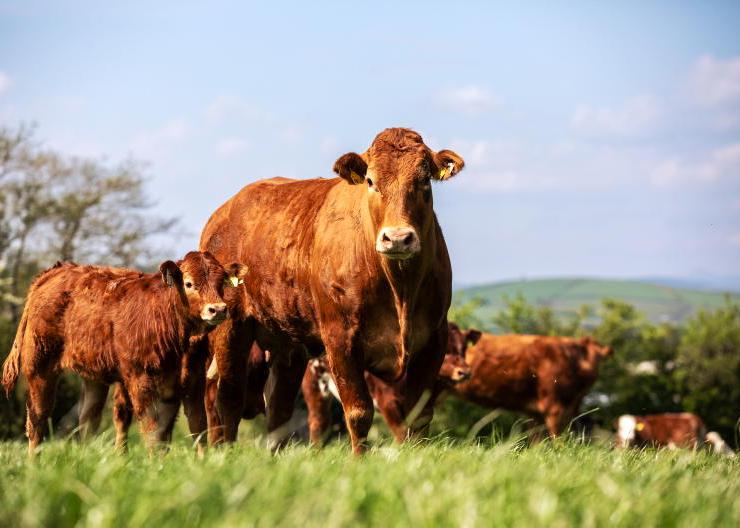
Selecting sires and dams based on genetic evaluations and focusing on the use of four- and- five-star genetics has the potential to increase the sale value of weanlings by up to €500 per head.
This statement is based on analysis of data obtained from the Irish Cattle Breeding Federation (ICBF).
The data is based on upwards of 45,000 weanlings traded in 2025 where sire and dam information was available.
Table 1 details the percentage of weanlings falling within categories in a five-star sire by five-star dam breeding matrix.
As can be seen over 77% of weanlings were sired by a bull rated as four- or- five-star sire on the terminal index.
Upwards of 40% of cows were rated as four-star or five-star with a more balanced ratio of one- to- five-star cows.
Sale value
Table 2 details the sale value of progeny across the 25 breeding permutations.
As can be quickly seen there is major scope to increase the value of weanlings by opting for five-star over one-star sire terminal genetics with the value varying by up to €500 per head irrespective of the star-rating of the cow.
On a herd of 15 cows this has the potential to increase the value of output by €7,500.
The increase in sale value is driven by a combination of better-quality animals and heavier weanlings at sale date. Table 3 details the average weight of weanlings by sire and dam star rating.
Progeny of five-star terminal sires weighed 40kg to 55kg heavier than progeny of one-star sires. While progeny bred from five star cows versus one-star cows were on average 15kg heavier at sale.
Taking a situation of weanlings bred by a five-star dam and a five-star sire compared to a one-star dam and a one-star sire resulted in a massive weight difference of over 65kg.
Calving interval
The benefit of utilising the replacement index and basing cow breeding decisions on four- and- five-star genetics is demonstrated in Table 4 which details the average calving interval of dams of the weanlings in question.
Five-star cows delivered a calving interval of approximately 30 days shorter than one-star cows with the gains cumulative as you progress from one-star to five-star.
The benefit of such in a breeding programme is cows weaning older and heavier weanlings and potential for increased lifetime output.
National significance
Analysis of national breeding trends shows that there is no issue in the cumulative gains being achieved in terminal genetics with traits of importance heading in the right direction.
However, while progress on the replacement index is improving it is not increasing at the same rate with much more scope to improve the productivity of the national cow herd.
If we look at the calving interval alone this figure has remained stubbornly high over the last decade.
There will be arguments that cows possessing terminal genetics deliver calves of superior quality. This may be the case in certain instances, but such cows on average will deliver lighter weanlings and typically do not remain in the herd as long.
As such the emphasis on breeding in commercial herds should be based on utilizing maternal genetics in the cow base and selecting sires that have the desired terminal or replacement traits for the market you are ultimately breeding for.
We have seen a good market develop in recent years for replacement heifers with a high-star rating and high herd health status with sales of in-calf heifers in Tullamore Farm reflective of this.
Ultimately, it is every farmer’s decision to decided the breeding objectives they wish to follow, be it producing for the show ring or commercial trade. At a minimum it is worth reviewing the performance of cows in the herd and not keeping any passengers.





SHARING OPTIONS