The structure of crop protection programmes has been based on widely agreed and applied key practices and ‘certainties’ for over 40 years.
Modern cereal disease control programmes work on the simple clarity of three timings – T1, T2 and T3.
It has made for very simplified but also very clear and easily communicated advice and it’s coding which I do think has proven very effective.
The fungicide timings are very well based and really don’t need meddling with – unless there is a very good scientific-based reason.
Disease control in cereal crops has been a very positive story of reliable and highly effective control of important and potentially devastating fungal diseases which thrive in cool, moist climates like Ireland.
It was the introduction of reliable and effective fungicides to control key wet weather diseases which made winter cereal production in Ireland a less risky option and also a financially attractive alternative to spring cereals, particularly on heavier textured soils – the modern fungicide technology has hence contributed hugely to Irish cereal production.
Winter cereals
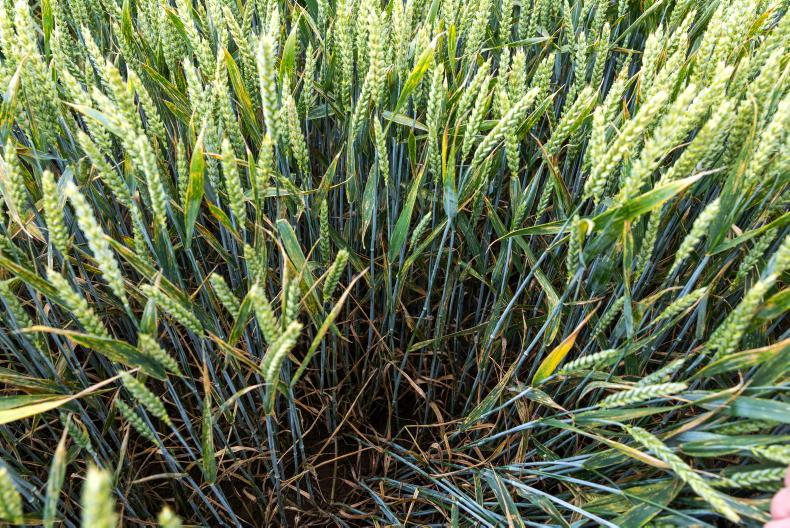
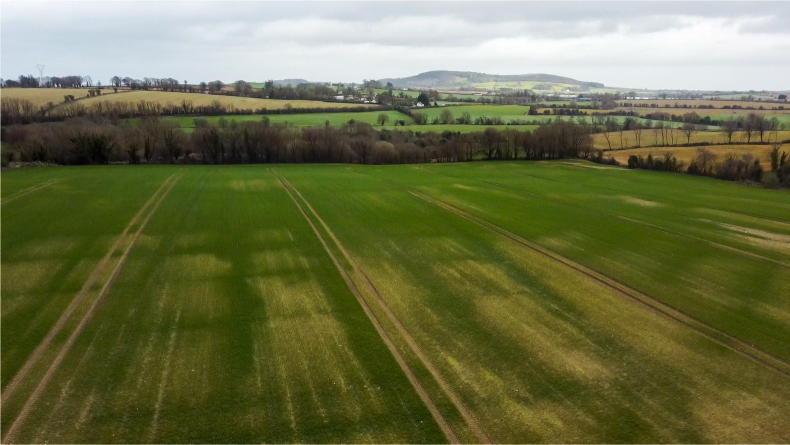
Winter wheat which was not treated with any fungicides last season. \ Claire Nash
However, a lot has happened since the early 1980s when winter cereals became widely grown on many tillage farms.
Firstly, a golden age of fungicide discovery and development in the period from the 1970s to the late 1990s has been followed by a steady pipeline decline and a period of relative stagnation in the last decade.
There is currently a positive resurgence in innovation in fungicide research and development, but this may take five to 10 years for products to reach the commercial EU market.
Secondly, the four decades of modern systemic fungicide use has combined with numerous disease sensitivity shifts on key diseases to the leading fungicide modes of action (this could equally be called more resistance) which has had a very strong impact on fungicide efficacy in practice.
'Generic' products
The third component of this new landscape is the increase in off patent or ‘generic’ products in the crop protection market with a big / sizeable ‘value-fall’ for key parts of the programme.
So absolutely a lot has changed – does it change the fundamentals of the disease control programme for a winter wheat or spring barley crop?
It’s not truly a ‘change’ or a re-set, but each of these aspects of ‘change’ are certainly influencing the fungicide programme plans for 2026 and the years ahead.
When fungicides are indispensable
In 1990, when Slejpner wheat succumbed to a new yellow rust strain, it was a perfect opportunity for the superb and quite expensive new azole fungicide Folicur (tebuconazole) to show its unique efficacy and dazzling field performance.
A key option for yellow rust control across Ireland and the UK this spring continues to be tebuconazole – nothing has changed – the efficacy is actually as good as it was decades ago but is available at a modest fraction of the cost.
Last season, saw the YR15 gene fail on rust and a number of varieties were hit with the disease.
The new-rust strains are a ‘disaster’ type scenario for wheat genetics, but the in-field disaster is averted by the availability of cheap and highly-effective control options. There are other really good examples of highly cost-effective fungicide options for key diseases.
Prothioconazole since its introduction has been the game changer for rhynchosporium control on barley for the last two decades and has made a great and on-going contribution to barley production on Irish farms.
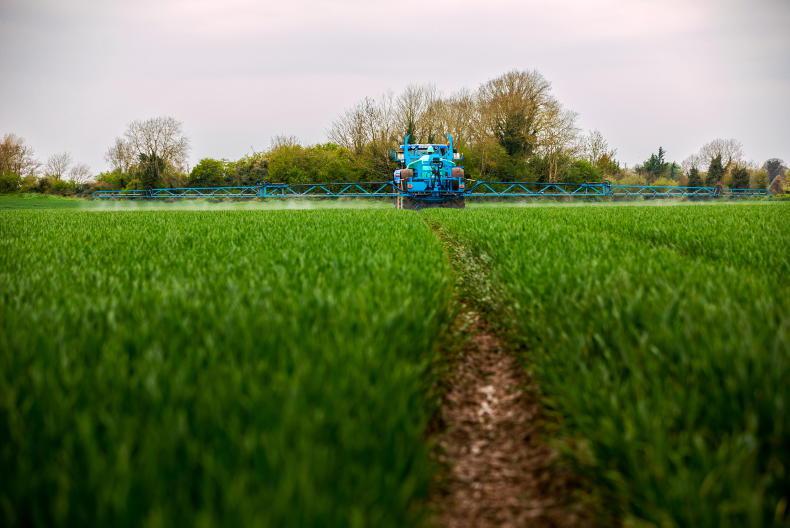
Timing is essential. Fungicides need to be applied at the correct timings and ahead of disease starting in a crop. \ Philip Doyle
Also, azole fungicide mixtures have been so valuable for ear disease control on wheat – ask any farmer who had wheat in 1985 / 1986 or in southern counties in 1992 how much the modern azole mixtures have contributed to wheat growing in a wet summer.
Other very good examples continue – eyespot in wheat, crown rust in oats, brown rust on any crop.
Ongoing challenges and the need for sharp agronomy
Septoria in wheat is a challenge, resistance shifts are complex and relentless and are always threatening, but when you spend a typical moist summer observing untreated versus treated trials across Ireland and the east of England, one is under no illusions as to the role of well-planned and well executed fungicide programmes.
Also, fungicide use guidance is highly scientifically based across western Europe with intensive monitoring of pathogen populations and this is contributing greatly to the maintenance of good fungicide efficacy.
Many other crop-disease-fungicide dynamics have changed and are not easy – net blotch and ramularia on barley are tricky – resistance combined with limited fungicide tools makes good skill and zero complacency necessary.
These are two brief examples of the complexity of modern disease control challenges – it requires a case-by-case approach – with few reliable or generalised approaches available or sustainable.
Good practice – good agronomy
So, this is the background to fungicide use in 2026 – some components of the fungicide programmes are clear, simple and so-so cost effective – yellow rust and ear disease on wheat, rhynchosporium control on barley, crown rust on oats and good practice is to get the timing and spray conditions right and the benefits will be excellent.
Other parts of the fungicide programme are challenging; both on the cost part and the unpredictability on the benefit, but these programmes are ‘essential’.
For example, to control septoria on wheat and ramularia on barley, the best products with the highest efficacy need to be in the programmes – it’s not easy decision making to go with higher cost options and more robust programmes, but the risks of things going wrong are high and the consequences are a hit to both yield and quality if there is a lack of crop protection – so you take the short cuts at your peril and you take your advice form the best sources.
Some parts of cereal disease control in any season across a farm will invariably leave an after-thought that they did not pass the cost-benefit analysis – it’s in the nature of using a crop protection programme and it’s probably always going to be so.
Hard-pressed growers
On the last point above, I can offer one real-time example – giving agronomy advice on a large area of wheat in east Anglia in a very dry spring and summer in 2025 local independent agronomists who I work closely with reduced the planned fungicide spend by over 50% as disease pressure was a fraction of normal – it was great advice to hard-pressed growers.
In the previous year – 2024, they increased the spend on wheat fungicides by 10-25% over budget in the wet season which was equally great advice and they were dismissive of growers concerns over the extra cost – they were chasing the benefit.

Dr Tom McCabe, UCD. \ Patrick Browne
The structure of crop protection programmes has been based on widely agreed and applied key practices and ‘certainties’ for over 40 years.
Modern cereal disease control programmes work on the simple clarity of three timings – T1, T2 and T3.
It has made for very simplified but also very clear and easily communicated advice and it’s coding which I do think has proven very effective.
The fungicide timings are very well based and really don’t need meddling with – unless there is a very good scientific-based reason.
Disease control in cereal crops has been a very positive story of reliable and highly effective control of important and potentially devastating fungal diseases which thrive in cool, moist climates like Ireland.
It was the introduction of reliable and effective fungicides to control key wet weather diseases which made winter cereal production in Ireland a less risky option and also a financially attractive alternative to spring cereals, particularly on heavier textured soils – the modern fungicide technology has hence contributed hugely to Irish cereal production.
Winter cereals
Winter wheat which was not treated with any fungicides last season. \ Claire Nash
However, a lot has happened since the early 1980s when winter cereals became widely grown on many tillage farms.
Firstly, a golden age of fungicide discovery and development in the period from the 1970s to the late 1990s has been followed by a steady pipeline decline and a period of relative stagnation in the last decade.
There is currently a positive resurgence in innovation in fungicide research and development, but this may take five to 10 years for products to reach the commercial EU market.
Secondly, the four decades of modern systemic fungicide use has combined with numerous disease sensitivity shifts on key diseases to the leading fungicide modes of action (this could equally be called more resistance) which has had a very strong impact on fungicide efficacy in practice.
'Generic' products
The third component of this new landscape is the increase in off patent or ‘generic’ products in the crop protection market with a big / sizeable ‘value-fall’ for key parts of the programme.
So absolutely a lot has changed – does it change the fundamentals of the disease control programme for a winter wheat or spring barley crop?
It’s not truly a ‘change’ or a re-set, but each of these aspects of ‘change’ are certainly influencing the fungicide programme plans for 2026 and the years ahead.
When fungicides are indispensable
In 1990, when Slejpner wheat succumbed to a new yellow rust strain, it was a perfect opportunity for the superb and quite expensive new azole fungicide Folicur (tebuconazole) to show its unique efficacy and dazzling field performance.
A key option for yellow rust control across Ireland and the UK this spring continues to be tebuconazole – nothing has changed – the efficacy is actually as good as it was decades ago but is available at a modest fraction of the cost.
Last season, saw the YR15 gene fail on rust and a number of varieties were hit with the disease.
The new-rust strains are a ‘disaster’ type scenario for wheat genetics, but the in-field disaster is averted by the availability of cheap and highly-effective control options. There are other really good examples of highly cost-effective fungicide options for key diseases.
Prothioconazole since its introduction has been the game changer for rhynchosporium control on barley for the last two decades and has made a great and on-going contribution to barley production on Irish farms.
Timing is essential. Fungicides need to be applied at the correct timings and ahead of disease starting in a crop. \ Philip Doyle
Also, azole fungicide mixtures have been so valuable for ear disease control on wheat – ask any farmer who had wheat in 1985 / 1986 or in southern counties in 1992 how much the modern azole mixtures have contributed to wheat growing in a wet summer.
Other very good examples continue – eyespot in wheat, crown rust in oats, brown rust on any crop.
Ongoing challenges and the need for sharp agronomy
Septoria in wheat is a challenge, resistance shifts are complex and relentless and are always threatening, but when you spend a typical moist summer observing untreated versus treated trials across Ireland and the east of England, one is under no illusions as to the role of well-planned and well executed fungicide programmes.
Also, fungicide use guidance is highly scientifically based across western Europe with intensive monitoring of pathogen populations and this is contributing greatly to the maintenance of good fungicide efficacy.
Many other crop-disease-fungicide dynamics have changed and are not easy – net blotch and ramularia on barley are tricky – resistance combined with limited fungicide tools makes good skill and zero complacency necessary.
These are two brief examples of the complexity of modern disease control challenges – it requires a case-by-case approach – with few reliable or generalised approaches available or sustainable.
Good practice – good agronomy
So, this is the background to fungicide use in 2026 – some components of the fungicide programmes are clear, simple and so-so cost effective – yellow rust and ear disease on wheat, rhynchosporium control on barley, crown rust on oats and good practice is to get the timing and spray conditions right and the benefits will be excellent.
Other parts of the fungicide programme are challenging; both on the cost part and the unpredictability on the benefit, but these programmes are ‘essential’.
For example, to control septoria on wheat and ramularia on barley, the best products with the highest efficacy need to be in the programmes – it’s not easy decision making to go with higher cost options and more robust programmes, but the risks of things going wrong are high and the consequences are a hit to both yield and quality if there is a lack of crop protection – so you take the short cuts at your peril and you take your advice form the best sources.
Some parts of cereal disease control in any season across a farm will invariably leave an after-thought that they did not pass the cost-benefit analysis – it’s in the nature of using a crop protection programme and it’s probably always going to be so.
Hard-pressed growers
On the last point above, I can offer one real-time example – giving agronomy advice on a large area of wheat in east Anglia in a very dry spring and summer in 2025 local independent agronomists who I work closely with reduced the planned fungicide spend by over 50% as disease pressure was a fraction of normal – it was great advice to hard-pressed growers.
In the previous year – 2024, they increased the spend on wheat fungicides by 10-25% over budget in the wet season which was equally great advice and they were dismissive of growers concerns over the extra cost – they were chasing the benefit.
Dr Tom McCabe, UCD. \ Patrick Browne





SHARING OPTIONS