


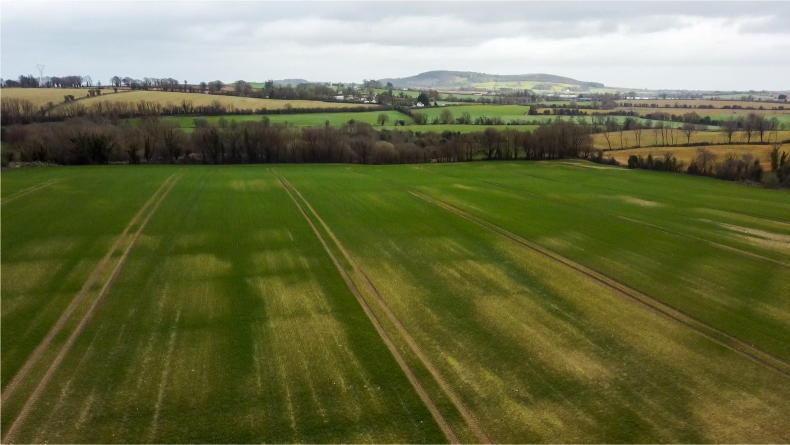
The winter wheat we are following as part of the Yield Watch series has turned inside out since our last video.
We visited Isaac Wheelock on 30 March and the field which had been saturated in spots - with springs and water running down tramlines - was drying out well.
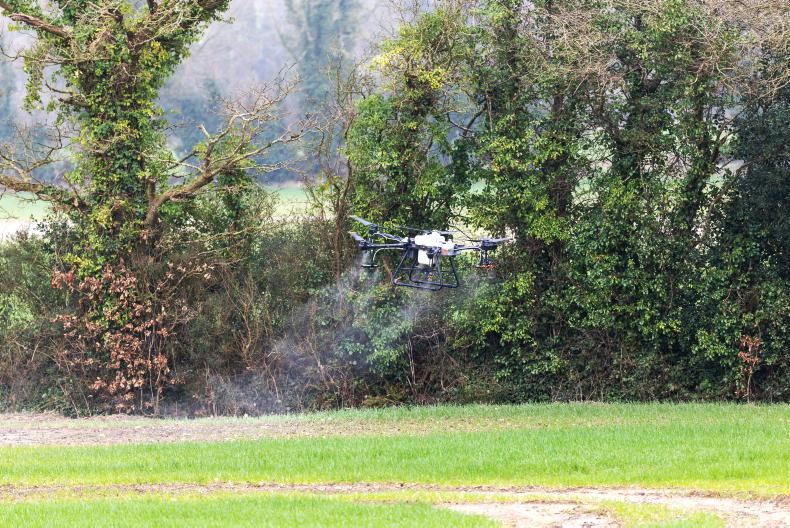
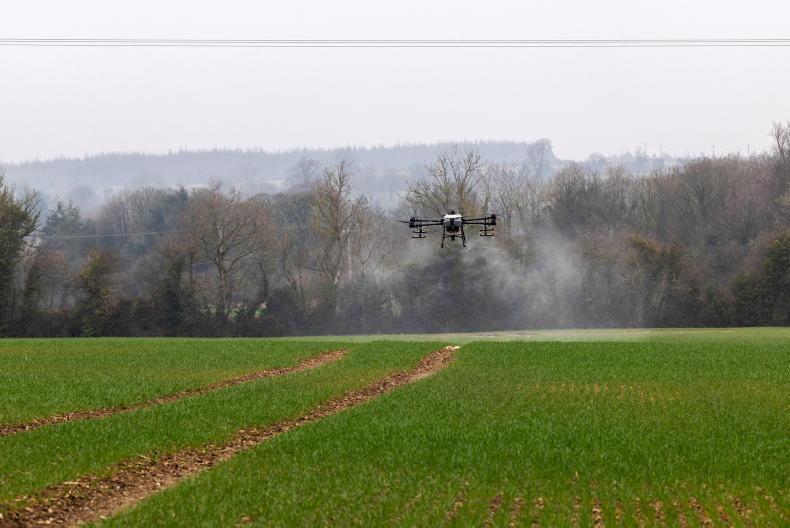
Shortly after that video on 26 February, Isaac followed through on his decision to apply manganese, copper, zinc, boron and phosphites with a drone.
As Isaac was not able to travel and the crop needed nutrition, a drone was seen as the only option. Patches which were saturated and looked like the wheat would not survive are now viable and while not overly thick, have come through the past four weeks very well.
The drone application almost certainly affected this outcome, as the crop was severely stressed and undernourished. Isaac split the compound fertiliser application in two and nitrogen was applied last week after we visited.
Nitrogen
Last week, Isaac applied the main split of nitrogen, applying two bags of CAN plus sulphur.
A little-and-often approach is how he will treat this crop, going with a bag next week and the week after. This should help to reduce the risk of loss in rainfall events and gradually feed the crop as it grows.
A tidy-up herbicide has been applied. Manhattan will control wild oats and any fumitory present. CeCeCe was applied at a half rate to promote tillering and manganese to treat a deficiency and reduce stress.
Fungicide
This week, a T0 was going to be applied. The variety is KWS Scope and while it is a little bit prone to rust, there was none visible.
Agronomist with Cooney Furlong Grain Company George Blackburn said they will keep the rust at bay with a T0 fungicide application. Pyraclostrobin will be applied with biosulphur.
George is keen to delay this application, so the fungicide programme will be condensed.
“I don’t want to start too early, in case you get caught in the middle, because that can happen if it is cold and crops don’t move that fast,” he commented.
Ideally, he wants farmers to apply the T0 two weeks later, the T1 two and half weeks later, the T2 and then T3.
For practicality, George is trying to target that T0 application to fall alongside the next application of plant growth regulator. That would ideally be applied when the fourth-last leaf is out and the first node is visible on all of the main stems.
Spend
When it comes to winter wheat, George says: “It’s all duck or no dinner.”
He did agree that spend needs to be tailored to the crop that is there, but disease will be present in really good crops and poorer crops.
He said: “Winter wheat especially, it’s all duck or no dinner.
“It’s not a crop you can really half do. You can half do it, but it will break you if you half do it.”
George explained that before farmers cut costs, they need to assess the crop’s yield potential and treat accordingly.
An increase in spend on costs of 5% could give you an extra 10% to 15% in yield and that will pay for the spend.
Isaac commented that he bought fertiliser early which has helped with costs, but as fuel prices rise increased, costs are a massive concern.
Still, he is cautious of cutting spend at the fungicide stage and said: “It’s tonnes over the weighbridge that pay the bills.”
He will be more careful on poorer fields, but on better crops he will be pushing them on.
This crop remains a challenge and he will try and push the yield as hard as he can.



SHARING OPTIONS