With uncertainty over the future outlook for energy prices and energy supply, dairy farmers should be looking at ways to reduce energy consumption which will reduce their costs and improve their sustainability credentials.
Between milking cows, heating water and cooling milk, the milking process uses up 74% of all electricity used on dairy farms, according to a Teagasc survey of 60 farms from a few years ago.
Within that, cooling milk uses the most electricity at 31%, followed by water heating at 23% and then the milking process itself at 20%. The following are some of the tools available to dairy farmers to reduce energy costs associated with the milking process.
Plate cooler
An effective plate cooler is an essential item in a milking parlour to reduce energy costs.
A correctly sized plate cooler, relative to the size of the milking parlour and how much milk passes through it, will reduce the temperature of the milk by about 10°C.
The energy used to create this temperature reduction is minimal compared to the energy used by bulk tanks to cool milk.
The plate cooler works by exchanging the heat in the milk to heat in water. It works by passing milk and water through a series of separated plates.
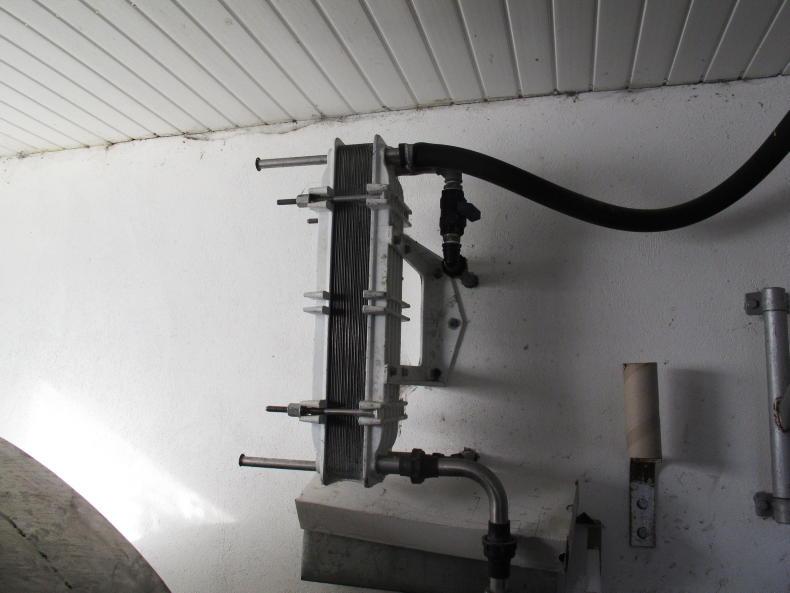
An effective plate cooler should use two or three times the volume of water compared to milk.
The larger the surface area of the plates the more effective the milk cooling will be.
While most farms have plate coolers, many are not that effective because they are either too small or have too low a water flow through them relative to the amount of milk flowing through them.
It is quite common to see the valve on the water pipe going into the plate cooler half closed to avoid “wasting” water.
This is particularly problematic where there are electrical milk pumps as these send a blast of milk from the jar to the bulk tank when in motion.
A high flow of water will be necessary to effectively cool this high flow of milk and that won’t be achieved if the water is restricted.
One way of overcoming this is to install a solenoid switch at the water entry point and link this to the milk pump so that the water only flows when the milk pump is on.
By doing so, water won’t be wasted when there is no milk flowing through the plate cooler. A five or 10 second delay should be incorporated, meaning water continues flowing for a short period after the pump shuts off to cool milk still flowing.
An effective plate cooler will use two to three litres of water for every one litre of milk that passes through.
Heat recovery
Heat recovery units are attached to bulk milk tanks but are used to reduce the cost of heating water. Essentially, the units work by using the heat generated from cooling the milk in the bulk tank to heat water.
In a heat recovery unit, rather than letting this heat or energy escape to the air, it is diverted to the heat-recovery unit, which heats water to a temperature of between 45°C and 55°C.
This water is then stored and usually used for pre-heating water before it goes into a dedicated water heater.
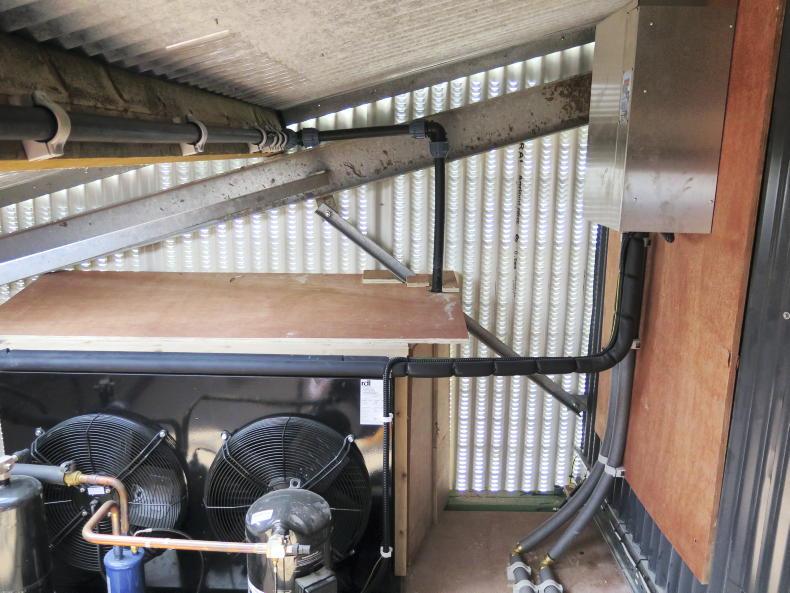
A heat recovery unit takes heat from the refrigerant when cooling milk and uses it to heat water.
In such cases, the cost of heating water from say 50°C to the required 80°C to 85°C for plant washing is much less than heating cold water at 12°C (mains temperature) to 80°C or 85°C.
The advantage is that the energy used to heat the water to 50°C is effectively free, apart from the capital cost of installing the heat recovery system.
LED lights
LED lights now almost totally dominate the light market with very little new fluorescent or sodium lights being purchased. LED lights dramatically reduce energy consumption by up to 90% and can last for up to 25 years longer than traditional light fittings. A key thing with lights is to make sure they are turned off when not in use. Milking parlours are often seen with lights on during the day when there is plenty of natural light and no cows being milked.
Putting light switches on timers that go off after a certain number of hours is a good idea. For other locations such as a farm office, dairy etc motion sensing lights can work well.
Variable-speed motors
Variable-speed milk pumps and vacuum pumps can reduce electricity consumption by up to 60% by varying the pump output depending on the load.
The classic example is the variable speed vacuum pump which operates at very low speed when all the clusters are on and everything is going fine. As soon as a cow kicks off a cluster and air is let in the pump roars into action to try and maintain the vacuum.
Variable speed milk pumps don’t save as much electricity as vacuum pumps as they operate at a lower kilowatt rating but they are still more efficient than standard milk pumps.
These standard milk pumps kick into action when the milk in the receiver jar reaches a certain level and run for as long as is necessary to empty the jar.
A variable-speed pump will generally be operating for longer time but at slower speeds but with the capacity to operate at full speed when the flow of milk into the jar necessitates it.
Power washing
The importance of hygiene is obviously critical when it comes to milking parlours, it is a food production site after all. Keeping all equipment that comes in contact with milk clean is well understood as is the importance of keeping outside surfaces of clusters, cow standing areas and rails clean.
Consideration must be given to the quantity of water used in the cleaning process. This is particularly true on farms that pay for mains water, but there are costs of getting water even on farms with their own well.
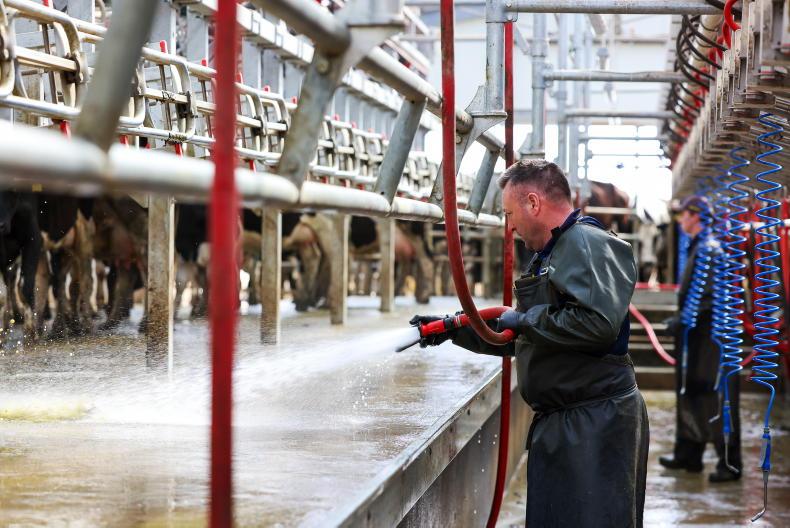
Typically, farmers will use a high-volume, low-pressure wash down hose for cleaning yards and cow standing areas.

A power washer with a short lance is very effective at cleaning clusters and stallwork.
While these use a high volume of water per minute, they are very efficient at cleaning yards as the volume pushes the effluent off the yard whereas higher pressure washers will splash effluent away.
However, for tasks like cleaning clusters and stallwork, higher pressure washers are superior and use a lot less water than higher volume washers or 0.5 inch hoses for doing the same job.
Pressure washers are available with hot water settings and when combined with a short lance they are a very fast and effective way of cleaning clusters compared to high volume hoses and rubbing by hand.
Water heating
Heating water for use in hot washes makes up 23% of all electricity used on the farm according to the Teagasc energy survey.
From a cost point of view, if using electric water storage heaters they should be used on night rate electricity.
Many farmers have timers on the fuse board enabling the heaters to be turned off during the day rate hours, when electricity costs are about twice as expensive as night rate.
Those with solar panels can use water heaters and indeed ice-bank tanks to store the energy created by the solar panels.
This is one of the advantages of hot water storage heaters. However, in recent years many farmers have moved away from storing hot water towards instant hot water in the form of gas or oil boilers.
These facilitate hot water on demand, meaning only what water is required is heated, unlike in storage systems where too much or not enough water is heated depending on demand. The jury is out as to whether these systems are more cost effective than storage systems.
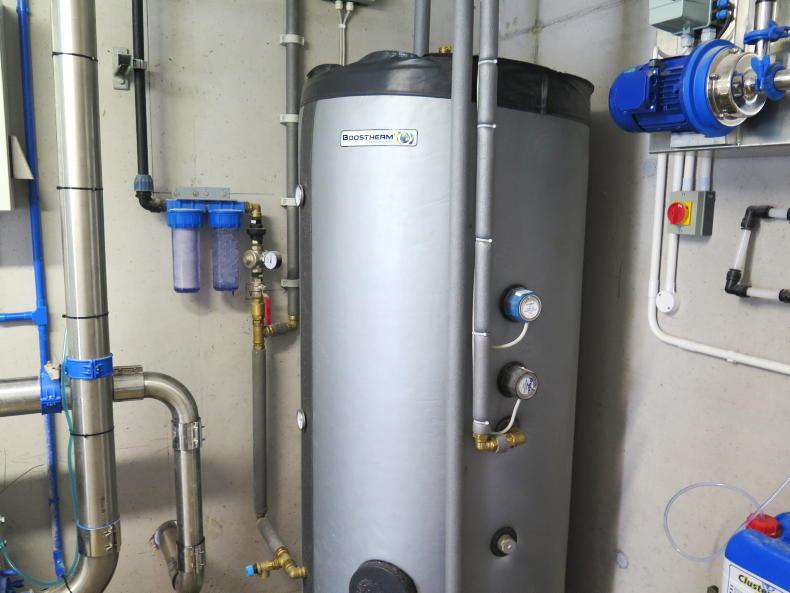
An electric hot-water storage tank.
On the one hand, farmers that use electricity buy electricity every day and have no real control over the price they pay, apart from being able to switch provider every 12 months or so.
Whereas farmers that use gas or oil heating can, up to a point, buy and store gas or oil when prices are low.
However, more often than not farmers will buy the fuel when the tank gets low and so will have to pay whatever price the fuel is on the day.
With uncertainty over the future outlook for energy prices and energy supply, dairy farmers should be looking at ways to reduce energy consumption which will reduce their costs and improve their sustainability credentials.
Between milking cows, heating water and cooling milk, the milking process uses up 74% of all electricity used on dairy farms, according to a Teagasc survey of 60 farms from a few years ago.
Within that, cooling milk uses the most electricity at 31%, followed by water heating at 23% and then the milking process itself at 20%. The following are some of the tools available to dairy farmers to reduce energy costs associated with the milking process.
Plate cooler
An effective plate cooler is an essential item in a milking parlour to reduce energy costs.
A correctly sized plate cooler, relative to the size of the milking parlour and how much milk passes through it, will reduce the temperature of the milk by about 10°C.
The energy used to create this temperature reduction is minimal compared to the energy used by bulk tanks to cool milk.
The plate cooler works by exchanging the heat in the milk to heat in water. It works by passing milk and water through a series of separated plates.
An effective plate cooler should use two or three times the volume of water compared to milk.
The larger the surface area of the plates the more effective the milk cooling will be.
While most farms have plate coolers, many are not that effective because they are either too small or have too low a water flow through them relative to the amount of milk flowing through them.
It is quite common to see the valve on the water pipe going into the plate cooler half closed to avoid “wasting” water.
This is particularly problematic where there are electrical milk pumps as these send a blast of milk from the jar to the bulk tank when in motion.
A high flow of water will be necessary to effectively cool this high flow of milk and that won’t be achieved if the water is restricted.
One way of overcoming this is to install a solenoid switch at the water entry point and link this to the milk pump so that the water only flows when the milk pump is on.
By doing so, water won’t be wasted when there is no milk flowing through the plate cooler. A five or 10 second delay should be incorporated, meaning water continues flowing for a short period after the pump shuts off to cool milk still flowing.
An effective plate cooler will use two to three litres of water for every one litre of milk that passes through.
Heat recovery
Heat recovery units are attached to bulk milk tanks but are used to reduce the cost of heating water. Essentially, the units work by using the heat generated from cooling the milk in the bulk tank to heat water.
In a heat recovery unit, rather than letting this heat or energy escape to the air, it is diverted to the heat-recovery unit, which heats water to a temperature of between 45°C and 55°C.
This water is then stored and usually used for pre-heating water before it goes into a dedicated water heater.
A heat recovery unit takes heat from the refrigerant when cooling milk and uses it to heat water.
In such cases, the cost of heating water from say 50°C to the required 80°C to 85°C for plant washing is much less than heating cold water at 12°C (mains temperature) to 80°C or 85°C.
The advantage is that the energy used to heat the water to 50°C is effectively free, apart from the capital cost of installing the heat recovery system.
LED lights
LED lights now almost totally dominate the light market with very little new fluorescent or sodium lights being purchased. LED lights dramatically reduce energy consumption by up to 90% and can last for up to 25 years longer than traditional light fittings. A key thing with lights is to make sure they are turned off when not in use. Milking parlours are often seen with lights on during the day when there is plenty of natural light and no cows being milked.
Putting light switches on timers that go off after a certain number of hours is a good idea. For other locations such as a farm office, dairy etc motion sensing lights can work well.
Variable-speed motors
Variable-speed milk pumps and vacuum pumps can reduce electricity consumption by up to 60% by varying the pump output depending on the load.
The classic example is the variable speed vacuum pump which operates at very low speed when all the clusters are on and everything is going fine. As soon as a cow kicks off a cluster and air is let in the pump roars into action to try and maintain the vacuum.
Variable speed milk pumps don’t save as much electricity as vacuum pumps as they operate at a lower kilowatt rating but they are still more efficient than standard milk pumps.
These standard milk pumps kick into action when the milk in the receiver jar reaches a certain level and run for as long as is necessary to empty the jar.
A variable-speed pump will generally be operating for longer time but at slower speeds but with the capacity to operate at full speed when the flow of milk into the jar necessitates it.
Power washing
The importance of hygiene is obviously critical when it comes to milking parlours, it is a food production site after all. Keeping all equipment that comes in contact with milk clean is well understood as is the importance of keeping outside surfaces of clusters, cow standing areas and rails clean.
Consideration must be given to the quantity of water used in the cleaning process. This is particularly true on farms that pay for mains water, but there are costs of getting water even on farms with their own well.
Typically, farmers will use a high-volume, low-pressure wash down hose for cleaning yards and cow standing areas.
A power washer with a short lance is very effective at cleaning clusters and stallwork.
While these use a high volume of water per minute, they are very efficient at cleaning yards as the volume pushes the effluent off the yard whereas higher pressure washers will splash effluent away.
However, for tasks like cleaning clusters and stallwork, higher pressure washers are superior and use a lot less water than higher volume washers or 0.5 inch hoses for doing the same job.
Pressure washers are available with hot water settings and when combined with a short lance they are a very fast and effective way of cleaning clusters compared to high volume hoses and rubbing by hand.
Water heating
Heating water for use in hot washes makes up 23% of all electricity used on the farm according to the Teagasc energy survey.
From a cost point of view, if using electric water storage heaters they should be used on night rate electricity.
Many farmers have timers on the fuse board enabling the heaters to be turned off during the day rate hours, when electricity costs are about twice as expensive as night rate.
Those with solar panels can use water heaters and indeed ice-bank tanks to store the energy created by the solar panels.
This is one of the advantages of hot water storage heaters. However, in recent years many farmers have moved away from storing hot water towards instant hot water in the form of gas or oil boilers.
These facilitate hot water on demand, meaning only what water is required is heated, unlike in storage systems where too much or not enough water is heated depending on demand. The jury is out as to whether these systems are more cost effective than storage systems.
An electric hot-water storage tank.
On the one hand, farmers that use electricity buy electricity every day and have no real control over the price they pay, apart from being able to switch provider every 12 months or so.
Whereas farmers that use gas or oil heating can, up to a point, buy and store gas or oil when prices are low.
However, more often than not farmers will buy the fuel when the tank gets low and so will have to pay whatever price the fuel is on the day.








SHARING OPTIONS