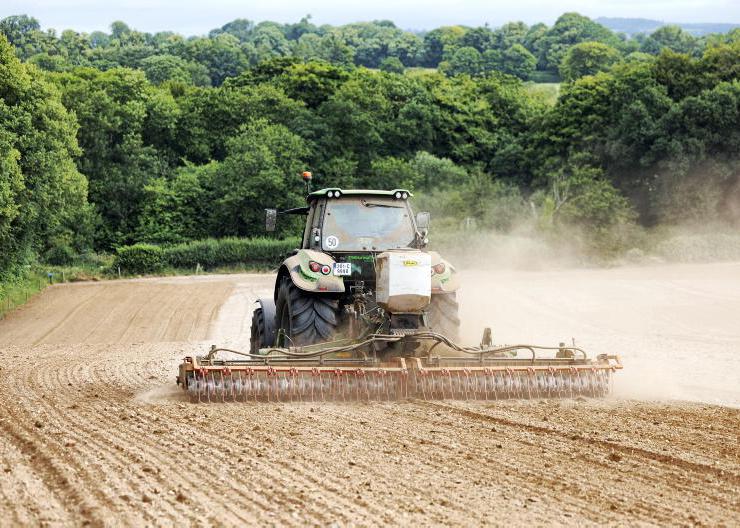
It’s very easy to count the cost of doing something. Whether it’s buying a tractor or reseeding a field, the costs are easily worked out. With reseeding, we have the costs of spraying off, cultivating, sowing, grass seeds, spray, contractor costs etc.
Some farmers will also look at the costs of lost productivity when the field is out of use. However, few farmers will look at the cost of not doing something such as reseeding. Many are now recognising that deciding to cut back or pull out of reseeding over the last few years has been a major cost to the farm business, far outweighing the direct costs of reseeding.
An immediate cost is spring and autumn growth. We know that recently reseeded fields grow better at the shoulders of the year compared to established swards. Some of this is the kick from new grass, but also from newer varieties giving long term benefits.
Quality is another advantage of reseeding with newer grass more digestible, meaning cows eat more of it and animal performance improves.
With the exception of 2025, the last four years have seen a reduction in the area being reseeded nationally. Some of this is due to poor weather such as in spring 2024, poor milk prices in 2023 and poor summer growth in 2022.
Farmers are now recognising that cutting back on reseeding has been a mistake and while there are challenges, it is better to do all that is possible to get back on track with reseeding.
The target is to reseed 10% per year but where farmers have done significantly less than that over the last few years they will have to catch up by doing a higher percentage now.
With plenty of feed available, 2026 may be a good opportunity to get back on track with the reseeding policy and reap the benefits in the years to come.
It’s very easy to count the cost of doing something. Whether it’s buying a tractor or reseeding a field, the costs are easily worked out. With reseeding, we have the costs of spraying off, cultivating, sowing, grass seeds, spray, contractor costs etc.
Some farmers will also look at the costs of lost productivity when the field is out of use. However, few farmers will look at the cost of not doing something such as reseeding. Many are now recognising that deciding to cut back or pull out of reseeding over the last few years has been a major cost to the farm business, far outweighing the direct costs of reseeding.
An immediate cost is spring and autumn growth. We know that recently reseeded fields grow better at the shoulders of the year compared to established swards. Some of this is the kick from new grass, but also from newer varieties giving long term benefits.
Quality is another advantage of reseeding with newer grass more digestible, meaning cows eat more of it and animal performance improves.
With the exception of 2025, the last four years have seen a reduction in the area being reseeded nationally. Some of this is due to poor weather such as in spring 2024, poor milk prices in 2023 and poor summer growth in 2022.
Farmers are now recognising that cutting back on reseeding has been a mistake and while there are challenges, it is better to do all that is possible to get back on track with reseeding.
The target is to reseed 10% per year but where farmers have done significantly less than that over the last few years they will have to catch up by doing a higher percentage now.
With plenty of feed available, 2026 may be a good opportunity to get back on track with the reseeding policy and reap the benefits in the years to come.






SHARING OPTIONS