Based in the north of Luxembourg, the Reiff contracting business started in 1958, with the arrival of the first combine harvester. Joseph Reiff joined his parents in the early 1970s and purchased a Ford 5000 with a 5t Bastian dung spreader. In 2006, Joseph was joined by his son Jeff, who today runs the business. Like many contracting businesses, it grew from a farming background.
Initially, the farm milked cows, bred pigs and ran chickens, with a mix of tillage and forestry. It progressed to milk 70 cows and grow a range of crops such as cereals, maize and sugar beet. In 2015, the company moved away from livestock, with Jeff’s focus being on crop production. The business grows potatoes, some of which is for seed potatoes, with the rest produced for table potatoes which are used to make Luxembourg chips. Beet and maize silage are grown to order for local customers, with all crops pre-priced at a rate per tonne.
Today, they grow 600ha (1,482 acres) of crops, between owned and rented ground. In Luxembourg, very little land ever comes on the market for sale. However, when it does, it generally fetches between €80,000 to €100,000/ha (€32,400 to €40,500/acre), depending on land quality. Meanwhile, leased ground is also difficult to find. It generally makes between €300 to €500/ha (€120 to €200/acre).
The family business is located just a few kilometres from the point where Luxembourg, Belgium and Germany meet. The contracting business spans a 100km radius, which sees them work into Belgium, Germany and France, alongside covering all of Luxembourg. We caught up with Stefan Neukirch, one of the company’s managers to find out more about the business. Stefen explained they had just completed two busy weeks ploughing, sowing, spreading slurry and farmyard manure, and getting land ready to sow potatoes. Lucky for them, they haven’t been getting the rain we have.
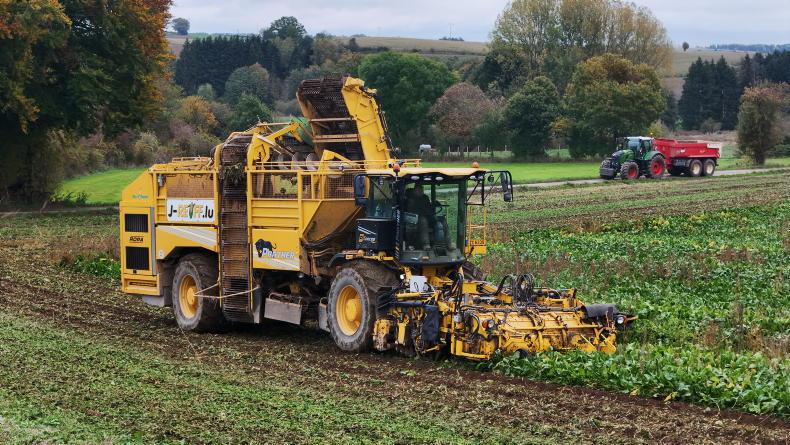
J Reiff grow 600ha (1,482 acres) of its own crops.
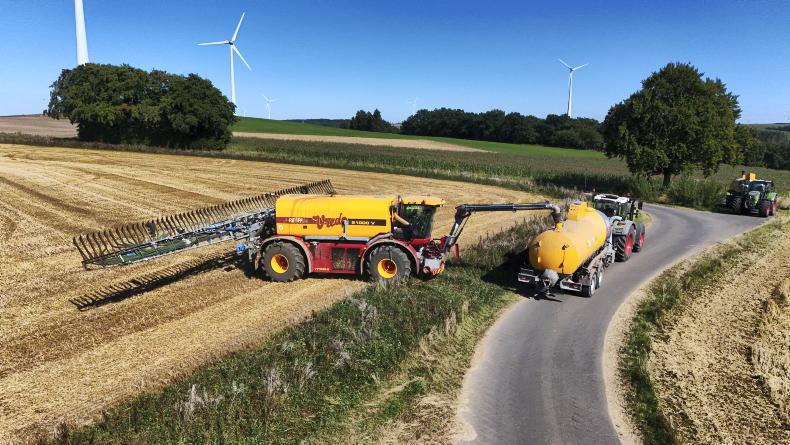
Silage harvesting and slurry spreading is the business’s main work.
Contracting
The contracting business carries out almost all the services farmers require, including ploughing, sowing, spraying, fertilising, dung spreading, etc, but Stefen explains that silage harvesting and slurry spreading is its main work. The contracting business employs 40 full-time staff, while the machinery dealership, which works out of the same yard, employs 30 full-time staff.
In the early days of the contracting business, the family ran MB Trac’s and Case IH tractors. In the 1980s they began running Fendt tractors, and soon transitioned to running a full fleet of Fendt, on the belief that they were the best tractor available.
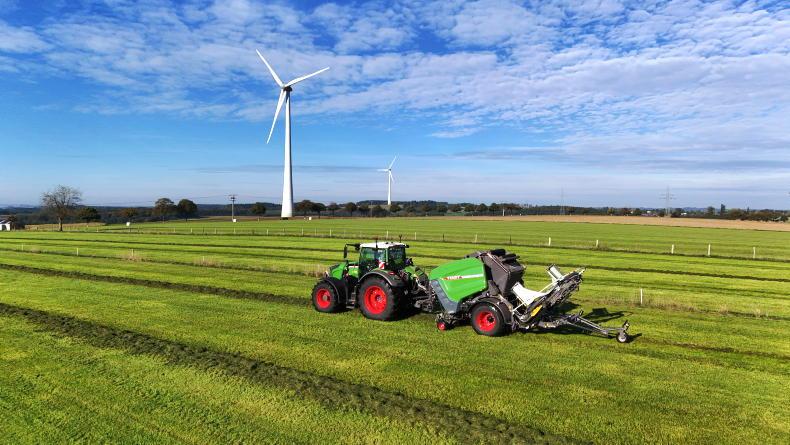
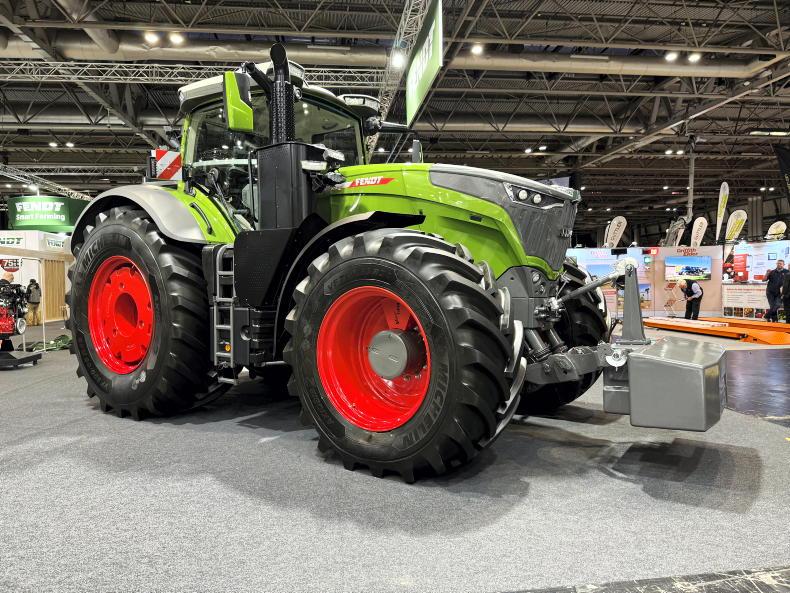
Gradually building the business over the years, J Reiff today runs 65-70 Fendt tractors at any one time in the fleet. And these aren’t older tractors; they are all almost new. Looking at the firm’s current tractor fleet, it includes one 300 series, three 500 series, five 800 series, 25 700 series, 20 900 series and 12 1,000 series machines.
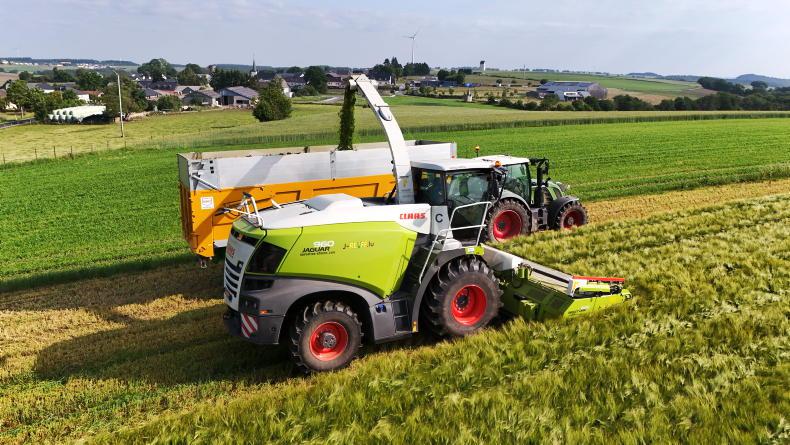
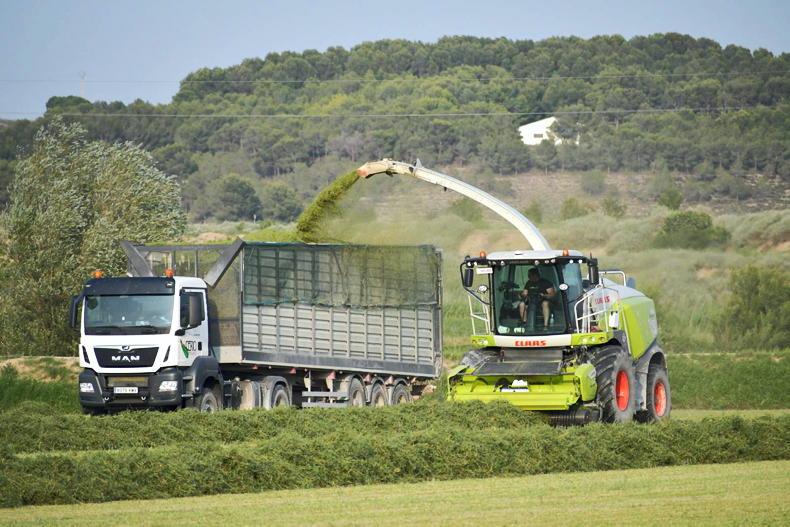
The business runs 10 self-propelled Claas Jaguar 900 series harvesters, with one new 1,000 series machine soon to arrive in the fleet. It also runs 15 forage wagons, which are mainly Pöttinger, with some Krone machines also. Stefen explained that they work on a whole host of farms of different sizes, with some farms taking just one to two cuts, while other farms take seven cuts of grass over the season. J Reiff generally clocks up 800 hours on each Jaguar per season. When you break down the numbers, they harvest 40,000 to 50,000 hectares (98,840 to 123,550 acres) of grass silage, 5,000 hectares (12,355 acres) of maize and 100 to 1,500 hectares of whole crop per season.
Stefen explained that the whole crop acres tend to vary so much from year to year, as depending on the price of grain, farmers either whole crop or combine the cereal crops.
The business also runs nine combines, again all of which are Claas. They typically combine 2,500 to 3,000 hectares (6,177 to 7,413 acres) per season. Similar to Ireland, Stefen explained that the average silage job is hauled from 1km to 10km from the fields to the pit, but he says as farms have gotten bigger, they are drawing some feedstuffs up to 50km each way from the field to the pit. On the pit, J Reiff runs a mix of wheel loaders and tractors. On the loader side of things they run JCB, Volvo and Caterpillar.
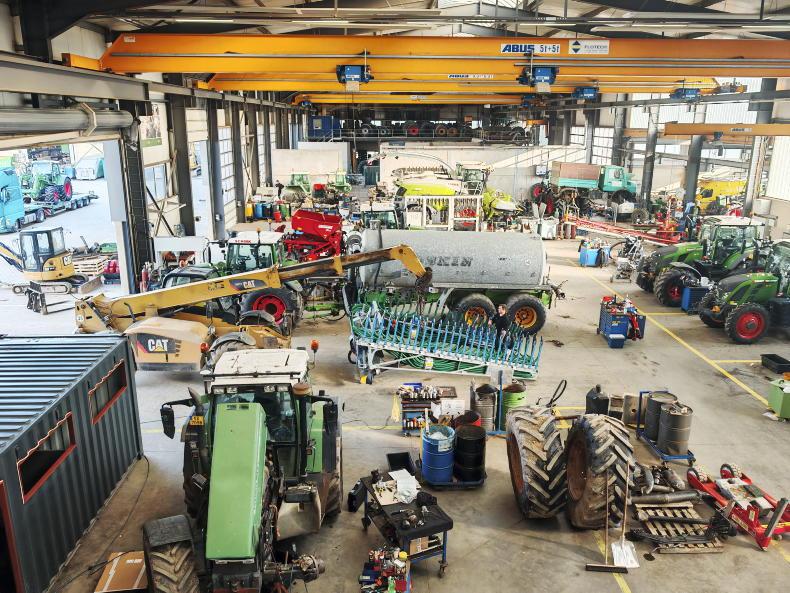
The firm’s machinery dealership directly employs 30 staff, of which 20 are mechanics, five are in parts, three work in the office and two work in sales.

The business has developed a unique model, in which equipment only stays within the fleet for a couple of years, before being sold on through its machinery dealership.
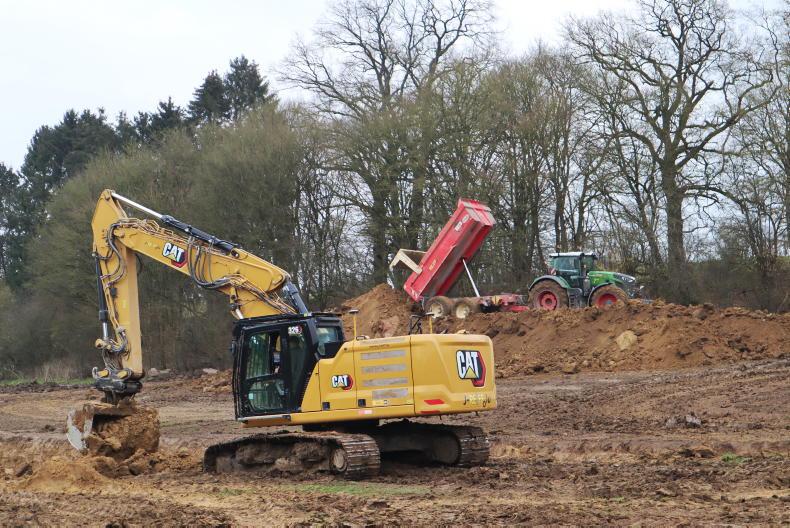
Some of the wheel loaders also cross over the construction side of the business. Initially, it used Volvo loaders for clamp work, but has recently transitioned towards JCB 457s machines, of which it is very impressed by.
In all, they run seven-wheel loaders. On the tractor front, they run 942s and 1000 series Fendts with a selection of forks and blades on the front.
They say different farmer clients have different preferences on tractors vs loaders, so they offer both.
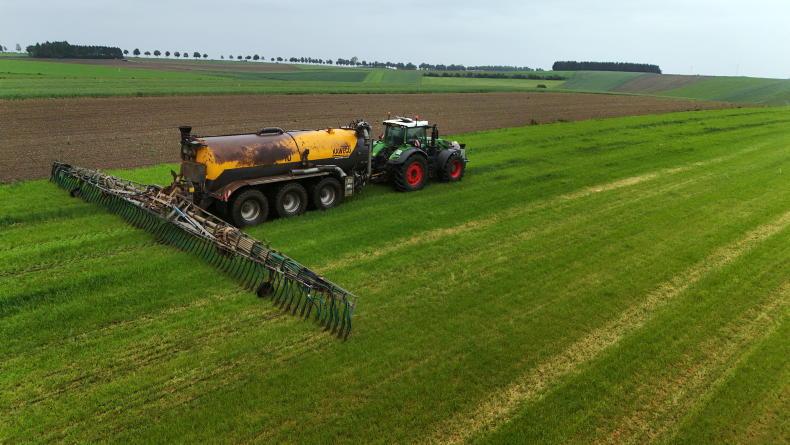
On the slurry front, J Reiff runs two self-propelled slurry tankers and 16 trailer tankers, all of which are kitted out with various types of injection and cultivators for incorporating slurry into the soil.
Its most novel recent additions have been two DJI Agras T50 drones, used for spraying and fertilising. They can carry 40kg of spray, or 50kg of fertiliser and cost around €25,000 each.
Covering a 100km radius from their base, we were keen to know if the staff stay in camper vans or hotels when working big jobs far away, but Stefen explained that by in large, they will bring home the farmers car/jeep and return to base most nights. As with any business, Stefen was very slow to reveal the rates they charge for hire work.
The only rate he gave us was for a Fendt 942 on butterfly mowers, charged out at €250/hour plus VAT.
He explained that they are lucky to have a really good team of skilled staff, but that it is getting harder and harder in Luxembourg to find good staff.
Cashflow is vital for any business, and J Reiff is no different. After works are completed, whether it be in its contracting, construction or machinery dealership, invoices are issued from the following day to two weeks later.
The vast majority of machinery in the contracting business is invoiced on a per hour basis. The only machines that are on a hectare rate, are the planting and harvesting of cereals.
Stefen explained that since the conflict kicked off in Iran two weeks ago, diesel prices in Luxembourg have gone up by 40c/l.
The business has fuel consumption rates per hour calculated for every machine in the business, and that a fuel surcharge has been added to its contracting rates with immediate effect.
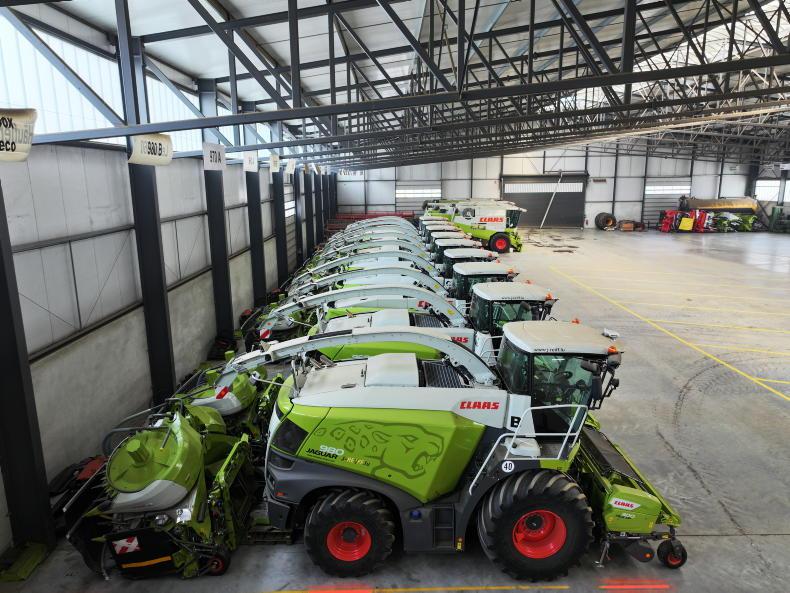
“We found Claas Jaguars to be the most cost-effective machine per hour to operate and will sell quicker used than any other brand.”
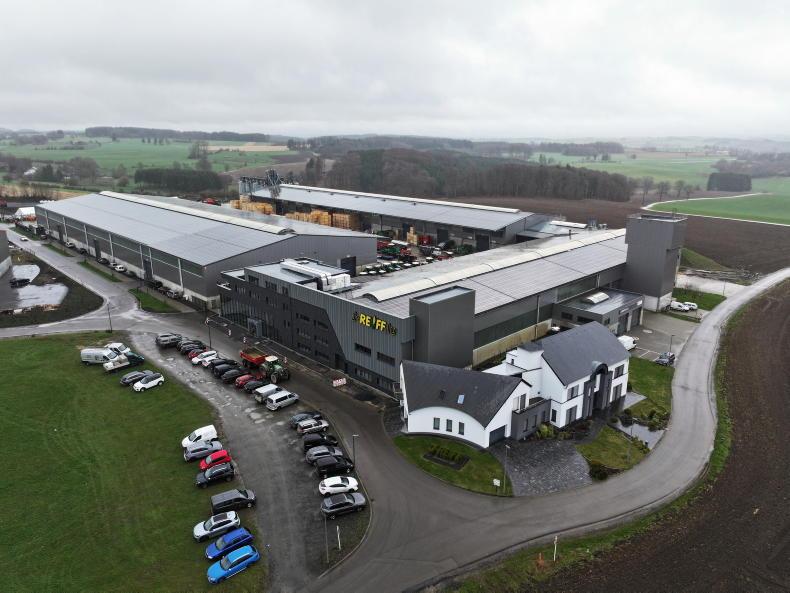
All of the contracting business fleet of modern machinery is maintained by the dealership, which works out of the same yard.
The Fendt dealership
J Reiff understands more than anyone, the importance of running a very modern machinery fleet in its agricultural contracting business, especially when it is carrying out such large volumes of work across such a vast geographical area.
The business has developed a unique model, in which tractors and equipment only stay within the fleet for a couple of years, before being sold on through its machinery dealership.
For example, the tractors only stay within the fleet for 1,000 to 3,000 hours. Once they hit 1,000 hours, they are advertised for sale.
Stefen explained: “We are official Fendt service agents for the north of Luxembourg and we are recently appointed Fliegl dealers.
“We typically sell 50 to 60 new Fendt tractors each year. Depending on the year, up to 50 of these new tractors are generally bought by our contracting business, with the remaining five to 10 new tractors sold to local farmers and contractors. If our contracting business buys 50 tractors, it means we have 50 used tractors to sell on.
“Through our dealership, we also sell all of our used machinery. When buying new equipment, our decision on brands is strongly influenced by resale value.
“For example, with our self-propelled forage harvesters, we run all Claas. We tried other brands over the years, but found used Claas Jaguars are the most cost-effective machine per hour to operate and will sell quicker used than any other brand. Likewise, with our forage wagons its predominantly Pöttinger, while our silage trailers are all Krone.
“We sell used machines all across Europe, and even have sold machines to Ireland. In the past few years, we have sold five Fendt tractors and three Claas Jaguar 900 series machines to Ireland, two of which were sold in 2024,” he said.
The dealership directly employs 30 staff, of which 20 are mechanics, five are in parts, three work in the office and two work in sales. All of the contracting business fleet of modern machinery is maintained by the dealership. Both businesses work out of the same yard.
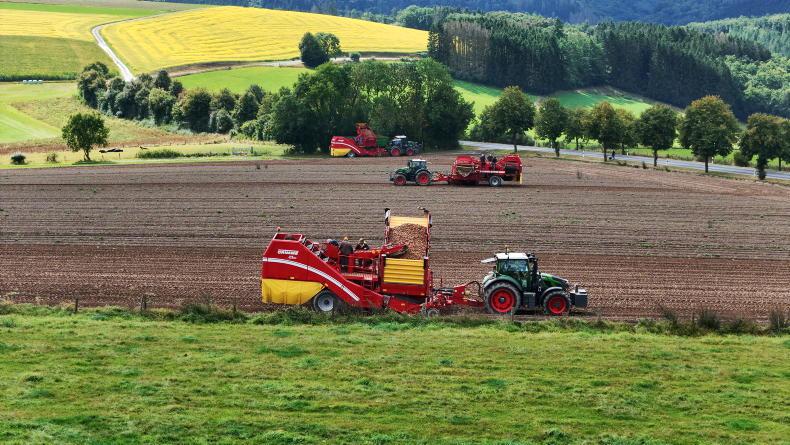
With diesel gone up by 40c/l, J Reiff has added a fuel surcharge to its rates.
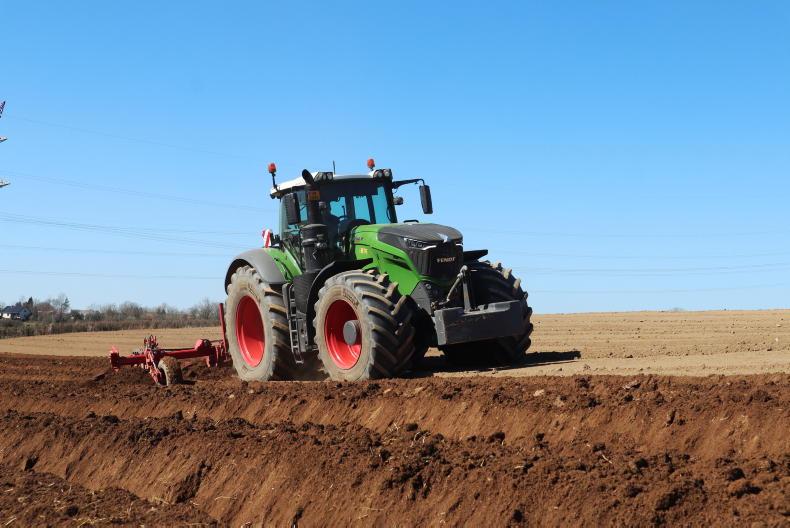
J Reiff today runs 65-70 Fendt tractors at any one time in the fleet.
Hiring tractors
The dealership also offers farmers and contractors the opportunity to hire Fendt tractors. Fendt tractors from the 300 series right up to the flagship 1,000 series tractors are available on short or long-term hire. Depending on requirements, the dealership offers different packages of monthly fixed amounts per operating hour. With its packages, J Reiff explains that the machine maintenance and the insurance are included in the rent, while no-fault repairs are at the cost of the hirer.
The vintage collection
Joseph Reiff owns what Stefen claims to probably be the world’s biggest collection of Fendt tractors. Stefen says that nearly every type of tractor that was once built in the Fendt tractor factory in Marktoberdorf in Germany can be found in his collection. Stefen explained that Joseph discovered his passion for older Fendt tractors just 20 years ago.
Since then, he has been collecting and restoring the old “diesel horses” with massive dedication.
His collection now houses over 140 tractors, from the F9 built in 1932 to the “Nasenbär” (Coati) Favorit 626 LS built in 1985.
The collection presents an impressive picture of the steps in tractor development over the decades. Right from the start, he says the Fendt brand was known for its reliability and the many technical innovations introduced by this inventive tractor manufacturer.
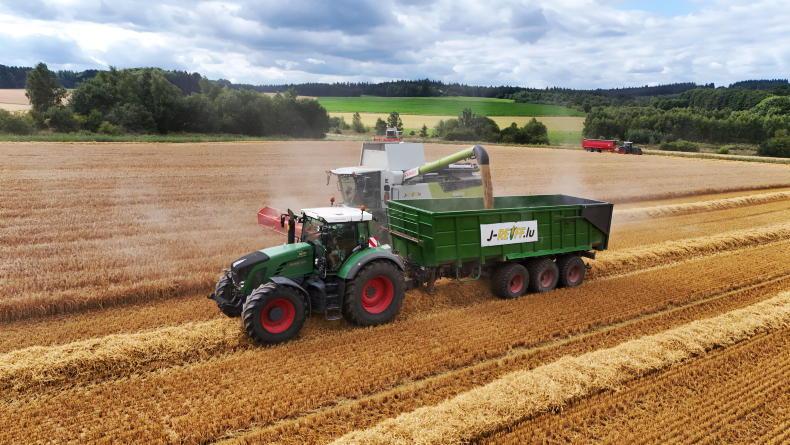
The dealership offers Fendt tractors from the 300 series right up to the flagship 1,000 series tractors on short or long-term hire.
Based in the north of Luxembourg, the Reiff contracting business started in 1958, with the arrival of the first combine harvester. Joseph Reiff joined his parents in the early 1970s and purchased a Ford 5000 with a 5t Bastian dung spreader. In 2006, Joseph was joined by his son Jeff, who today runs the business. Like many contracting businesses, it grew from a farming background.
Initially, the farm milked cows, bred pigs and ran chickens, with a mix of tillage and forestry. It progressed to milk 70 cows and grow a range of crops such as cereals, maize and sugar beet. In 2015, the company moved away from livestock, with Jeff’s focus being on crop production. The business grows potatoes, some of which is for seed potatoes, with the rest produced for table potatoes which are used to make Luxembourg chips. Beet and maize silage are grown to order for local customers, with all crops pre-priced at a rate per tonne.
Today, they grow 600ha (1,482 acres) of crops, between owned and rented ground. In Luxembourg, very little land ever comes on the market for sale. However, when it does, it generally fetches between €80,000 to €100,000/ha (€32,400 to €40,500/acre), depending on land quality. Meanwhile, leased ground is also difficult to find. It generally makes between €300 to €500/ha (€120 to €200/acre).
The family business is located just a few kilometres from the point where Luxembourg, Belgium and Germany meet. The contracting business spans a 100km radius, which sees them work into Belgium, Germany and France, alongside covering all of Luxembourg. We caught up with Stefan Neukirch, one of the company’s managers to find out more about the business. Stefen explained they had just completed two busy weeks ploughing, sowing, spreading slurry and farmyard manure, and getting land ready to sow potatoes. Lucky for them, they haven’t been getting the rain we have.
J Reiff grow 600ha (1,482 acres) of its own crops.
Silage harvesting and slurry spreading is the business’s main work.
Contracting
The contracting business carries out almost all the services farmers require, including ploughing, sowing, spraying, fertilising, dung spreading, etc, but Stefen explains that silage harvesting and slurry spreading is its main work. The contracting business employs 40 full-time staff, while the machinery dealership, which works out of the same yard, employs 30 full-time staff.
In the early days of the contracting business, the family ran MB Trac’s and Case IH tractors. In the 1980s they began running Fendt tractors, and soon transitioned to running a full fleet of Fendt, on the belief that they were the best tractor available.
Gradually building the business over the years, J Reiff today runs 65-70 Fendt tractors at any one time in the fleet. And these aren’t older tractors; they are all almost new. Looking at the firm’s current tractor fleet, it includes one 300 series, three 500 series, five 800 series, 25 700 series, 20 900 series and 12 1,000 series machines.
The business runs 10 self-propelled Claas Jaguar 900 series harvesters, with one new 1,000 series machine soon to arrive in the fleet. It also runs 15 forage wagons, which are mainly Pöttinger, with some Krone machines also. Stefen explained that they work on a whole host of farms of different sizes, with some farms taking just one to two cuts, while other farms take seven cuts of grass over the season. J Reiff generally clocks up 800 hours on each Jaguar per season. When you break down the numbers, they harvest 40,000 to 50,000 hectares (98,840 to 123,550 acres) of grass silage, 5,000 hectares (12,355 acres) of maize and 100 to 1,500 hectares of whole crop per season.
Stefen explained that the whole crop acres tend to vary so much from year to year, as depending on the price of grain, farmers either whole crop or combine the cereal crops.
The business also runs nine combines, again all of which are Claas. They typically combine 2,500 to 3,000 hectares (6,177 to 7,413 acres) per season. Similar to Ireland, Stefen explained that the average silage job is hauled from 1km to 10km from the fields to the pit, but he says as farms have gotten bigger, they are drawing some feedstuffs up to 50km each way from the field to the pit. On the pit, J Reiff runs a mix of wheel loaders and tractors. On the loader side of things they run JCB, Volvo and Caterpillar.
The firm’s machinery dealership directly employs 30 staff, of which 20 are mechanics, five are in parts, three work in the office and two work in sales.
The business has developed a unique model, in which equipment only stays within the fleet for a couple of years, before being sold on through its machinery dealership.
Some of the wheel loaders also cross over the construction side of the business. Initially, it used Volvo loaders for clamp work, but has recently transitioned towards JCB 457s machines, of which it is very impressed by.
In all, they run seven-wheel loaders. On the tractor front, they run 942s and 1000 series Fendts with a selection of forks and blades on the front.
They say different farmer clients have different preferences on tractors vs loaders, so they offer both.
On the slurry front, J Reiff runs two self-propelled slurry tankers and 16 trailer tankers, all of which are kitted out with various types of injection and cultivators for incorporating slurry into the soil.
Its most novel recent additions have been two DJI Agras T50 drones, used for spraying and fertilising. They can carry 40kg of spray, or 50kg of fertiliser and cost around €25,000 each.
Covering a 100km radius from their base, we were keen to know if the staff stay in camper vans or hotels when working big jobs far away, but Stefen explained that by in large, they will bring home the farmers car/jeep and return to base most nights. As with any business, Stefen was very slow to reveal the rates they charge for hire work.
The only rate he gave us was for a Fendt 942 on butterfly mowers, charged out at €250/hour plus VAT.
He explained that they are lucky to have a really good team of skilled staff, but that it is getting harder and harder in Luxembourg to find good staff.
Cashflow is vital for any business, and J Reiff is no different. After works are completed, whether it be in its contracting, construction or machinery dealership, invoices are issued from the following day to two weeks later.
The vast majority of machinery in the contracting business is invoiced on a per hour basis. The only machines that are on a hectare rate, are the planting and harvesting of cereals.
Stefen explained that since the conflict kicked off in Iran two weeks ago, diesel prices in Luxembourg have gone up by 40c/l.
The business has fuel consumption rates per hour calculated for every machine in the business, and that a fuel surcharge has been added to its contracting rates with immediate effect.
“We found Claas Jaguars to be the most cost-effective machine per hour to operate and will sell quicker used than any other brand.”
All of the contracting business fleet of modern machinery is maintained by the dealership, which works out of the same yard.
The Fendt dealership
J Reiff understands more than anyone, the importance of running a very modern machinery fleet in its agricultural contracting business, especially when it is carrying out such large volumes of work across such a vast geographical area.
The business has developed a unique model, in which tractors and equipment only stay within the fleet for a couple of years, before being sold on through its machinery dealership.
For example, the tractors only stay within the fleet for 1,000 to 3,000 hours. Once they hit 1,000 hours, they are advertised for sale.
Stefen explained: “We are official Fendt service agents for the north of Luxembourg and we are recently appointed Fliegl dealers.
“We typically sell 50 to 60 new Fendt tractors each year. Depending on the year, up to 50 of these new tractors are generally bought by our contracting business, with the remaining five to 10 new tractors sold to local farmers and contractors. If our contracting business buys 50 tractors, it means we have 50 used tractors to sell on.
“Through our dealership, we also sell all of our used machinery. When buying new equipment, our decision on brands is strongly influenced by resale value.
“For example, with our self-propelled forage harvesters, we run all Claas. We tried other brands over the years, but found used Claas Jaguars are the most cost-effective machine per hour to operate and will sell quicker used than any other brand. Likewise, with our forage wagons its predominantly Pöttinger, while our silage trailers are all Krone.
“We sell used machines all across Europe, and even have sold machines to Ireland. In the past few years, we have sold five Fendt tractors and three Claas Jaguar 900 series machines to Ireland, two of which were sold in 2024,” he said.
The dealership directly employs 30 staff, of which 20 are mechanics, five are in parts, three work in the office and two work in sales. All of the contracting business fleet of modern machinery is maintained by the dealership. Both businesses work out of the same yard.
With diesel gone up by 40c/l, J Reiff has added a fuel surcharge to its rates.
J Reiff today runs 65-70 Fendt tractors at any one time in the fleet.
Hiring tractors
The dealership also offers farmers and contractors the opportunity to hire Fendt tractors. Fendt tractors from the 300 series right up to the flagship 1,000 series tractors are available on short or long-term hire. Depending on requirements, the dealership offers different packages of monthly fixed amounts per operating hour. With its packages, J Reiff explains that the machine maintenance and the insurance are included in the rent, while no-fault repairs are at the cost of the hirer.
The vintage collection
Joseph Reiff owns what Stefen claims to probably be the world’s biggest collection of Fendt tractors. Stefen says that nearly every type of tractor that was once built in the Fendt tractor factory in Marktoberdorf in Germany can be found in his collection. Stefen explained that Joseph discovered his passion for older Fendt tractors just 20 years ago.
Since then, he has been collecting and restoring the old “diesel horses” with massive dedication.
His collection now houses over 140 tractors, from the F9 built in 1932 to the “Nasenbär” (Coati) Favorit 626 LS built in 1985.
The collection presents an impressive picture of the steps in tractor development over the decades. Right from the start, he says the Fendt brand was known for its reliability and the many technical innovations introduced by this inventive tractor manufacturer.
The dealership offers Fendt tractors from the 300 series right up to the flagship 1,000 series tractors on short or long-term hire.





SHARING OPTIONS