


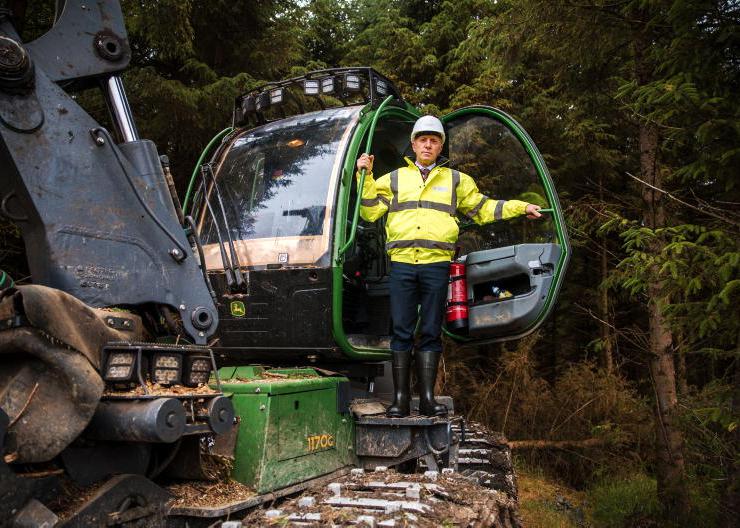
Minister for of State at the Department of Agriculture Michael Healy-Rae’s recent announcement of a reconstitution scheme for private forest owners affected by storms Darragh and Éowyn has received wide support from the forestry sector.
The package provides grant aid of between €3,858/ha and €6,744/ha (Table 1) to replant windblown forests depending on the forest type.
The total amount allocated to the scheme is €55m to cover the windblow replanting programme as soon as the damaged timber is harvested.
“Storms Darragh and Éowyn have inflicted significant damage on forests around the country, resulting in real challenges for forestry,” said Minister Healy-Rae.
“While I welcome the significant effort and progress made to date by the forestry sector in the mobilisation of windblown material, it is clear that financial support is required for private forest owners affected by these events.”
The replanting package has received wide support from forestry organisations including the Social Economic Environmental Forestry Association of Ireland (SEEFA) and the Irish Timber Growers Association (ITGA).
“This is good news for impacted forest owners but also for the wider industry, in terms of further restoring confidence,” said Paddy Bruton, chair of SEEFA.
SEEFA members Noreen Barrett in Sligo and Kenmare-based Conor Daly also acknowledged the Minister’s reconstitution scheme.
“The gives confidence to the forestry sector, which cannot be overestimated,” said Barrett while Daly praised the Minister “for acting with speed”.
The ITGA welcomed the introduction of the scheme but the association’s technical director Donal Whelan said: “Flexibility in its implementation will be critical to growers, particularly in relation to qualifying criteria which the Department of Agriculture, Food and the Marine is due to clarify in early 2026.
“Grant eligibility must apply to the squared-off areas in windblown sites, where patches of windblown trees are appropriately harvested within a blown forest, with this entire ‘squared off’, harvested area being fully eligible for the reconstitution grant.”
IFA farm forestry chair Padraig Stapleton said those with the 13,000ha of private forestry affected by both storms will be able to apply to the scheme in early 2026 once a valid felling licence is in place.
“All conditions attached to the felling licence will continue to apply.
“The scheme will provide much needed financial support to landowners to restore damaged forests,” Stapleton said.
Insurance
He added that it should be noted the level of support under the reconstitution scheme for windblow depends on whether the forest was insured for the costs of reconstitution at the time of the storms.
“However, landowners who have already replanted, or are in the process of doing so, are eligible to apply for this scheme in early 2026 retrospectively once they satisfy the qualifying criteria,” Stapleton said.
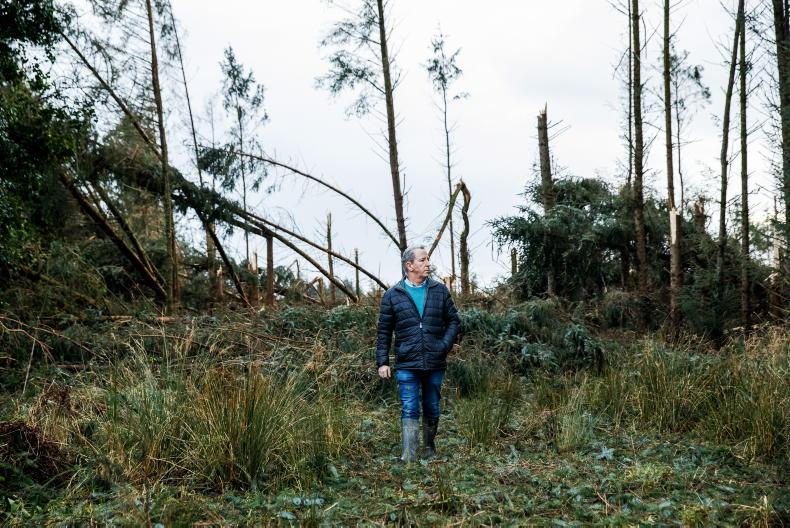
Over 26,050ha of Irish forests were damaged by storm Darragh in December 2024 year and the much more severe storm Éowyn last January, which hit the west, northwest and north midlands.
Storm Éowyn caused the most damage ever to Irish forests compared with previous windblow, not just because of the ferocity of the storm but also because the forest area in Ireland has almost doubled since 1990 to over 800,000ha, mainly due to major increases in private – mainly farmer – afforestation, so much more forests are now vulnerable to storm damage.
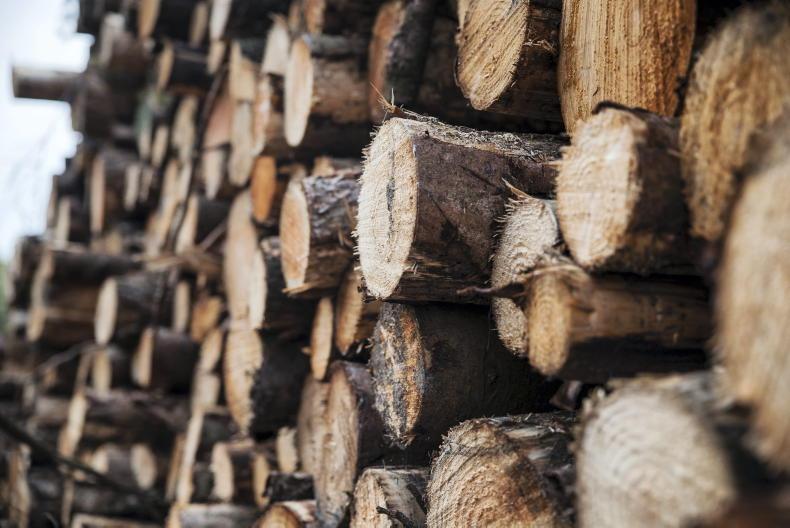
Coillte plans to complete the harvesting and sale of blown timber by the end of 2026 and replant the damaged forests by 2027.
“The removal period of timber from 13,000ha of privately owned forests will go well into 2027 while replanting will take until 2028, possibly longer, due to the fragmented nature of the private forest estate and lack of a cohesive forest harvesting and marketing structure.



SHARING OPTIONS