I was in Our Lady's Island twice in the space of five days last week. Both were related to the issues facing Ireland's largest saltwater lagoon.
In recent years, elevated nutrient levels have led to significant algal bloom, particularly in summer.
This is a sign of poor environmental health, with the nitrogen produced by the algae starving marine life of oxygen.
The first occasion was a public meeting, where An Taisce's head of advocacy, Dr Elaine McGoff, was the guest speaker.
Elaine has spoken frequently of how her research, which leans on research carried out by Teagasc, suggests that there is a nitrates problem associated with intensive dairy farming that is unfixable, except by lowering stocking rates.
The urine of grazing cows accounts for 63% - almost two-thirds - of the nitrates from dairy farming. Chemical fertiliser is responsible for 28%, with the remaining 8% coming from applied slurry.
And there is nothing that has been found to slow the flow of such nitrogen through soils and to groundwater. While buffer zones are helpful in trapping phosphorus, they are ineffective against nitrogen (N) leakage from land.
McGoff's doctorate is in freshwater ecology, so she is an expert in this field. I am not and until I hear an evidence-based rebuttal of these assertions, I have to accept them as valid. This is problematic for dairy farming.
"The EPA are referring to precipitous declines in our estuaries because of the nitrates issue, particularly around the southeast and east coasts" she said.
There is "a clear spatial overlap" between derogation farms and most elevated N levels in rivers, but "correlation doesn't equal causation" she said.
Indeed, others have highlighted the human population is more concentrated in these same regions.
And tillage farming is common in the most free-draining soils, and is the dominant farming activity in the catchment feeding Our Lady's Island's lagoon. The evidence from the Agricultural Catchments Programme shows that keeping nutrients from tillage fields out of groundwater remains a challenge
McGoff made a separate and important point around the impact of soil and land type on nutrient loss. Basically, land type is a bigger variable than stocking rate when it comes to N losses from grassland.
Frustration and annoyance
The farmer response to McGoff's presentation was one of anger. Perhaps anger is putting it a little too strongly, but there was certainly frustration and annoyance that her focus had so strongly been on farming.
More particularly on livestock farming and especially concerning the nitrates derogation, stocking intensity and dairy expansion.
Normally, I would be sat down at the back of the hall taking notes. But on this occasion I was sitting beside Elaine, as the meeting's organisers had asked me to moderate. And that gave me a different perspective.
I could feel the negativity from the floor towards the speaker and I felt honour bound to ensure that an atmosphere of mutual respect was maintained.
And the reality was that despite the negative response from a significant section of the audience, her conviction in her findings was unaffected.
In terms of recommendations, McGoff wanted to see an intense assessment of the various nutrient threats - agriculture, other industry, privately-owned septic tanks and treatment systems. And that action would only follow analysis. And that people being asked to change be supported in making those necessary changes.
There was very little difference in her position and that of the environmental scientists who attended from Wexford County Council or indeed the farmers. The difference was in the starting point as to the likely pollution source.
Farmers have told me of a drone being sent up in June over the lagoon and finding an intensity of algal bloom around the outflow from the local wastewater treatment plant.
I have no evidence of this - it's only hearsay - but given what I've seen recently, which I speak of later on in this article, I wouldn't be surprised if this were true.
Better future
Brendan Cooney is the senior executive scientist with Wexford County Council. He spoke of the buy-in from all sections of the local community in tackling the environmental challenge facing the lake.
In one of those coincidences that are commonplace in this little country, Elaine McGoff had referred to Lough Sheelin as an exemplar of how a polluted waterway could be tackled with farmer buy-in and behavioural change.
Brendan Cooney said that he had been the scientist on behalf of (as I recall) Cavan County Council, in that very project.
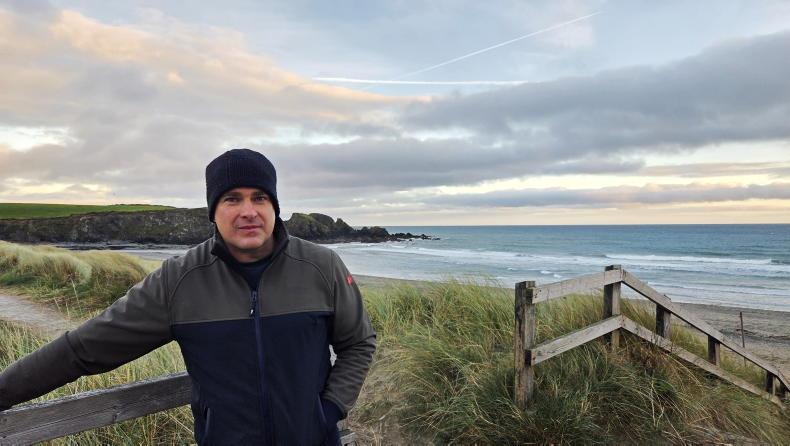
Local resident Jamie Power at Bunmahon Beach.
I would really like if Elaine McGoff went to Johnstown Castle, just up the road from Our Lady's Island, the next time they hold their biennial open day.
2022's 'Farming for a Better Future' event was entitled 'Technologies for today & tomorrow', with the 2024 event named 'Resilient and sustainable farming systems'.
I'm not suggesting she would suddenly decree that all her scientific evaluation was flawed. It's more that it would be an opportunity for a positive engagement around the hundreds of small steps being advocated by Teagasc and adopted by farmers to ensure they farm more in harmony with nature.
Ministerial buy-in
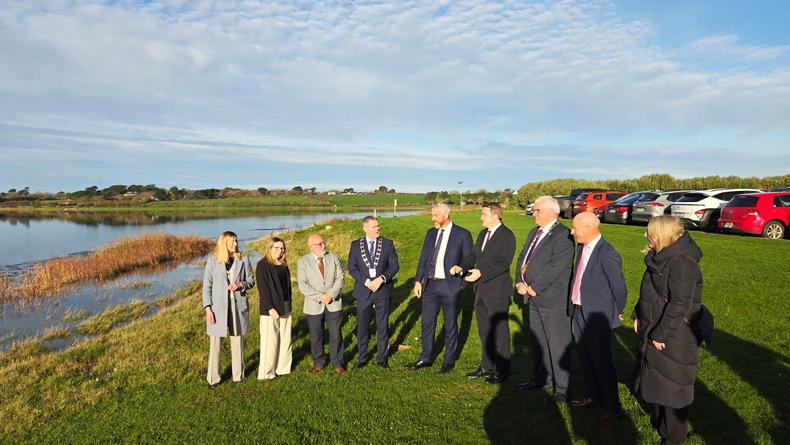
The following Friday (21 November), I was back at Our Lady's Island. On a stunning November morning, against the backdrop of the lagoon looking at it's best, Minister James Browne and Minsiter of State Christopher O'Sullivan announced €700,000 of funding to carry out that very analysis called for by all sides at the meeting four days earlier.
Both men seemed personally invested in the project. James Browne, like myself and most Wexford people who were children in the last century, he went there on pilgimage with his family during Augusts past. And here he was ensuring a quick response by his department to an urgent need.
Christopher O'Sullivan, as well as having ministerial responsibility for nature, heritage and biodiversity, is also a keen birdwatcher, who is familiar with this part of Wexford.
He will be taking a personal hands-on approach to the efforts, which will be led by Wexford County Council.
We all know that tough decisions lie ahead, but the honesty and buy-in that is palpable in the community at Our Lady's Island is the best possible start on what will be an uphill journey to a downstream sustainability.
Intensive and sustainable
We had our own local Irish Farmers' Association (IFA) branch annual general meeting (AGM) last Monday.
The guest speaker was Alan Poole, a farmer in Craanford who has a degree in environmental science and a doctorate in zoology. He spoke of the steps he has taken on his farm to ensure that the environmental footprint of his farm is minimised.
I think Alan and his wife Cheryl have taken part in every initiative possible, from the pollinator survey, swiftboxes and a sandmartin wall, the bat survey, increased space for nature - over one-fifth of the farm is dedicated to nature.
The water in the River Bann (the Wexford tributary of the Slaney - not the Northern Ireland river) running through Poole's farm is pristine.
You might think that the Pooles are farming in an extensive way, perhaps drystock, maybe organic tillage. Actually, Alan and Cheryl are dairy farmers and are intensively stocked.
They are availing of the nitrates derogation, stocked close to the 220kg limit we expect the whole country to be operating under if the nitrates committee follows the inclination of environment commissioner Jessika Roswell and grant a derogation up until 2029.
The evidence from the Poole farm, which by the way is just one of many intensive dairy, drystock and tillage farms along the upper Bann catchment in north Wexford, stands in contrast to what is happening in Our Lady's Island.
One does not disprove the other, but perhaps we need to look more closely at why water is clean in farmed areas for learnings, just as we must intensively examine what is happening where water is polluted by excessive nutrients where intensive farming occurs.
If you want to see more of what Alan and Cheryl Poole are doing, visit www.poolebioschool.ie.
Irish Water and whataboutery
At farmers' meetings relating to nitrates and pollution, a little of our native tongue is often invoked - Uisce Éireann. Irish Water, as it is more commonly known, is responsible for both freshwater provision and public wastewater treatment in this country.
They are two demanding tasks and are linked. Good drinking water is dependent on good wastewater treatment, as it is on farmers observing the highest standards of slurry, farmyard manure and pesticide management.
The fact that 93% of Irish Water staff gained a bonus last year would suggest that they are performing both their key tasks superbly. If only that were true.
The most recent EPA report on water quality found that almost 60% of wastewater treatment plants under Irish Water's management failed to meet the standards specified in their licenses.
I spent some time recently in Bunmahon in Waterford, a beautiful village with a beautiful beach.
It's a noted surfers paradise, but has been blighted by pollution issues affecting bathing water quality.
It's obvious to anyone who looked at the Mahon River in the village that the outflow from the main treatment plant and indeed under closer inspection the three public treatment plants operated by Irish Water, falls short of what would be acceptable.
Despite years of this issue being raised everywhere from with all the regulatory authorities to the floor of the Dáil, it was only in March of this year that the bathing water profile finally acknowledged the pollution threat from improperly treated sewage.
You can read the full story here.
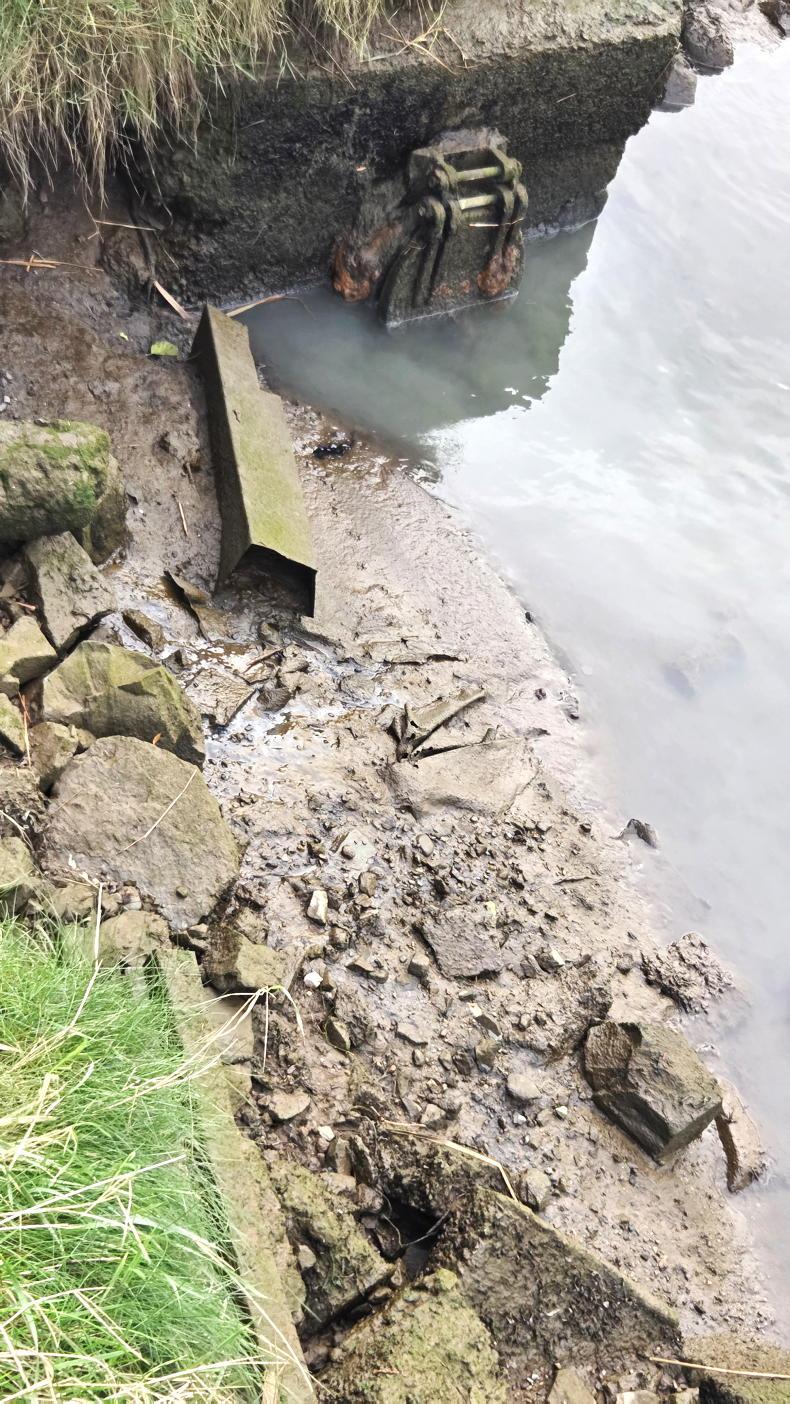
Seepage from the main wastewater treatment plant in Bunmahon can clearly be seen entering the River Mahon less than 100m from Bunmahon beach on 27 October 2025
When farmers raise such issues, they are sometimes accused of whataboutery. This would be valid if the farmers concerned were attempting to downplay the issues facing farming, particularly around nutrient loss. But that is not the point I've heard being made.
What I do hear is that all pollution not attributed elsewhere is assigned to farming, so failings in the system of attribution mean farming is being handed the blame for pollution being caused by others.
It's not denialism, it's simple and irrefutable logic. And what I've seen in Bunmahon - and across a significant body of documentation relating to that particular issue - gives me cause for concern.
Since the publication of the article, I've been contacted by farmers in Clare, in Dublin, in Wexford and in Dungarvan down Waterford's gold coast, all saying they are experiencing similar frustrations with Irish Water.
Farming must clean up it's act, but it shouldn't have to carry the can for the failings of State bodies.
I was in Our Lady's Island twice in the space of five days last week. Both were related to the issues facing Ireland's largest saltwater lagoon.
In recent years, elevated nutrient levels have led to significant algal bloom, particularly in summer.
This is a sign of poor environmental health, with the nitrogen produced by the algae starving marine life of oxygen.
The first occasion was a public meeting, where An Taisce's head of advocacy, Dr Elaine McGoff, was the guest speaker.
Elaine has spoken frequently of how her research, which leans on research carried out by Teagasc, suggests that there is a nitrates problem associated with intensive dairy farming that is unfixable, except by lowering stocking rates.
The urine of grazing cows accounts for 63% - almost two-thirds - of the nitrates from dairy farming. Chemical fertiliser is responsible for 28%, with the remaining 8% coming from applied slurry.
And there is nothing that has been found to slow the flow of such nitrogen through soils and to groundwater. While buffer zones are helpful in trapping phosphorus, they are ineffective against nitrogen (N) leakage from land.
McGoff's doctorate is in freshwater ecology, so she is an expert in this field. I am not and until I hear an evidence-based rebuttal of these assertions, I have to accept them as valid. This is problematic for dairy farming.
"The EPA are referring to precipitous declines in our estuaries because of the nitrates issue, particularly around the southeast and east coasts" she said.
There is "a clear spatial overlap" between derogation farms and most elevated N levels in rivers, but "correlation doesn't equal causation" she said.
Indeed, others have highlighted the human population is more concentrated in these same regions.
And tillage farming is common in the most free-draining soils, and is the dominant farming activity in the catchment feeding Our Lady's Island's lagoon. The evidence from the Agricultural Catchments Programme shows that keeping nutrients from tillage fields out of groundwater remains a challenge
McGoff made a separate and important point around the impact of soil and land type on nutrient loss. Basically, land type is a bigger variable than stocking rate when it comes to N losses from grassland.
Frustration and annoyance
The farmer response to McGoff's presentation was one of anger. Perhaps anger is putting it a little too strongly, but there was certainly frustration and annoyance that her focus had so strongly been on farming.
More particularly on livestock farming and especially concerning the nitrates derogation, stocking intensity and dairy expansion.
Normally, I would be sat down at the back of the hall taking notes. But on this occasion I was sitting beside Elaine, as the meeting's organisers had asked me to moderate. And that gave me a different perspective.
I could feel the negativity from the floor towards the speaker and I felt honour bound to ensure that an atmosphere of mutual respect was maintained.
And the reality was that despite the negative response from a significant section of the audience, her conviction in her findings was unaffected.
In terms of recommendations, McGoff wanted to see an intense assessment of the various nutrient threats - agriculture, other industry, privately-owned septic tanks and treatment systems. And that action would only follow analysis. And that people being asked to change be supported in making those necessary changes.
There was very little difference in her position and that of the environmental scientists who attended from Wexford County Council or indeed the farmers. The difference was in the starting point as to the likely pollution source.
Farmers have told me of a drone being sent up in June over the lagoon and finding an intensity of algal bloom around the outflow from the local wastewater treatment plant.
I have no evidence of this - it's only hearsay - but given what I've seen recently, which I speak of later on in this article, I wouldn't be surprised if this were true.
Better future
Brendan Cooney is the senior executive scientist with Wexford County Council. He spoke of the buy-in from all sections of the local community in tackling the environmental challenge facing the lake.
In one of those coincidences that are commonplace in this little country, Elaine McGoff had referred to Lough Sheelin as an exemplar of how a polluted waterway could be tackled with farmer buy-in and behavioural change.
Brendan Cooney said that he had been the scientist on behalf of (as I recall) Cavan County Council, in that very project.
Local resident Jamie Power at Bunmahon Beach.
I would really like if Elaine McGoff went to Johnstown Castle, just up the road from Our Lady's Island, the next time they hold their biennial open day.
2022's 'Farming for a Better Future' event was entitled 'Technologies for today & tomorrow', with the 2024 event named 'Resilient and sustainable farming systems'.
I'm not suggesting she would suddenly decree that all her scientific evaluation was flawed. It's more that it would be an opportunity for a positive engagement around the hundreds of small steps being advocated by Teagasc and adopted by farmers to ensure they farm more in harmony with nature.
Ministerial buy-in
The following Friday (21 November), I was back at Our Lady's Island. On a stunning November morning, against the backdrop of the lagoon looking at it's best, Minister James Browne and Minsiter of State Christopher O'Sullivan announced €700,000 of funding to carry out that very analysis called for by all sides at the meeting four days earlier.
Both men seemed personally invested in the project. James Browne, like myself and most Wexford people who were children in the last century, he went there on pilgimage with his family during Augusts past. And here he was ensuring a quick response by his department to an urgent need.
Christopher O'Sullivan, as well as having ministerial responsibility for nature, heritage and biodiversity, is also a keen birdwatcher, who is familiar with this part of Wexford.
He will be taking a personal hands-on approach to the efforts, which will be led by Wexford County Council.
We all know that tough decisions lie ahead, but the honesty and buy-in that is palpable in the community at Our Lady's Island is the best possible start on what will be an uphill journey to a downstream sustainability.
Intensive and sustainable
We had our own local Irish Farmers' Association (IFA) branch annual general meeting (AGM) last Monday.
The guest speaker was Alan Poole, a farmer in Craanford who has a degree in environmental science and a doctorate in zoology. He spoke of the steps he has taken on his farm to ensure that the environmental footprint of his farm is minimised.
I think Alan and his wife Cheryl have taken part in every initiative possible, from the pollinator survey, swiftboxes and a sandmartin wall, the bat survey, increased space for nature - over one-fifth of the farm is dedicated to nature.
The water in the River Bann (the Wexford tributary of the Slaney - not the Northern Ireland river) running through Poole's farm is pristine.
You might think that the Pooles are farming in an extensive way, perhaps drystock, maybe organic tillage. Actually, Alan and Cheryl are dairy farmers and are intensively stocked.
They are availing of the nitrates derogation, stocked close to the 220kg limit we expect the whole country to be operating under if the nitrates committee follows the inclination of environment commissioner Jessika Roswell and grant a derogation up until 2029.
The evidence from the Poole farm, which by the way is just one of many intensive dairy, drystock and tillage farms along the upper Bann catchment in north Wexford, stands in contrast to what is happening in Our Lady's Island.
One does not disprove the other, but perhaps we need to look more closely at why water is clean in farmed areas for learnings, just as we must intensively examine what is happening where water is polluted by excessive nutrients where intensive farming occurs.
If you want to see more of what Alan and Cheryl Poole are doing, visit www.poolebioschool.ie.
Irish Water and whataboutery
At farmers' meetings relating to nitrates and pollution, a little of our native tongue is often invoked - Uisce Éireann. Irish Water, as it is more commonly known, is responsible for both freshwater provision and public wastewater treatment in this country.
They are two demanding tasks and are linked. Good drinking water is dependent on good wastewater treatment, as it is on farmers observing the highest standards of slurry, farmyard manure and pesticide management.
The fact that 93% of Irish Water staff gained a bonus last year would suggest that they are performing both their key tasks superbly. If only that were true.
The most recent EPA report on water quality found that almost 60% of wastewater treatment plants under Irish Water's management failed to meet the standards specified in their licenses.
I spent some time recently in Bunmahon in Waterford, a beautiful village with a beautiful beach.
It's a noted surfers paradise, but has been blighted by pollution issues affecting bathing water quality.
It's obvious to anyone who looked at the Mahon River in the village that the outflow from the main treatment plant and indeed under closer inspection the three public treatment plants operated by Irish Water, falls short of what would be acceptable.
Despite years of this issue being raised everywhere from with all the regulatory authorities to the floor of the Dáil, it was only in March of this year that the bathing water profile finally acknowledged the pollution threat from improperly treated sewage.
You can read the full story here.
Seepage from the main wastewater treatment plant in Bunmahon can clearly be seen entering the River Mahon less than 100m from Bunmahon beach on 27 October 2025
When farmers raise such issues, they are sometimes accused of whataboutery. This would be valid if the farmers concerned were attempting to downplay the issues facing farming, particularly around nutrient loss. But that is not the point I've heard being made.
What I do hear is that all pollution not attributed elsewhere is assigned to farming, so failings in the system of attribution mean farming is being handed the blame for pollution being caused by others.
It's not denialism, it's simple and irrefutable logic. And what I've seen in Bunmahon - and across a significant body of documentation relating to that particular issue - gives me cause for concern.
Since the publication of the article, I've been contacted by farmers in Clare, in Dublin, in Wexford and in Dungarvan down Waterford's gold coast, all saying they are experiencing similar frustrations with Irish Water.
Farming must clean up it's act, but it shouldn't have to carry the can for the failings of State bodies.






SHARING OPTIONS