


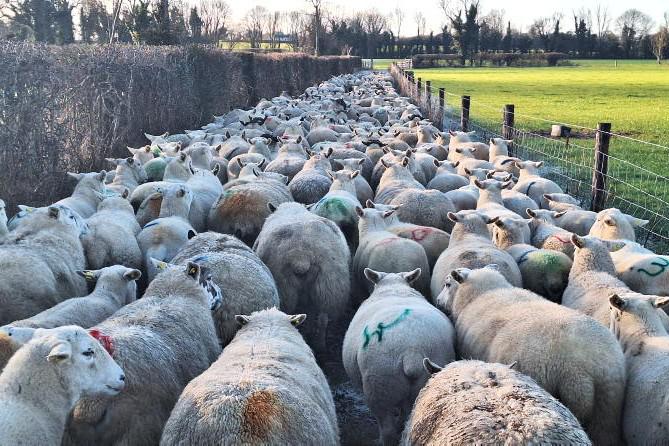
Many sheep farmers will be in the process of preparing sheds and ewe flocks for housing ahead of lambing. Below are some practical recommendations to ensure a successful housed period.
Key management decisions revolve around body condition scoring, feeding and shed hygiene.
When to house
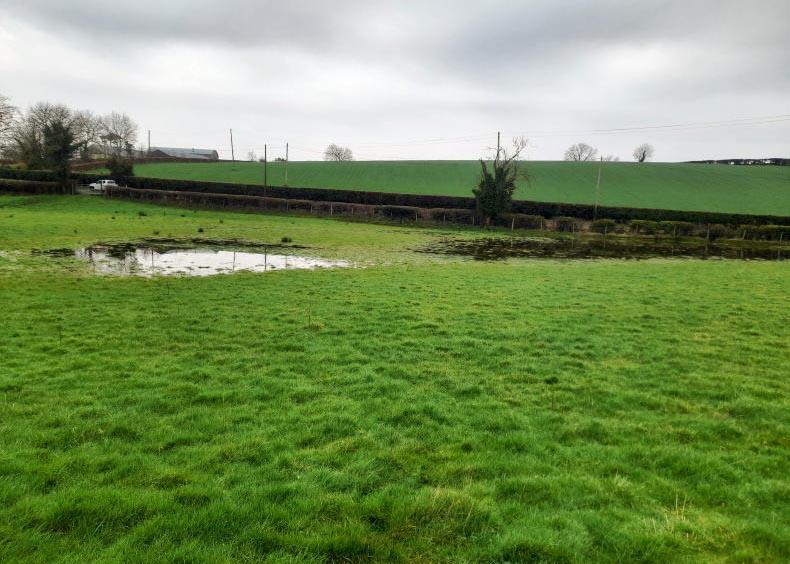
The decision on when to house should be based primarily on grass supply. Avoid re-grazing paddocks already closed for spring grass or early silage production.
Ideally, ewes should be housed when they are dry, if at all possible. This reduces the level of humidity that builds up in the shed, which can increase the risk of respiratory disease in housed ewes.
Footbathing
When housing ewes, it can give rise to rapid spread of infection, especially lameness in sheep. It is a critical management practice to prevent the introduction and spread of lameness-causing bacteria, such as scald and footrot, within a confined environment.
To ensure effectiveness of treatment, ensure the efficacy of solution is not altered by excessive dirt on ewes’ feet. This can be minimised by having ewes walk first through a water bath before entering the foot bath.
After exiting the footbath, ewes should be allowed to stand on a clean, dry surface for a minimum of 30 minutes to allow the treatment to penetrate the hoof before being moved to clean pens.
Batching ewes
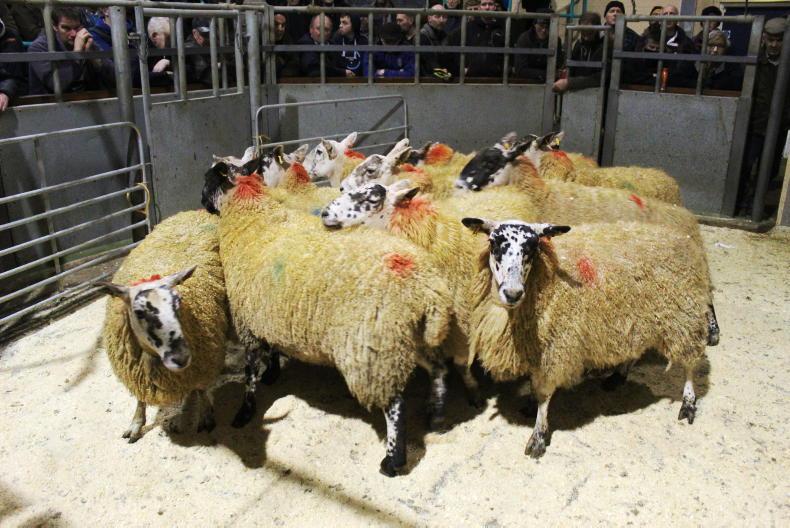
Batching pregnant ewes by body condition score (BCS) and scanning results (litter size) is a fundamental management practice for optimising pre-lambing nutrition and improving lamb survival rates.
Aim to lamb down lowland ewes at a BCS of 3-3.5 and hill ewes of BCS 3 in order to ensure ewes are fit with good mothering ability at lambing time.
If using raddles at mating time, it is also beneficial to group ewes on the basis of expecting lambing date. This will allow for more accurate feeding in late pregnancy.
Administering vaccination boosters for clostridial diseases at least 4-6 weeks prior to lambing, to ensure passive immunity for the new born lambs, can be made easier once ewes are batched appropriately.
Feeding ewes
During the last 6-8 weeks of pregnancy, 75% of lamb growth occurs. The nutritional needs of a ewe increase quite significantly due to the rapid growth of the lambs, and the reduction in stomach capacity means appetite can be reduced by 30%, making it difficult to consume adequate energy from forage alone.
Nutrition during late pregnancy (day 90-145) influences lamb birth weight and viability, colostrum supply, lambing difficulty, ewe mortality and subsequent lamb growth rates.
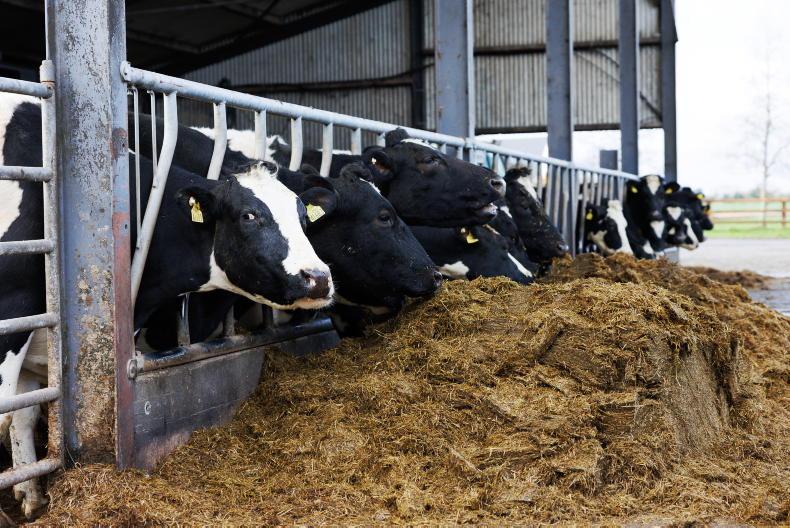
Only the best silage should be fed to ewes, preferably first cut with an ME of over 11 MJ/kg DM. The chop length of the silage must also be considered, as ewes are capable of consuming higher volumes.
The quantity of concentrates offered to ewes will depend on the feeding value of grass silage and the expected lamb crop. Typically, feed twin bearing ewes on good silage on a step-rate feeding system, increasing the amount of concentrate supplementation from 0.3kg at six weeks pre-lambing up to 0.8kg one week prior to lambing.
To ensure ewes maintain condition and produce high-quality colostrum, it is recommended to feed a pre-lambing ration of at least 18% crude protein. Protein quality is extremely important, so ensure that the ration contains good-quality ingredients, ideally soyabean meal as the main protein source, followed by rapeseed meal.
Look for a ration which contains high-energy ingredients such as barley, wheat, maize, citrus/beet pulp and distillers (be cautious with the levels of distillers as certain breeds are more susceptible to copper toxicity).
Space allowance
It is important to have adequate trough space to avoid competition and aggression when sheep are given concentrate feed, and to ensure all animals are fed together so that every ewe receives an adequate amount. It is recommended for lowland ewes to have 45cm feed space, with hill ewes requiring 30cm feed space.
Always ensure a good supply of fresh water, especially where high levels of concentrate feed are offered.
The lying space requirement for housed pregnant ewes with adequate ventilation and well-bedded on straw indoors is recommended 1.2-1.4m2 for lowland ewes of 60-90kg liveweight. Meanwhile, hill ewes with a liveweight of 45-65kg require 1-1.2m2 floor space during pregnancy.



SHARING OPTIONS