


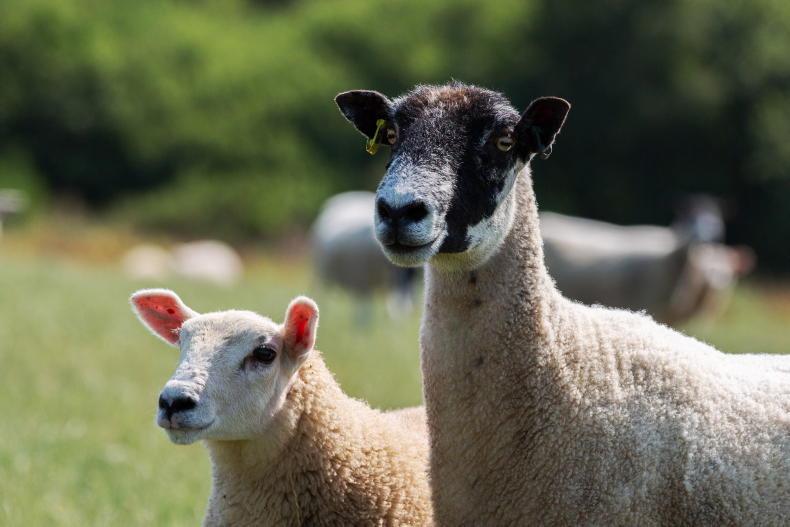
Early lambing ewes: Lambing is commencing in an increasing number of early lambing flocks. Many such flocks will be retaining ewes and lambs indoors for a period post-lambing, and during this time it is important to get feeding programmes right to maximise performance.
The high demand for protein in late gestation continues to build in early lactation. In normal circumstances this is satisfied by spring grass, but where ewes are retained indoors then there will be greater pressure, depending on feeding levels.
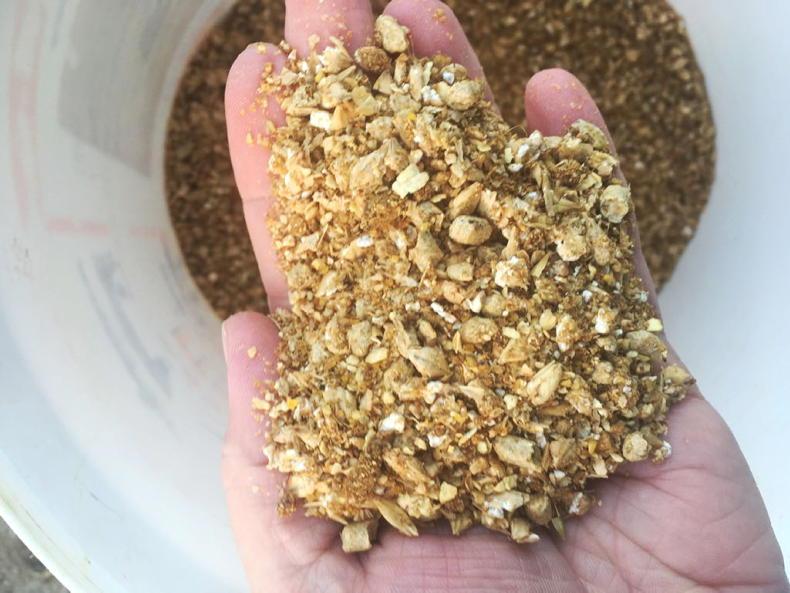
Continuing to feed an 18% to 20% crude protein concentrate is important.
Where high levels of concentrates are being fed daily, then the protein content can be scaled back to 16%.
However, where small numbers are being fed, then the overall saving from doing so is small and, therefore, it may be best not to alter the diet significantly if ewes are settled on high levels of meal.
Ewes in good body condition and suckling two lambs with access to good-quality forage will require in the region of 1.5kg concentrates daily and 0.3kg to 0.5kg higher if ewes are lacking flesh.
Where forage quality is poor, then it will only act as a roughage source, with ewes practically requiring ad-lib feeding. Teagasc advice where feeding a high-concentrate diet is a recommended crude fibre content of at least 7%.
It is wise to keep the diet constant for the first 24 to 36 hours post-lambing to allow ewes to adjust after the birthing process, with feeding levels stepped up over the space of a few days.
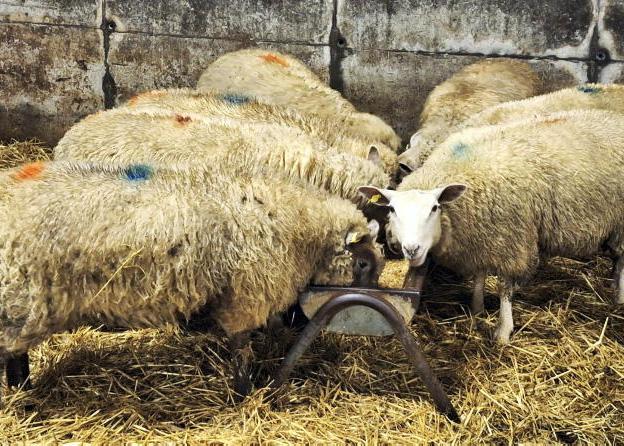
Pressure on space is an obvious challenge of retaining ewes indoors. The space requirement for a 70kg to 80kg lowland ewe on straw bedding is 1.2m² to 1.4m² (13ft² to 15ft²), with each additional lamb having a space requirement of 0.3m² (3.3ft²). Feeding space is also critical, with 500mm to 600mm of trough space recommended for large-framed lowland ewes.
It is also important to satisfy a higher water intake demand, with lactating ewes requiring upwards of 10l of fresh water per day. Hygiene is critical and straw usage should increase along with regular disinfecting and optimum management of feeding equipment to help prevent disease establishing.
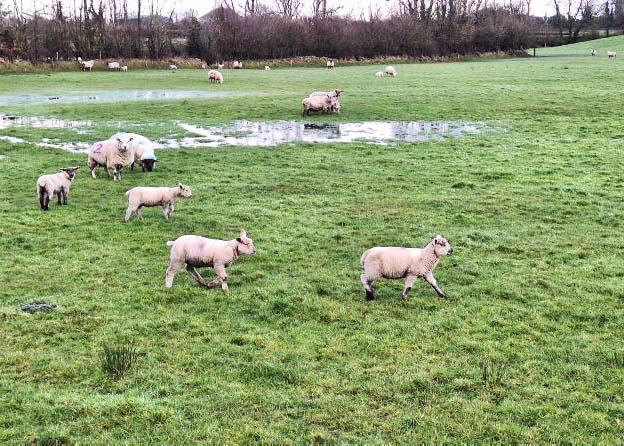
Where ewes and lambs are being turned outdoors, then shelter and a dry lie are paramount.
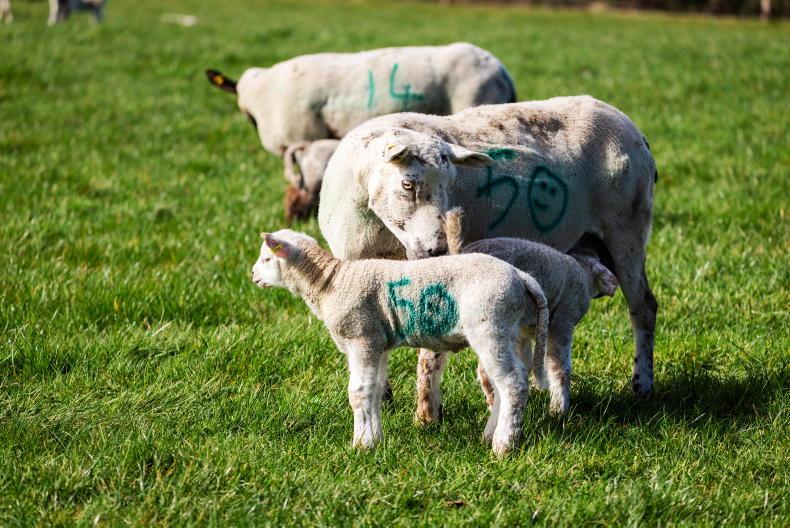
Ewes will benefit from concentrate supplementation at this stage of the year given the low dry matter in grass and challenging grass utilisation. Supplementation of 0.5kg will suffice for single suckling ewes with upwards of 0.8kg to 1kg beneficial for twin suckling ewes. These levels can be reduced as ewes acclimatise to an outdoor environment.
SIS and scanning records: The commonly selected action, scanning and recording of results, in the Sheep Improvement Scheme (SIS) requires participants to scan ewes, ideally between 70 and 100 days post-ram turnout and to manage ewes according to scanning results.
Details must be recorded in the scheme action booklet including the date of scanning, number of ewes scanned, litter size and number of barren ewes. The date on which ewes are grouped and when management commences post-scanning must also be recorded along with the number of ewes in each management group.
There is no need to alter existing feeding programmes as long as they are delivering on the objective of improving lamb survivability and reducing mortality. The general Teagasc feeding guidelines will work perfectly.



SHARING OPTIONS