We take a look at one reader's query on slurry and fertiliser - which should come first and how long should you wait between spreading one and the other?
It is better to have as little slurry as possible on existing vegetation which is to be regrazed.
ADVERTISEMENT
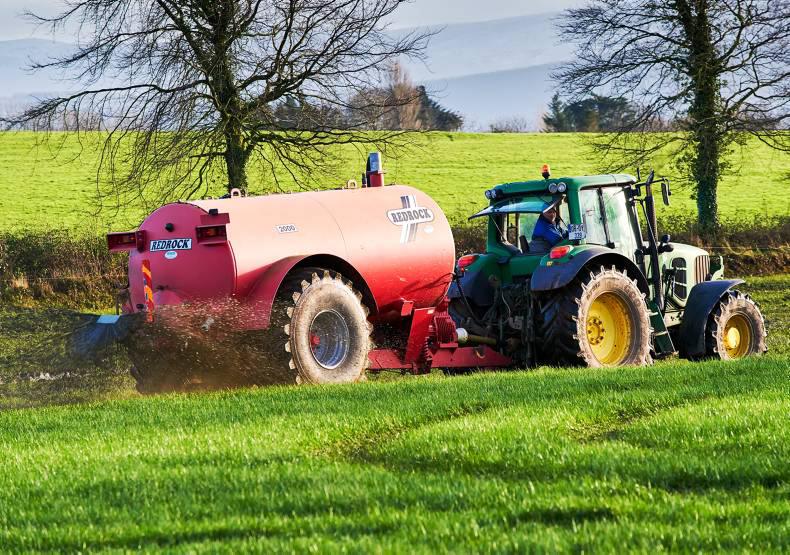
It is always recommended that slurry be applied immediately after grazing and to then wait seven days before applying chemical fertiliser to the same area, according to Brendan Horan, grassland systems research officer at Teagasc.
"This allows the slurry to be integrated quickly into the soil and ensures maximum subsequent response from applied chemical fertiliser afterwards," he said.
Irish Farmers Journal tillage expert Andy Doyle added that it is also better to have as little slurry as possible on existing vegetation which is to be regrazed, as the artificial fertiliser applied subsequently will work its way down through the vegetation and not impact on subsequent grazing.
ADVERTISEMENT
"The interval between the two will be influenced by weather at the time and the grass growth rates – the faster it is growing the more fertiliser it requires," he said.
This content is available to digital subscribers and loyalty code users only. Sign in to your account, use the code or subscribe to get unlimited access.
However, if you would like to share the information in this article, you may use the headline, summary and link below:
Title: Slurry or fertiliser: which should come first?
We take a look at one reader's query on slurry and fertiliser - which should come first and how long should you wait between spreading one and the other?
The reader loyalty code gives you full access to the site from when you enter it until the following Wednesday at 9pm. Find your unique code on the back page of Irish Country Living every week.
CODE ACCEPTED
You have full access to the site until next Wednesday at 9pm.
CODE NOT VALID
Please try again or contact support.
It is always recommended that slurry be applied immediately after grazing and to then wait seven days before applying chemical fertiliser to the same area, according to Brendan Horan, grassland systems research officer at Teagasc.
"This allows the slurry to be integrated quickly into the soil and ensures maximum subsequent response from applied chemical fertiliser afterwards," he said.
Irish Farmers Journal tillage expert Andy Doyle added that it is also better to have as little slurry as possible on existing vegetation which is to be regrazed, as the artificial fertiliser applied subsequently will work its way down through the vegetation and not impact on subsequent grazing.
"The interval between the two will be influenced by weather at the time and the grass growth rates – the faster it is growing the more fertiliser it requires," he said.
If you would like to speak to a member of our team, please call us on 01-4199525.
Link sent to your email address
We have sent an email to your address. Please click on the link in this email to reset your password. If you can't find it in your inbox, please check your spam folder. If you can't find the email, please call us on 01-4199525.
ENTER YOUR LOYALTY CODE:
The reader loyalty code gives you full access to the site from when you enter it until the following Wednesday at 9pm. Find your unique code on the back page of Irish Country Living every week.









SHARING OPTIONS