The Department of Agriculture has released its recommended maize lists for 2026. This year sees the return of the covered list for the first time since 2022.
The Department estimates that 70% of the maize crop is grown with a cover, although more and more farmers seem to be looking at the option of uncovered maize in recent years.
In 2021, the Single Use Plastics Directive was introduced and so the original plastic film could no longer be used to grow maize. This was then replaced with a biodegradable film, which breaks down after about six weeks.
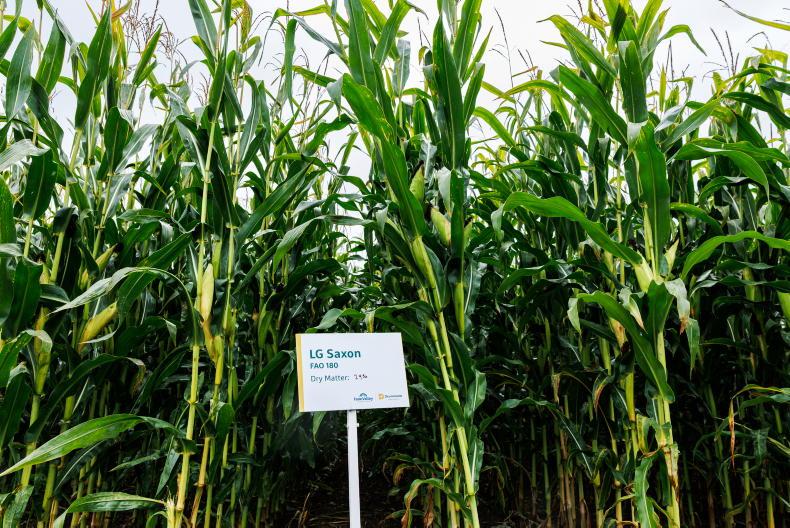
LG Saxon.
The Department of Agriculture had ceased trialling covered maize varieties in 2022, but recommenced using the biodegradable film in 2023. There are now three years of trials data available for these trials and so the Department has once again released a covered maize varieties list.
These lists contain the best of the varieties being trialled by the Department which are submitted by the seed companies. Approximately, 20 varieties are trialled in each set of trials – covered and uncovered.
What to look out for?
When deciding where to plant your maize you ideally need free-draining soil, want it to be south-facing and sheltered. Ideally, you would choose an earlier-maturing variety to get crops out early and in good condition. A wetter site, in a wet year could make harvest very difficult.
Covered list
One variety on the covered maize list is a medium-late maturing variety, while the others are early-medium or medium maturing. P8200 is the medium-late maturing variety and the dry matter yield score is 100. This is a control variety along with Emeleen. The highest variety on the list is Aramola with a score of 101. See table 1.
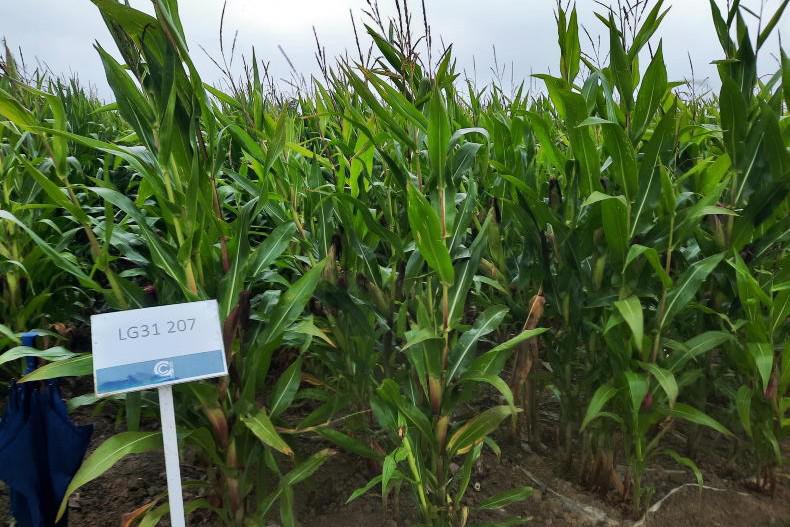
The variety with the lowest score of yield is LG31207 with a score of 98, but this has the highest score for starch yield at 103.
Emeleen rates highest for energy and is highest on dry matter content at a score of 105, the same as Aramola.
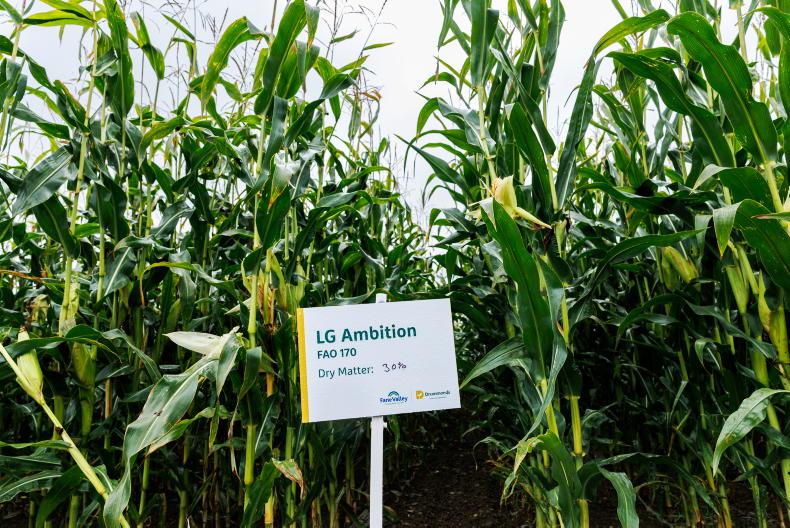
LG Ambition.
Uncovered maize
There is only one variety pushing towards late maturing on the uncovered maize list. KWS Anastasio is a medium to late variety, but it has a dry matter yield score of 106, the highest on the list alongside Saxon which a medium maturing variety. The closest varieties on yield to these varieties have a score of 101. See table 2.
P7179 has the highest score for starch content at 103. The closest to it is Ambition at 101. Ambition has been on the list since 2015. Some of the other varieties are much lower.
However, the varieties have high energy scores with P7179 at 11.1 and a range of 10.7-11.1 on the varieties. P7179 has a score for dry matter content of 103, again the highest after Ambition at 101.
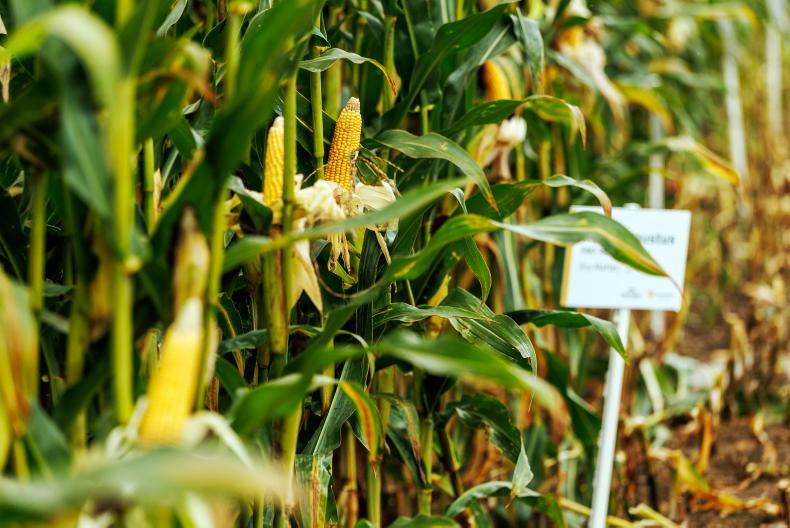
Maize trials at the Drummonds maize open day on their trial site in Betaghstown Co Louth. \ Philip Doyle
The Department of Agriculture has released its recommended maize lists for 2026. This year sees the return of the covered list for the first time since 2022.
The Department estimates that 70% of the maize crop is grown with a cover, although more and more farmers seem to be looking at the option of uncovered maize in recent years.
In 2021, the Single Use Plastics Directive was introduced and so the original plastic film could no longer be used to grow maize. This was then replaced with a biodegradable film, which breaks down after about six weeks.
LG Saxon.
The Department of Agriculture had ceased trialling covered maize varieties in 2022, but recommenced using the biodegradable film in 2023. There are now three years of trials data available for these trials and so the Department has once again released a covered maize varieties list.
These lists contain the best of the varieties being trialled by the Department which are submitted by the seed companies. Approximately, 20 varieties are trialled in each set of trials – covered and uncovered.
What to look out for?
When deciding where to plant your maize you ideally need free-draining soil, want it to be south-facing and sheltered. Ideally, you would choose an earlier-maturing variety to get crops out early and in good condition. A wetter site, in a wet year could make harvest very difficult.
Covered list
One variety on the covered maize list is a medium-late maturing variety, while the others are early-medium or medium maturing. P8200 is the medium-late maturing variety and the dry matter yield score is 100. This is a control variety along with Emeleen. The highest variety on the list is Aramola with a score of 101. See table 1.
The variety with the lowest score of yield is LG31207 with a score of 98, but this has the highest score for starch yield at 103.
Emeleen rates highest for energy and is highest on dry matter content at a score of 105, the same as Aramola.
LG Ambition.
Uncovered maize
There is only one variety pushing towards late maturing on the uncovered maize list. KWS Anastasio is a medium to late variety, but it has a dry matter yield score of 106, the highest on the list alongside Saxon which a medium maturing variety. The closest varieties on yield to these varieties have a score of 101. See table 2.
P7179 has the highest score for starch content at 103. The closest to it is Ambition at 101. Ambition has been on the list since 2015. Some of the other varieties are much lower.
However, the varieties have high energy scores with P7179 at 11.1 and a range of 10.7-11.1 on the varieties. P7179 has a score for dry matter content of 103, again the highest after Ambition at 101.
Maize trials at the Drummonds maize open day on their trial site in Betaghstown Co Louth. \ Philip Doyle






SHARING OPTIONS