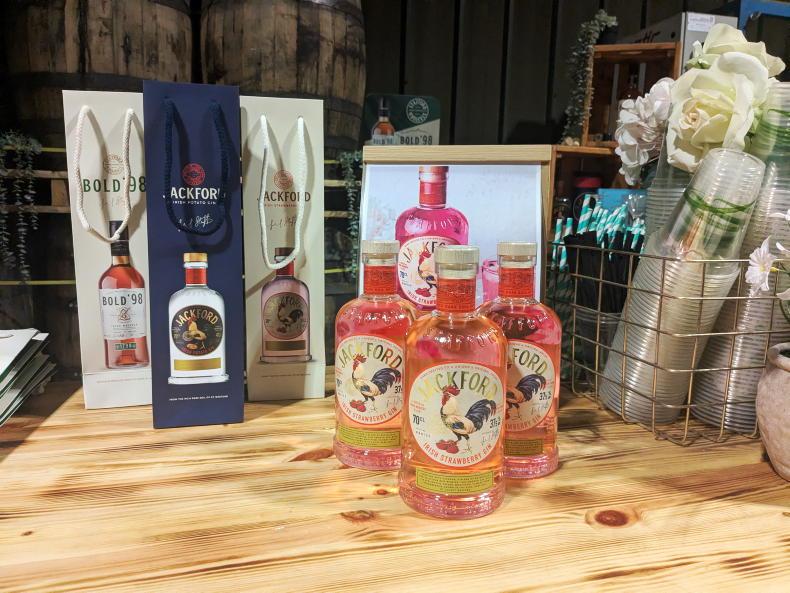
A desire to diversify the farm after a poor year for potatoes led Slaney Farms owner John Stafford to investigate the potential for the farm to process potatoes, produce crisps or make alcoholic drinks. After careful consideration, John decided on going down the alcohol route and Jackford Irish potato gin was born.
“Our gin is made from potatoes, which is a good bit more complicated. Most gin is made from grain and it’s a lot cheaper to manufacture,” John explained at the Irish Tillage and Land Use Society’s spring workshop.
There is also a lower extraction rate from potatoes, resulting in a lower yield of gin, but John believes in using potatoes from his own farm and the unique selling point it provides.
The majority of potatoes that Slaney Farms cannot sell into retail stores are sent for cattle feed, while others are sent for processing and there is a demand for over-sized potatoes in the food services sector too.
The potatoes may be misshapen or are the wrong size but they are still perfect to use.
While still on a small scale, this drinks venture has allowed the farm to use more of these potatoes for purposes other than cattle feed.
Located in Wexford, the next logical step for the business was to create a strawberry-infused potato gin to accompany the original potato gin. The gin is currently made off-site but a German gin still has been bought and installed on the farm. John hopes this will be up and running soon once they reach the level of production that is needed to operate the still.
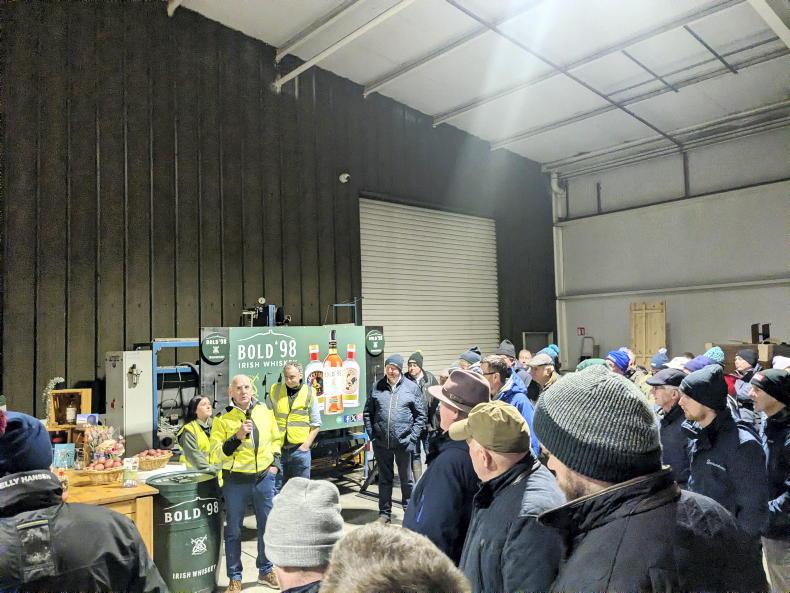
Some of the ITLUS crowd in Slaney Farms.
Whiskey
John noted that the gin did quite well for the farm, but consumer trends then moved towards whiskey. This led to the creation of Bold ’98, a blended whiskey named after the Irish Rebellion of 1798 due to the close proximity of the farm to the site of the battle of Vinegar Hill.
“Whiskey is probably the easier sell overall, and once you have whiskey, you can piggyback the gin on it,” John explained.
The decision was made to use an off-site distillery for the whiskey. While the whiskey business has been “very, very successful” so far, John noted that building a distillery would cost millions, and with the reduced demand for whiskey globally at present, he is relieved that they made this decision.
The whiskey side of the business is only a couple of years old and the first bottles hit the shelves a year ago.
John has high hopes for the future and currently some of the farm’s own barley is maturing in casks, which should be available in two years’ time.
A desire to diversify the farm after a poor year for potatoes led Slaney Farms owner John Stafford to investigate the potential for the farm to process potatoes, produce crisps or make alcoholic drinks. After careful consideration, John decided on going down the alcohol route and Jackford Irish potato gin was born.
“Our gin is made from potatoes, which is a good bit more complicated. Most gin is made from grain and it’s a lot cheaper to manufacture,” John explained at the Irish Tillage and Land Use Society’s spring workshop.
There is also a lower extraction rate from potatoes, resulting in a lower yield of gin, but John believes in using potatoes from his own farm and the unique selling point it provides.
The majority of potatoes that Slaney Farms cannot sell into retail stores are sent for cattle feed, while others are sent for processing and there is a demand for over-sized potatoes in the food services sector too.
The potatoes may be misshapen or are the wrong size but they are still perfect to use.
While still on a small scale, this drinks venture has allowed the farm to use more of these potatoes for purposes other than cattle feed.
Located in Wexford, the next logical step for the business was to create a strawberry-infused potato gin to accompany the original potato gin. The gin is currently made off-site but a German gin still has been bought and installed on the farm. John hopes this will be up and running soon once they reach the level of production that is needed to operate the still.
Some of the ITLUS crowd in Slaney Farms.
Whiskey
John noted that the gin did quite well for the farm, but consumer trends then moved towards whiskey. This led to the creation of Bold ’98, a blended whiskey named after the Irish Rebellion of 1798 due to the close proximity of the farm to the site of the battle of Vinegar Hill.
“Whiskey is probably the easier sell overall, and once you have whiskey, you can piggyback the gin on it,” John explained.
The decision was made to use an off-site distillery for the whiskey. While the whiskey business has been “very, very successful” so far, John noted that building a distillery would cost millions, and with the reduced demand for whiskey globally at present, he is relieved that they made this decision.
The whiskey side of the business is only a couple of years old and the first bottles hit the shelves a year ago.
John has high hopes for the future and currently some of the farm’s own barley is maturing in casks, which should be available in two years’ time.







SHARING OPTIONS