



Sowing: farmers are growing frustrated across the country as the season moves on and many crops have not yet been sown.
There does look to be a drier week in the forecast next week and possibly over the weekend so hopefully that comes to pass to allow sowing to take place and to begin on some farms. There are large areas of the country where sowing has yet to start, where ploughing has been done but crops have not been planted and there is also ploughing to be done.
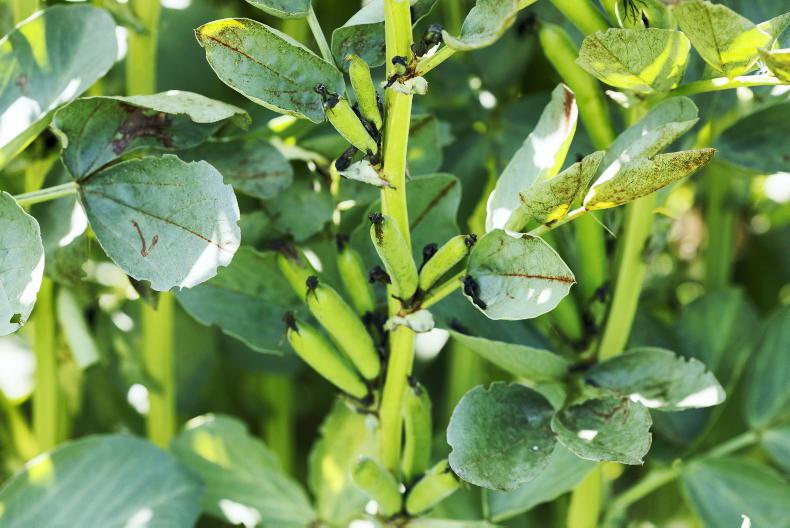
As the season moves on planting cereals, beet and maize will all run into one. Some still have beans to plant. It’s hard to leave them out when the protein payment is available and you have seed purchased.
Just be prepared to leave out fungicide from these crops to try and bring them in earlier for harvest as the later sowing is likely to result in a later harvest. Don’t plant them too deep at this stage.
Look at the positives soil is warming up, so when crops get into the ground they should come up quickly.
Wheat: T1 fungicides will go onto winter wheat crops in the coming days and weeks. It’s aimed at GS31-32 and the third last leaf should be fully emerged. That’s easier said than done. Some crops may be only after a T0 which will take pressure off T1s in bad weather.
As resistance becomes more-risky and rust has become a bigger issue it makes choosing fungicides a bit more complicated. If you used tebuconazole in the T0 then you should avoid tebuconazole and Revysol in the T1, so Ascra or Inatreq are your options, but check what you’re mixing it with. If disease pressure is low you might choose to keep Inatreq for later in the season.
If you used prothioconazole in the first spray then you should use something like Revysol in the T1. The main message is to try and alternate fungicides and always apply in a mix. Folpet should be applied at T1 and T2.
Growth regulators: as growth regulators continue to be applied to winter crops, be careful of frost at night and extremes in temperatures from day to night. There has been a nice bit of scorch in crops from liquid nitrogen and growth regulators in recent weeks.
Spring crops: nitrogen should be applied to crops that are up, albeit there are not many of these. Consider front-loading nitrogen into the seedbed of late-sown crops. Up the target plant count to 325 plants/m2 for spring barley from now on.
Late-April establishment is generally estimated at 90%, but you will know your own field conditions better than anyone else. Seed rates should increase slightly if you have it available.
Keep seed labels for crop records. April-sown crops are at higher risk of barley yellow dwarf virus so the advice is to apply an aphicide at the two to three-leaf stage.
It has been very cold lately so aphid numbers are likely to be lower, but it is up to each individual farmer if they spray or not. Spraying can also hit natural predators of aphids.




SHARING OPTIONS