In the first episode of our new series Yield Watch, we introduce you to Isaac Wheelock, who is trying to push a crop of winter wheat on yield this season near Enniscorthy, Co Wexford.
Isaac is a young farmer, enthusiastic about tillage and trying to maximise profit. He has a target in mind – 17.96t/ha or 7.27t/ac.
He is well aware that he might not meet this target, but has set the current world record for wheat yield as a target, which was reached by Tim Layman in Lincolnshire in the UK.
We will follow the crop throughout the year and catch up with Isaac, his agronomist and advisers to see why different advice is being given.
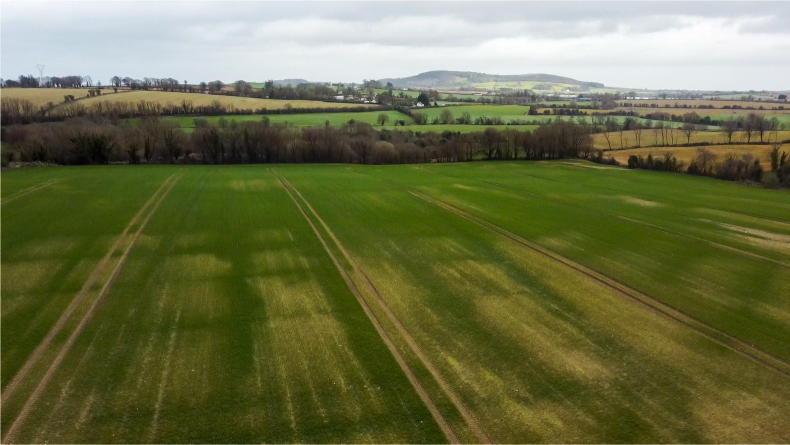
For background, the field has been in minimum tillage for 25 years and has received farmyard manure and slurry from the cattle enterprise on the farm. Soil health is good and earthworms are active, but the field is extremely wet in places, with springs in some parts.
High input
Isaac manages a high-input, high-output system on his farm. His other wheat crops, some of which are in adjoining fields to this one, will receive a standard high-input programme on the farm, while Isaac will try some different things on this field and increase inputs.
He has already been leaf-sampling and will put a focus on crop nutrition and health. Timing will be key for any inputs in the field.
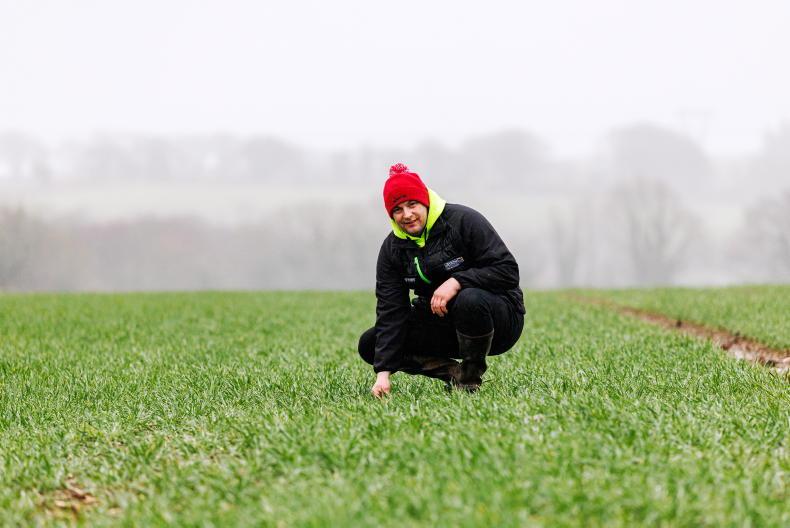
Isaac Wheelock walking his crop outside Clonroche in Co Wexford. The Irish Farmers Journal will follow the crop's progress throughout the year in a new series called Yield Watch. \ Philip Doyle
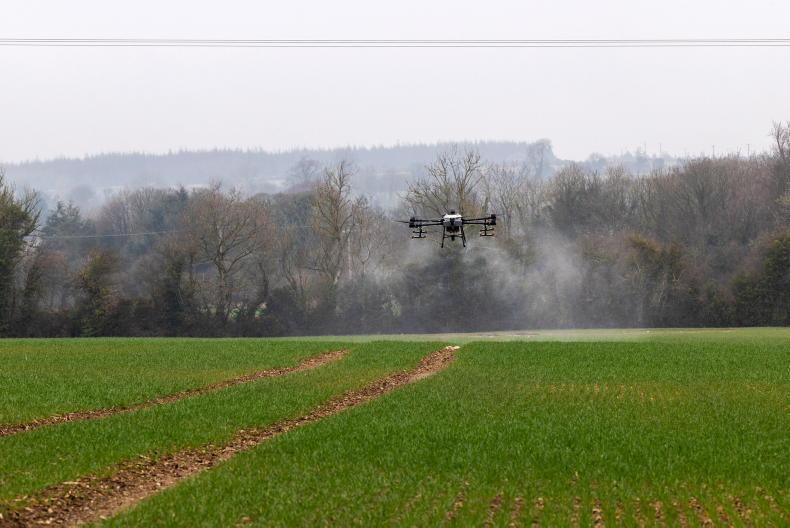
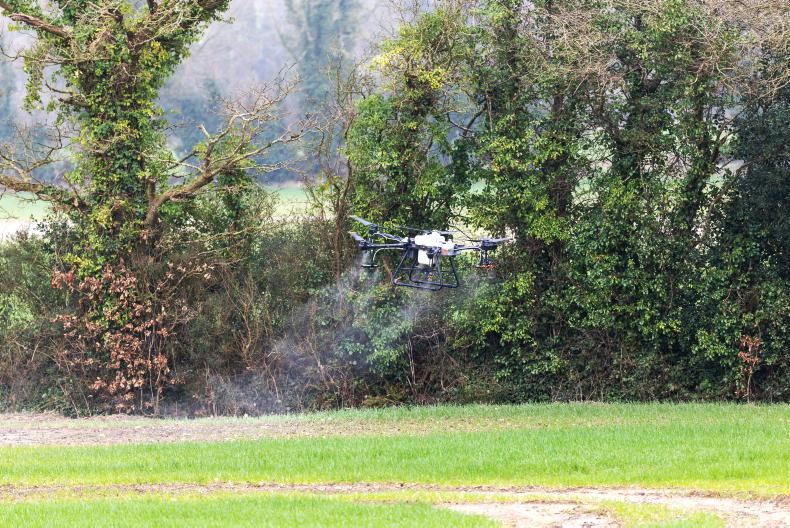
Since the video was filmed, trace elements were applied on 4 March using a drone. Drones cannot be used to apply plant protection products, but there are no rules around trace elements.
Isaac is confident that in order to push yield and make money, he must spend money.
“Generally, we’d be on a high-input programme across the board anyway. People will say 'oh you’re high inputs, the money is not in the grain market, you should be pulling back'. I think that is utter madness,” Isaac commented.
“I’ve already invested in the machinery. I’ve already invested in the land. We’re on 100% rented land, so there’s a big cost laid out there.
“You put the seed in the ground, you till the land, there’s another investment and no matter what happens you’re going to have to put the fertiliser out, so over 50% of your spend is spent already. To come along then and skimp on a spray programme I think is absolute madness.
“In order to get something out of it, you have to spend the money,” he said.
Crop facts
Variety: KWS Scope. Date sown: 11 October. Establishment type: Minimum tillage. Agronomy to date: Pre-emergence herbicide of Firebird Met, trace elements and an aphicide. Rainfall from sowing to 26 February: 652mm.
In the first episode of our new series Yield Watch, we introduce you to Isaac Wheelock, who is trying to push a crop of winter wheat on yield this season near Enniscorthy, Co Wexford.
Isaac is a young farmer, enthusiastic about tillage and trying to maximise profit. He has a target in mind – 17.96t/ha or 7.27t/ac.
He is well aware that he might not meet this target, but has set the current world record for wheat yield as a target, which was reached by Tim Layman in Lincolnshire in the UK.
We will follow the crop throughout the year and catch up with Isaac, his agronomist and advisers to see why different advice is being given.
For background, the field has been in minimum tillage for 25 years and has received farmyard manure and slurry from the cattle enterprise on the farm. Soil health is good and earthworms are active, but the field is extremely wet in places, with springs in some parts.
High input
Isaac manages a high-input, high-output system on his farm. His other wheat crops, some of which are in adjoining fields to this one, will receive a standard high-input programme on the farm, while Isaac will try some different things on this field and increase inputs.
He has already been leaf-sampling and will put a focus on crop nutrition and health. Timing will be key for any inputs in the field.
Isaac Wheelock walking his crop outside Clonroche in Co Wexford. The Irish Farmers Journal will follow the crop's progress throughout the year in a new series called Yield Watch. \ Philip Doyle
Since the video was filmed, trace elements were applied on 4 March using a drone. Drones cannot be used to apply plant protection products, but there are no rules around trace elements.
Isaac is confident that in order to push yield and make money, he must spend money.
“Generally, we’d be on a high-input programme across the board anyway. People will say 'oh you’re high inputs, the money is not in the grain market, you should be pulling back'. I think that is utter madness,” Isaac commented.
“I’ve already invested in the machinery. I’ve already invested in the land. We’re on 100% rented land, so there’s a big cost laid out there.
“You put the seed in the ground, you till the land, there’s another investment and no matter what happens you’re going to have to put the fertiliser out, so over 50% of your spend is spent already. To come along then and skimp on a spray programme I think is absolute madness.
“In order to get something out of it, you have to spend the money,” he said.
Crop facts
Variety: KWS Scope. Date sown: 11 October. Establishment type: Minimum tillage. Agronomy to date: Pre-emergence herbicide of Firebird Met, trace elements and an aphicide. Rainfall from sowing to 26 February: 652mm. 





SHARING OPTIONS