On 17 February, millions of people worldwide will gather to celebrate the year of the Fire Horse. This is the Chinese Lunar New Year – also known as Chunjié. If you’re Korean, it’s called Seollal. If you’re Vietnamese, Tét.
If you’re in Mongolia, you’ll be celebrating Tsagaan Sar, and if you’re in Tibet, it’s called Losar. Anyone with cultural connections to these countries is likely planning to celebrate, regardless of where in the world they currently live.
In many parts of east and southeast Asia, the lunar new year (celebrated on the second new moon from the winter solstice, according to the lunisolar calendar) is as big as Christmas is in western countries – it is the holiday everyone looks forward to all year. Schools close and adults get time off work to spend time with family and friends.
Mum’s cooking
Chinese Lunar New Year is celebrated in Ireland, too, just a bit more quietly. If you frequent Asian supermarkets, you’ve likely noticed shelves of red and gold lanterns in recent weeks – these are decorations to help ring in the new year.
Similar to Christmas, Chinese Lunar New Year is a time for families to gather over tables laden with delicious food, to give gifts, and to wish friends and neighbours good luck for the year to come.
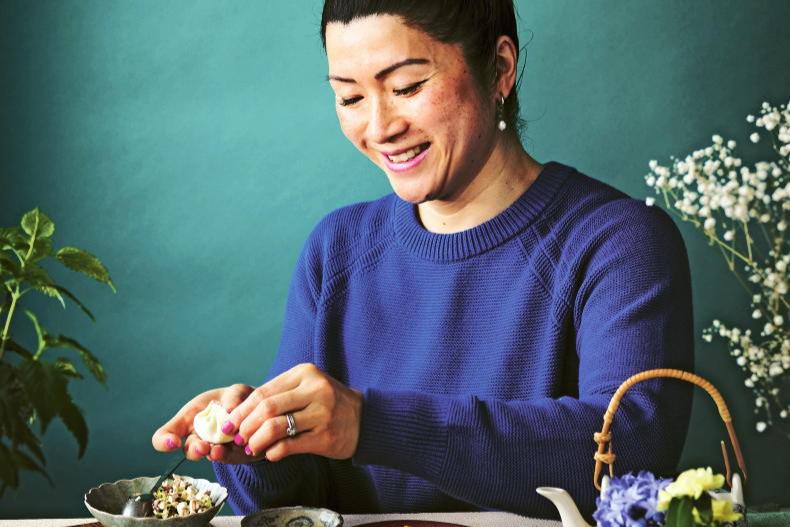
“We always celebrated Chinese New Year – my mum was so traditional,” says author and television presenter Suzie Lee Arbuthnot. Suzie has just published the third of her cookbook trilogy, Simply Speedy Chinese (preceded by Simply Chinese in 2022 and Simply Chinese Feasts in 2024), and her most recent television series Suzie Lee’s Great Food Made Simple aired last spring on BBC One.
Her parents moved to Lisburn, Northern Ireland in 1980 and established their restaurant, Man Lee Takeaway, which is still in operation today.
“For the new year, the house would be massively cleaned from top to bottom,” she recalls. “And everything was brushed out through the back door, so any bad luck went out through the back door. The house would be decorated in red and gold, which are very auspicious colours, and things like dumplings and spring rolls would be eaten as they have connotations with gold.
“Then we would have big family meals together. They were heavy on seafood and very festive [my second book, Simply Chinese Feasts, has a big section on foods for Chinese New Year]. This year, I’ll be making a big feast – we always lay the table with eight different dishes because eight is considered a very lucky number.
“I’m proud to carry these traditions through for my children, hence why they are forced to go to Chinese school every Saturday,” she adds, laughing.
Suzie’s Cantonese heritage is very important to her, and her mother has been the driving force behind her gastronomic journey. In fact, she dedicates all three
of her cookbooks to her mother’s memory – she sadly passed away when Suzie was 16.
“She just taught me everything I know,” she says fondly. “My favourite dish is in my first cookbook. It’s my mum’s egg char siu green bean hash. It sounds strange, but it’s fried egg with leftover char siu [Chinese barbecued pork] and green beans, and it’s so good with a bowl of rice. It brings back wonderful memories for me, and my kids love it.

Simply Speedy Chinese.
“When I had my children, I decided there was a real need for me to go, ‘Here are recipes your granny cooked,’ and for my work to be as much about legacy as it was about recipes. I’ve been so fortunate and blessed to pen these recipes and be able to tell my story behind them. This third book is a more relaxed version of how I cook these days.
“The kids are 11 and eight, and our meals have to be speedy and realistic.”
Before coming to Northern Ireland, Suzie’s parents first moved to Blackburn in the United Kingdom. Her uncle had come to Northern Ireland, though, and soon sent word to her parents, urging them to join him. The reason was purely economic.
“This was in the late 1970s, and at that time a bag of chips in Blackburn was selling for 10p,” Suzie explains. “In Northern Ireland, a bag of chips was selling for 50p – it was all about furthering your future and making sure your family would be secure.”
Chinese cuisine
Chinese cuisine is a bit of a gastronomic chimera. When it’s taken to a new place, it evolves into something more attuned to regional tastes. In Korea, you’ll find Chinese restaurants serving spicy seafood noodle soup and crispy fried pork. In Canada, you’ll find the beloved “combination plate”: honey garlic spareribs, chicken fried rice and egg rolls.
Here in Ireland? It’s a half and half (half chips, half rice), sweet and sour chicken and, in more recent years, spice bags, which have exploded in popularity.
“It’s fascinating,” Suzie says. “It is all about what we can get locally. My parents would have always said, ‘This is not true Chinese food, but it’s a version of it.’ You do it [authentically] to a certain level and then tweak it so the community will enjoy it.
“Breaking bread breaks down so many barriers, and that’s why Chinese takeaways have been so integral to Irish food,” she continues. “Irish Chinese isn’t authentic – and I’m not slagging it off at all, that’s just the truth of it.
“My family are now 40-something years into our takeaway, and we offer dishes like beef and broccoli to say, ‘This is actually what we eat, normally.’”
In a world increasingly attuned to cultural appropriation, Suzie is at peace with her own unique context: she is Irish, and she is Chinese.
Her latest Simply Speedy Chinese celebrates this diversity, and she says she is no longer worried about the “fusion” element to her cooking.
“My first two books were quite true and authentic by comparison,” she says. “This book says, ‘It’s okay.’ The flavours are there. Every Chinese family who has settled in different parts of the world have their own version of traditional recipes.
That’s how new cuisines are born. I am quite excited about this book; I’ve really embraced my authentic self. After all, I didn’t grow up in Hong Kong – I was born here in Northern Ireland.”
See suzieleecooks.com
On 17 February, millions of people worldwide will gather to celebrate the year of the Fire Horse. This is the Chinese Lunar New Year – also known as Chunjié. If you’re Korean, it’s called Seollal. If you’re Vietnamese, Tét.
If you’re in Mongolia, you’ll be celebrating Tsagaan Sar, and if you’re in Tibet, it’s called Losar. Anyone with cultural connections to these countries is likely planning to celebrate, regardless of where in the world they currently live.
In many parts of east and southeast Asia, the lunar new year (celebrated on the second new moon from the winter solstice, according to the lunisolar calendar) is as big as Christmas is in western countries – it is the holiday everyone looks forward to all year. Schools close and adults get time off work to spend time with family and friends.
Mum’s cooking
Chinese Lunar New Year is celebrated in Ireland, too, just a bit more quietly. If you frequent Asian supermarkets, you’ve likely noticed shelves of red and gold lanterns in recent weeks – these are decorations to help ring in the new year.
Similar to Christmas, Chinese Lunar New Year is a time for families to gather over tables laden with delicious food, to give gifts, and to wish friends and neighbours good luck for the year to come.
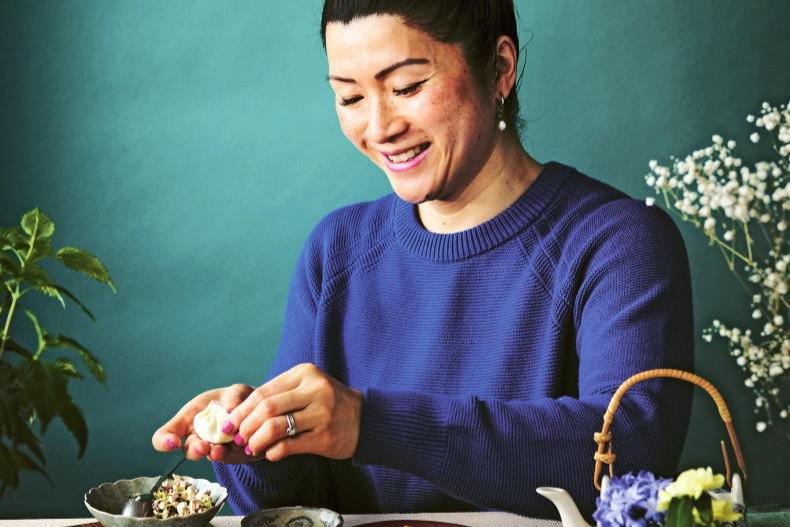
“We always celebrated Chinese New Year – my mum was so traditional,” says author and television presenter Suzie Lee Arbuthnot. Suzie has just published the third of her cookbook trilogy, Simply Speedy Chinese (preceded by Simply Chinese in 2022 and Simply Chinese Feasts in 2024), and her most recent television series Suzie Lee’s Great Food Made Simple aired last spring on BBC One.
Her parents moved to Lisburn, Northern Ireland in 1980 and established their restaurant, Man Lee Takeaway, which is still in operation today.
“For the new year, the house would be massively cleaned from top to bottom,” she recalls. “And everything was brushed out through the back door, so any bad luck went out through the back door. The house would be decorated in red and gold, which are very auspicious colours, and things like dumplings and spring rolls would be eaten as they have connotations with gold.
“Then we would have big family meals together. They were heavy on seafood and very festive [my second book, Simply Chinese Feasts, has a big section on foods for Chinese New Year]. This year, I’ll be making a big feast – we always lay the table with eight different dishes because eight is considered a very lucky number.
“I’m proud to carry these traditions through for my children, hence why they are forced to go to Chinese school every Saturday,” she adds, laughing.
Suzie’s Cantonese heritage is very important to her, and her mother has been the driving force behind her gastronomic journey. In fact, she dedicates all three
of her cookbooks to her mother’s memory – she sadly passed away when Suzie was 16.
“She just taught me everything I know,” she says fondly. “My favourite dish is in my first cookbook. It’s my mum’s egg char siu green bean hash. It sounds strange, but it’s fried egg with leftover char siu [Chinese barbecued pork] and green beans, and it’s so good with a bowl of rice. It brings back wonderful memories for me, and my kids love it.
Simply Speedy Chinese.
“When I had my children, I decided there was a real need for me to go, ‘Here are recipes your granny cooked,’ and for my work to be as much about legacy as it was about recipes. I’ve been so fortunate and blessed to pen these recipes and be able to tell my story behind them. This third book is a more relaxed version of how I cook these days.
“The kids are 11 and eight, and our meals have to be speedy and realistic.”
Before coming to Northern Ireland, Suzie’s parents first moved to Blackburn in the United Kingdom. Her uncle had come to Northern Ireland, though, and soon sent word to her parents, urging them to join him. The reason was purely economic.
“This was in the late 1970s, and at that time a bag of chips in Blackburn was selling for 10p,” Suzie explains. “In Northern Ireland, a bag of chips was selling for 50p – it was all about furthering your future and making sure your family would be secure.”
Chinese cuisine
Chinese cuisine is a bit of a gastronomic chimera. When it’s taken to a new place, it evolves into something more attuned to regional tastes. In Korea, you’ll find Chinese restaurants serving spicy seafood noodle soup and crispy fried pork. In Canada, you’ll find the beloved “combination plate”: honey garlic spareribs, chicken fried rice and egg rolls.
Here in Ireland? It’s a half and half (half chips, half rice), sweet and sour chicken and, in more recent years, spice bags, which have exploded in popularity.
“It’s fascinating,” Suzie says. “It is all about what we can get locally. My parents would have always said, ‘This is not true Chinese food, but it’s a version of it.’ You do it [authentically] to a certain level and then tweak it so the community will enjoy it.
“Breaking bread breaks down so many barriers, and that’s why Chinese takeaways have been so integral to Irish food,” she continues. “Irish Chinese isn’t authentic – and I’m not slagging it off at all, that’s just the truth of it.
“My family are now 40-something years into our takeaway, and we offer dishes like beef and broccoli to say, ‘This is actually what we eat, normally.’”
In a world increasingly attuned to cultural appropriation, Suzie is at peace with her own unique context: she is Irish, and she is Chinese.
Her latest Simply Speedy Chinese celebrates this diversity, and she says she is no longer worried about the “fusion” element to her cooking.
“My first two books were quite true and authentic by comparison,” she says. “This book says, ‘It’s okay.’ The flavours are there. Every Chinese family who has settled in different parts of the world have their own version of traditional recipes.
That’s how new cuisines are born. I am quite excited about this book; I’ve really embraced my authentic self. After all, I didn’t grow up in Hong Kong – I was born here in Northern Ireland.”
See suzieleecooks.com





SHARING OPTIONS