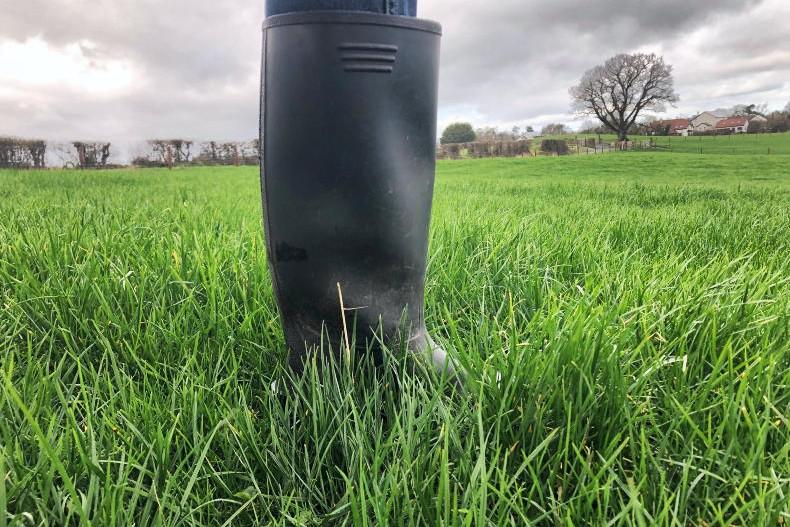
With many farmers recording growth rates in the high 30’s and low 40’s in terms of kilos of grass dry matter per hectare per day, it means it’s time to take action.
An indicator of the higher grass growth rates is that many farmers are finding they are getting more grazings per paddock than they thought.
While it is still relatively early, the forecast does not suggest that a big reduction in grass growth rates is looming.
This tells me that farmers need to be proactive by increasing herd demand to take into account the extra grass growth.
The easiest way to do this is to reduce the amount of feed going into the cows whether that’s in the form of meal or silage.
There is no valid reason to feed silage when there is plenty of grass available. The higher-than-normal grass growth rates now are a real advantage to farmers as it means that silage can be saved.
Given the increased cost of silage in 2026 it makes no sense to be feeding silage unnecessarily. On meal, I see a lot of farmers are feeding 4kg and 5kg of meal but this should also be questioned given where grass growth is at.
At this stage, a herd stocked at three cows/ha and being fed 2kg of meal has a herd demand of 48kg DM/ha/day.
If grass growth rates are 40kg/ha/day it means that the demand is 8kg above growth rates over the space of a week average farm cover will decline by 56kg/ha.
This is a minimal decline considering most farms have an average farm cover in excess 880kg DM/ha which is well ahead of where it should be at this time of year.
It seems that the bad weather has meant that many farmers are well behind in terms of grazing and so there is lots of grass available on farms.
Now is the time to take action by reducing supplementary feed as soon as possible.
With many farmers recording growth rates in the high 30’s and low 40’s in terms of kilos of grass dry matter per hectare per day, it means it’s time to take action.
An indicator of the higher grass growth rates is that many farmers are finding they are getting more grazings per paddock than they thought.
While it is still relatively early, the forecast does not suggest that a big reduction in grass growth rates is looming.
This tells me that farmers need to be proactive by increasing herd demand to take into account the extra grass growth.
The easiest way to do this is to reduce the amount of feed going into the cows whether that’s in the form of meal or silage.
There is no valid reason to feed silage when there is plenty of grass available. The higher-than-normal grass growth rates now are a real advantage to farmers as it means that silage can be saved.
Given the increased cost of silage in 2026 it makes no sense to be feeding silage unnecessarily. On meal, I see a lot of farmers are feeding 4kg and 5kg of meal but this should also be questioned given where grass growth is at.
At this stage, a herd stocked at three cows/ha and being fed 2kg of meal has a herd demand of 48kg DM/ha/day.
If grass growth rates are 40kg/ha/day it means that the demand is 8kg above growth rates over the space of a week average farm cover will decline by 56kg/ha.
This is a minimal decline considering most farms have an average farm cover in excess 880kg DM/ha which is well ahead of where it should be at this time of year.
It seems that the bad weather has meant that many farmers are well behind in terms of grazing and so there is lots of grass available on farms.
Now is the time to take action by reducing supplementary feed as soon as possible.





SHARING OPTIONS