In recent years, the area of forage maize across the UK has grown by 5% to 10% annually, with that rate of growth expected to continue in 2026, a leading agronomist has suggested.
“It definitely has an ability to increase by at least another 10% this year. I don’t think I have had as many enquiries as I have had this year,” Ben Lowe from Agrii, told farmers at an event in Co Down last Friday.
With over 600,000 acres grown, maize is now a major crop in the UK, with 65% going to livestock feed, 25% to anaerobic digestion and 10% destined for grain.
While there is increased interest in maize grains, the Shropshire-based agronomist maintained that quality is variable, including in the southeast of England. Some farmers are now successfully crimping maize and utilising it as a moist feed.
However, despite advances in crop genetics and the potential impact of climate change, Lowe pointed out that much of the north and west of NI is still not suited to growing maize. Across other parts of NI, ultra-early and early varieties should only be used.
These early varieties need a shorter growing season to reach maturity, which is important given that both 2023 and 2024 came with a very late spring, while in 2025, harvest was difficult.
“The door is closing in on us in the autumn as well. You can take a lot of the pressure off [by variety choice],” said Lowe.
But when it comes to choosing varieties, the market is not as well regulated as for the likes of grass or cereal seeds, where a variety needs to be statistically better than existing options to make it onto recommended lists.
Instead, the British Society of Plant Breeders (BSPB) publishes a descriptive list of maize varieties.
“There are a lot of varieties on there that create a lot of noise. Marketing can get in the way,” said Lowe.
He also maintained that the way the data is collected does not always properly show the yield potential of early varieties as they tend to be harvested in trial work beyond their ideal cutting date.
As a result, changes are being made to how the descriptive list is formulated.
“It will take around three years to start fully filtering through, but we will have much more accurate data for you as growers, especially around that early sector. The yield potential of an ultra-early variety now is significant. A lot of the time, growers have to take a leap of faith and ignore the data,” said Lowe.
In 2025, he said ultra-earlies accounted for 18% of sales, with early varieties making up 76%, so effectively, late varieties have been squeezed out of the UK market.
Each maize variety comes with an FAO number, which is a measure of a number of factors used to measure crop maturity. A higher number indicates a longer growing season and more heat units will be required for the crop to reach maturity. Ultra-early varieties have an FAO number of 150 to 160, with early varieties ranging from 170 to 190.
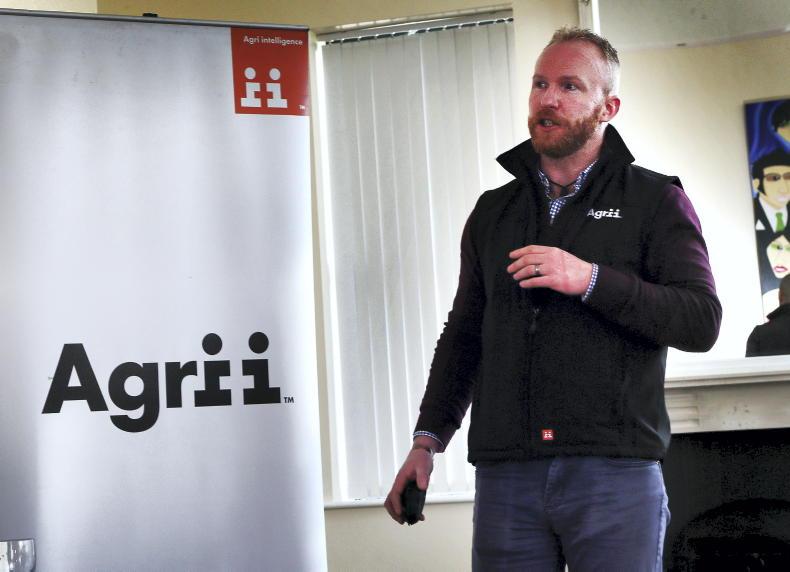
Event Speaker Ben Lowe, Agrii's National Forage Manager, at the Agrii maize meeting held in the La Mon hotel, Co Down. \ Peter Houston
Clear role for maize but challenges to overcome
Previous research has shown the production benefit to be had from including high-quality maize in dairy cow and beef finishing diets, so it could be used to displace bought-in concentrate feed.
There is also the potential to make use of excess nutrients from slurry and chicken manures to grow the crop, while utilising little to no artificial fertiliser. As a result, maize can be part of a solution to improving the environmental sustainability of NI agriculture.
But there are also environmental challenges, particularly where maize is harvested late in season, leaving bare soil which is prone to leaching over the winter.
“Maize hasn’t always had the best environmental picture possible. However, some of the advances that have been made [in crop breeding] have really started to improve that image,” said Ben Lowe.
In a normal year, ultra-early crops should be ready for harvest by the end of September, thereby greatly increasing the window to get a winter crop into the ground, or an alternative such as forage rye or conventional grass.
At harvest, he maintained that these very early crops can hit ideal dry matter (DM) of 32% to 34%, while still being green.
“Remember it is an early variety – that is the biggest thing – 90% of issues at harvest are because these crops are allowed to over-mature. Close to harvest, maize will gain 2% DM per week. Once the leaves are brown and crispy, you are just harvesting straw. It is too expensive a crop not to be maximising feed value,” said Lowe.
Plastic
He is also uncertain about the long-term future for growing maize under plastic.
As well as the cost, there is the wider drive towards minimising plastic in the environment and the fact that plastic has allowed farmers to grow maize on marginal sites, where there is little to no prospect of getting a winter crop into the ground post-harvest.
“I have no issue with plastic. We just need to work out a strategy around how we don’t use it where we can. We have to be prepared for someone to say this is not working,” said Lowe.
There are fully biodegradable plastics on the market, but the price is “eyewatering”.
Practical issues around maize harvest in 2025
Following on from the poor spring in 2024, which meant maize was late into the ground, a number of growers with arable operations in Co Down were advised in 2025 to use an ultra-early variety, such as KWS Leto.
However, 2025 turned into an excellent year, which meant the crop was ready for harvest in mid- to late September, which in practice, clashed with pressure to get fourth and fifth cuts of silage ensiled, late spring barley finished up and slurry out before the closed period. Some growers also maintained that Leto was more prone to lodging in high winds than other varieties and on some sites, storm Amy at the start of October did significant damage. Other, slightly later varieties such as Resolute, were not impacted.
“This year could be different – it is about finding a middle ground. Leto may not be a good variety to have everywhere. Topography and shelter do come into it as well.
“Resolute is super reliable, but it has its limitations for an arable farmer,” said Robin McMullan from Agrii.
In recent years, the area of forage maize across the UK has grown by 5% to 10% annually, with that rate of growth expected to continue in 2026, a leading agronomist has suggested.
“It definitely has an ability to increase by at least another 10% this year. I don’t think I have had as many enquiries as I have had this year,” Ben Lowe from Agrii, told farmers at an event in Co Down last Friday.
With over 600,000 acres grown, maize is now a major crop in the UK, with 65% going to livestock feed, 25% to anaerobic digestion and 10% destined for grain.
While there is increased interest in maize grains, the Shropshire-based agronomist maintained that quality is variable, including in the southeast of England. Some farmers are now successfully crimping maize and utilising it as a moist feed.
However, despite advances in crop genetics and the potential impact of climate change, Lowe pointed out that much of the north and west of NI is still not suited to growing maize. Across other parts of NI, ultra-early and early varieties should only be used.
These early varieties need a shorter growing season to reach maturity, which is important given that both 2023 and 2024 came with a very late spring, while in 2025, harvest was difficult.
“The door is closing in on us in the autumn as well. You can take a lot of the pressure off [by variety choice],” said Lowe.
But when it comes to choosing varieties, the market is not as well regulated as for the likes of grass or cereal seeds, where a variety needs to be statistically better than existing options to make it onto recommended lists.
Instead, the British Society of Plant Breeders (BSPB) publishes a descriptive list of maize varieties.
“There are a lot of varieties on there that create a lot of noise. Marketing can get in the way,” said Lowe.
He also maintained that the way the data is collected does not always properly show the yield potential of early varieties as they tend to be harvested in trial work beyond their ideal cutting date.
As a result, changes are being made to how the descriptive list is formulated.
“It will take around three years to start fully filtering through, but we will have much more accurate data for you as growers, especially around that early sector. The yield potential of an ultra-early variety now is significant. A lot of the time, growers have to take a leap of faith and ignore the data,” said Lowe.
In 2025, he said ultra-earlies accounted for 18% of sales, with early varieties making up 76%, so effectively, late varieties have been squeezed out of the UK market.
Each maize variety comes with an FAO number, which is a measure of a number of factors used to measure crop maturity. A higher number indicates a longer growing season and more heat units will be required for the crop to reach maturity. Ultra-early varieties have an FAO number of 150 to 160, with early varieties ranging from 170 to 190.
Event Speaker Ben Lowe, Agrii's National Forage Manager, at the Agrii maize meeting held in the La Mon hotel, Co Down. \ Peter Houston
Clear role for maize but challenges to overcome
Previous research has shown the production benefit to be had from including high-quality maize in dairy cow and beef finishing diets, so it could be used to displace bought-in concentrate feed.
There is also the potential to make use of excess nutrients from slurry and chicken manures to grow the crop, while utilising little to no artificial fertiliser. As a result, maize can be part of a solution to improving the environmental sustainability of NI agriculture.
But there are also environmental challenges, particularly where maize is harvested late in season, leaving bare soil which is prone to leaching over the winter.
“Maize hasn’t always had the best environmental picture possible. However, some of the advances that have been made [in crop breeding] have really started to improve that image,” said Ben Lowe.
In a normal year, ultra-early crops should be ready for harvest by the end of September, thereby greatly increasing the window to get a winter crop into the ground, or an alternative such as forage rye or conventional grass.
At harvest, he maintained that these very early crops can hit ideal dry matter (DM) of 32% to 34%, while still being green.
“Remember it is an early variety – that is the biggest thing – 90% of issues at harvest are because these crops are allowed to over-mature. Close to harvest, maize will gain 2% DM per week. Once the leaves are brown and crispy, you are just harvesting straw. It is too expensive a crop not to be maximising feed value,” said Lowe.
Plastic
He is also uncertain about the long-term future for growing maize under plastic.
As well as the cost, there is the wider drive towards minimising plastic in the environment and the fact that plastic has allowed farmers to grow maize on marginal sites, where there is little to no prospect of getting a winter crop into the ground post-harvest.
“I have no issue with plastic. We just need to work out a strategy around how we don’t use it where we can. We have to be prepared for someone to say this is not working,” said Lowe.
There are fully biodegradable plastics on the market, but the price is “eyewatering”.
Practical issues around maize harvest in 2025
Following on from the poor spring in 2024, which meant maize was late into the ground, a number of growers with arable operations in Co Down were advised in 2025 to use an ultra-early variety, such as KWS Leto.
However, 2025 turned into an excellent year, which meant the crop was ready for harvest in mid- to late September, which in practice, clashed with pressure to get fourth and fifth cuts of silage ensiled, late spring barley finished up and slurry out before the closed period. Some growers also maintained that Leto was more prone to lodging in high winds than other varieties and on some sites, storm Amy at the start of October did significant damage. Other, slightly later varieties such as Resolute, were not impacted.
“This year could be different – it is about finding a middle ground. Leto may not be a good variety to have everywhere. Topography and shelter do come into it as well.
“Resolute is super reliable, but it has its limitations for an arable farmer,” said Robin McMullan from Agrii.






SHARING OPTIONS