A young Wexford man has risen to the top of the Australian working dog trial world, sweeping national titles and fending off competition from seasoned trainers.
Aoidh Doyle from Craanford, Co Wexford, left home in 2011 at age 18, just after his Leaving Certificate, to embark on three months of shearing in New South Wales (NSW).
While in school, he had spent a few summers keeping sheep pushed up to Camolin shearer Roy Collier and his team, some of whom came over from Australia each summer.
“I kept in contact with one of them and came over to them,” Doyle said.
“I came over for three months, liked it a lot, and never went home.”
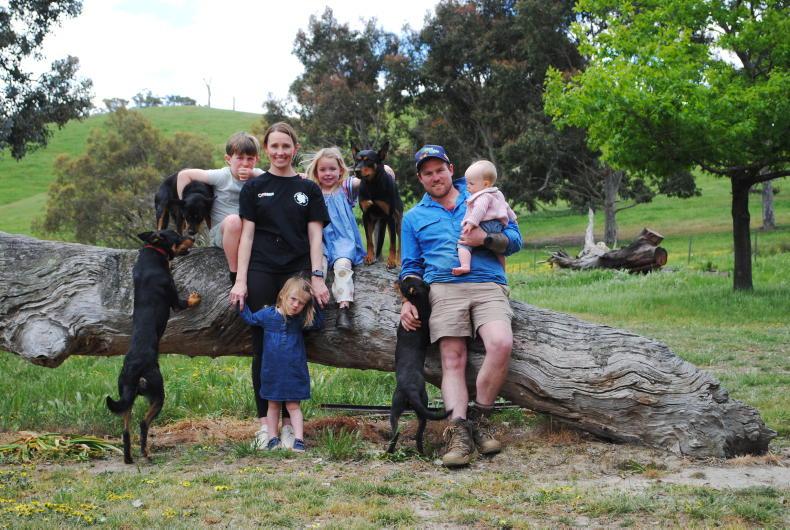
Fourteen years later, he has made a life for himself down under, settling near the central Victorian town of Alexandra, with Australian wife Darcy and their four children AJ, Heidi, Ella, and Macey.
Doyle now runs a stock and sheep shearing contracting business of his own, which employs 12 full-time staff and six to 10 part-timers.
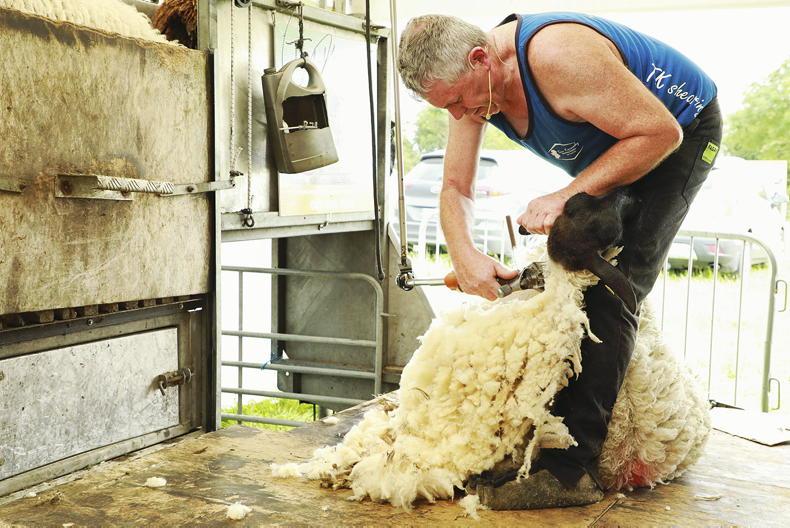
The business shears 150,000 sheep each year across northern Victoria and into New South Wales.
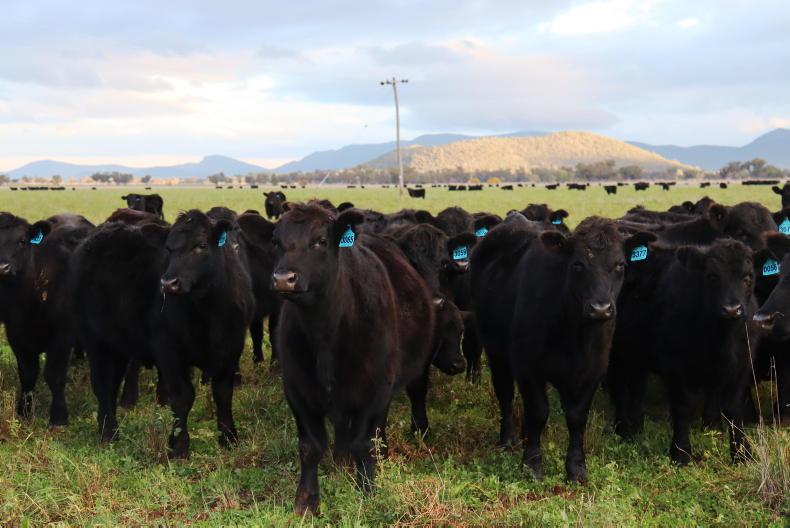
The Wexford native also farms 230ac of his own and leases a further 1,250ac, with 1,300 Merino ewes and 80 Angus cows.
He plans to take on more land and expand to at least 3,000 sheep in the years ahead.
It’s all juggled alongside what is perhaps the best string to his bow yet - major success on the extremely competitive Australian working dog trial circuit.

The Kelpie is used for sheep and cattle work on Australian farms. \ Barry Murphy
Dog trials
From 2018 to 2022, and before he got his own land, Doyle managed a local farm with 20,000 sheep and 1,400 cows.
It was this work, coupled with the sheep shearing, that started him on his dog trial journey.
“I needed dogs for the job so I had to try and build the team up,” he explained to the Irish Farmers Journal.
With him since 2018, Cash, (seven), and Snip (six), are two of his “superstar” Kelpies, and they have cleaned up in recent years.
There are two main types of working dog competitions in Australia. These include Kelpie field trials, which cover paddock and yard work, and are only open to registered Kelpies, and ‘yard dog’ trials, which are just about a dog’s yard work, and are open to any breed of dog, including Border Collies.
Cash took home Doyle’s first national title in 2022, winning the Australian Yard Dog Competition.
He was also Victorian State Yard Dog Champion in 2024 and 2025.
Snip won the Australian Yard Dog Competition title in 2024 and 2025.
She was also first in the national Kelpie field trials in 2024, meaning she did the double of both national titles, and was Victorian State Utility Champion (paddock and yard) in 2024 and 2025 as well.
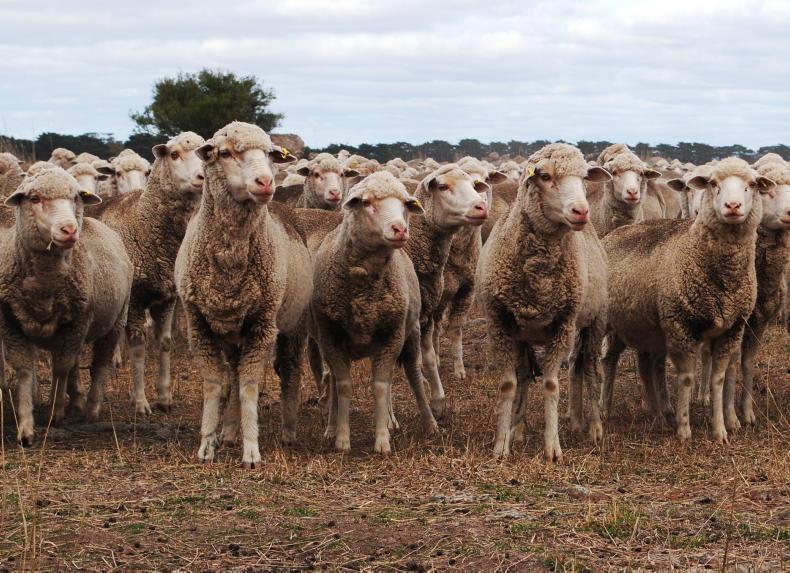
Doyle's sheep shearing business shears 150,000 sheep in a year. \ Barry Murphy
In summary, Doyle’s Kelpies have won four of the last six national working dog titles over the past three years, and all of the Victorian state titles over the past two years.
He puts the success down to the fact his dogs are always on a job.
“All I was doing was stock work every single day,” he said.
“With that type of work, you’re making an okay dog into a really good dog, and a really good dog into a superstar.”
However, he said the national titles were probably just as much down to his dogs’ nature.
“I’ve been lucky to have plenty of good dogs but what Snip and Cash have done, there’s probably not many like them,” he said.
“You learn a lot from them too.”
An Irish man among Aussies, Doyle said the dog trials, which can be anywhere from Tasmania to Queensland, also help him bring on more sheep shearing work.
“Some farmers will get you to come in to muster and drench sheep, help with weaning,” he said. “They all take the piss out of me being Irish too but at the end of the day, we’re all there to have a good time.”

Doyle plans lambing for when he's working off-farm. \ Barry Murphy
Dog training, sheep shearing, or cattle mustering, Doyle said he could now never see himself returning to Ireland.
His brothers Jonathan and Jamie are concrete cutters in Melbourne, another brother Danny is in Canada, soon to return to Australia, and sister Ciara works for his shearing business.
Parents James and Una Doyle run 100 dairy cows on 100ac at Craanford, and travel to see their children as often as possible.
“I’m probably the one that’s most passionate about the farming but I just have no interest in going back home,” Doyle said. “There are just more opportunities over here.”
He explained that there was little to hold a young farmer back, if they were willing to work hard.
“It’s just so much busier out here because there’s such scale,” he said.
“There’s not much room to expand back home but over here, there is.”
The Wexford native also felt there was far less “red tape” in Australian agriculture, and it is “easier to get money out of banks”.
“You don’t have all the [paperwork] over here compared to back home, with regulations,” he said.
Home farm
Sheep and beef farming are also different, according to Doyle.
He crosses his 1,300 Merino ewes back to White Suffolk and Poll Dorset rams for the prime (fat) lamb market.
Lambing takes place during July and August, the Victorian winter, to coincide with Doyle’s busiest time shearing.
“We go away [to NSW] with work,” he said. “I try to have them lambing while I’m away.
“I don’t go around ewes lambing or anything – I just let them lamb themselves. The theory over here with the Merinos is if you go in to save one, you’ll kill three, so you just let them be.”
That said, the flock runs at about 5% lamb mortality, not too far off indoor lambing with lambing cameras in Ireland. The lambs are weaned at the end of October with the first load away before Christmas.
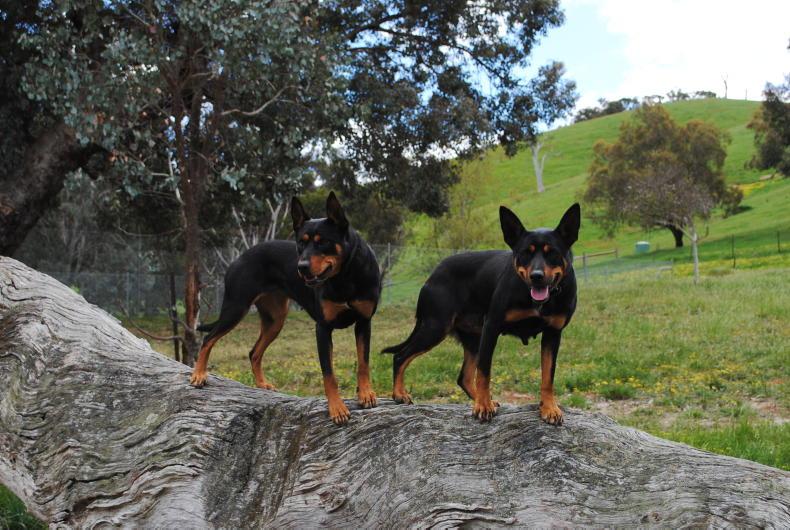
Doyle aims to breed and train natural, hard-working Kelpies for sheep and cattle farms. \ Barry Murphy
His 80 Angus cows calve in the autumn, March-April, and weanlings are sold in special sales each January.
“I’m the same with the cows, I just let them be,” he said. “I usually calve them along the road so when you’re on the way home, you sort of see what’s going on.”
Wool industry
Doyle highlighted that the Australian wool industry is also different from that of Ireland.
“With the Merino being a nicer fibre, it goes towards making suits and clothes,” he said. “We have to prepare it as best we can and a [wool] classer is there to grade it to make the farmer the best money.
“For every shearer, there’s one shed hand and there’s someone pressing out the wool out the back.”
Farmers are charged $10 (€5.70) per sheep shorn, with about $4.50 (€2.55) of that going to the actual shearer, with the best shearing 250 in a day.
“You have to pay a shearer out of that, a wool handler, a classer, work cover, superannuation,” Doyle said.
He described how an 18 micron wool off a Merino ewe is making $20 (€11.40) per kilogram, clean, with more than a $50 (€28.50) return to the farmer, per ewe.
He said that there were plenty of shearers available in Australia at present, but insisted there is still “good money” to be made by any Irish young person wanting to give it a go.
Darcy said she was glad those opportunities brought Doyle to Australian shores back when they were both only teens.
She said she never planned to meet and marry a man all the way from Wexford.
“That kind of came left of field but I’m so glad it did,” she said.
“I’ve seen so much of Australia, Victoria, and NSW, that I probably wouldn’t have if I hadn’t met Aoidh.”
A young Wexford man has risen to the top of the Australian working dog trial world, sweeping national titles and fending off competition from seasoned trainers.
Aoidh Doyle from Craanford, Co Wexford, left home in 2011 at age 18, just after his Leaving Certificate, to embark on three months of shearing in New South Wales (NSW).
While in school, he had spent a few summers keeping sheep pushed up to Camolin shearer Roy Collier and his team, some of whom came over from Australia each summer.
“I kept in contact with one of them and came over to them,” Doyle said.
“I came over for three months, liked it a lot, and never went home.”
Fourteen years later, he has made a life for himself down under, settling near the central Victorian town of Alexandra, with Australian wife Darcy and their four children AJ, Heidi, Ella, and Macey.
Doyle now runs a stock and sheep shearing contracting business of his own, which employs 12 full-time staff and six to 10 part-timers.
The business shears 150,000 sheep each year across northern Victoria and into New South Wales.
The Wexford native also farms 230ac of his own and leases a further 1,250ac, with 1,300 Merino ewes and 80 Angus cows.
He plans to take on more land and expand to at least 3,000 sheep in the years ahead.
It’s all juggled alongside what is perhaps the best string to his bow yet - major success on the extremely competitive Australian working dog trial circuit.
The Kelpie is used for sheep and cattle work on Australian farms. \ Barry Murphy
Dog trials
From 2018 to 2022, and before he got his own land, Doyle managed a local farm with 20,000 sheep and 1,400 cows.
It was this work, coupled with the sheep shearing, that started him on his dog trial journey.
“I needed dogs for the job so I had to try and build the team up,” he explained to the Irish Farmers Journal.
With him since 2018, Cash, (seven), and Snip (six), are two of his “superstar” Kelpies, and they have cleaned up in recent years.
There are two main types of working dog competitions in Australia. These include Kelpie field trials, which cover paddock and yard work, and are only open to registered Kelpies, and ‘yard dog’ trials, which are just about a dog’s yard work, and are open to any breed of dog, including Border Collies.
Cash took home Doyle’s first national title in 2022, winning the Australian Yard Dog Competition.
He was also Victorian State Yard Dog Champion in 2024 and 2025.
Snip won the Australian Yard Dog Competition title in 2024 and 2025.
She was also first in the national Kelpie field trials in 2024, meaning she did the double of both national titles, and was Victorian State Utility Champion (paddock and yard) in 2024 and 2025 as well.
Doyle's sheep shearing business shears 150,000 sheep in a year. \ Barry Murphy
In summary, Doyle’s Kelpies have won four of the last six national working dog titles over the past three years, and all of the Victorian state titles over the past two years.
He puts the success down to the fact his dogs are always on a job.
“All I was doing was stock work every single day,” he said.
“With that type of work, you’re making an okay dog into a really good dog, and a really good dog into a superstar.”
However, he said the national titles were probably just as much down to his dogs’ nature.
“I’ve been lucky to have plenty of good dogs but what Snip and Cash have done, there’s probably not many like them,” he said.
“You learn a lot from them too.”
An Irish man among Aussies, Doyle said the dog trials, which can be anywhere from Tasmania to Queensland, also help him bring on more sheep shearing work.
“Some farmers will get you to come in to muster and drench sheep, help with weaning,” he said. “They all take the piss out of me being Irish too but at the end of the day, we’re all there to have a good time.”
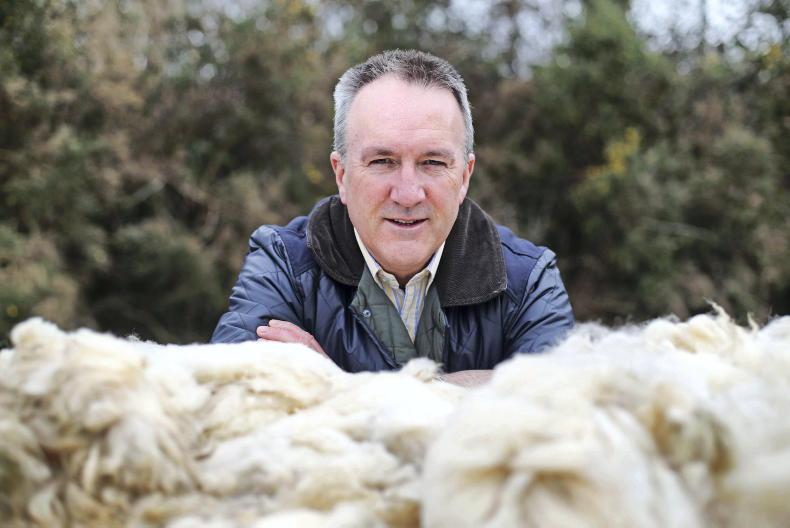
Doyle plans lambing for when he's working off-farm. \ Barry Murphy
Dog training, sheep shearing, or cattle mustering, Doyle said he could now never see himself returning to Ireland.
His brothers Jonathan and Jamie are concrete cutters in Melbourne, another brother Danny is in Canada, soon to return to Australia, and sister Ciara works for his shearing business.
Parents James and Una Doyle run 100 dairy cows on 100ac at Craanford, and travel to see their children as often as possible.
“I’m probably the one that’s most passionate about the farming but I just have no interest in going back home,” Doyle said. “There are just more opportunities over here.”
He explained that there was little to hold a young farmer back, if they were willing to work hard.
“It’s just so much busier out here because there’s such scale,” he said.
“There’s not much room to expand back home but over here, there is.”
The Wexford native also felt there was far less “red tape” in Australian agriculture, and it is “easier to get money out of banks”.
“You don’t have all the [paperwork] over here compared to back home, with regulations,” he said.
Home farm
Sheep and beef farming are also different, according to Doyle.
He crosses his 1,300 Merino ewes back to White Suffolk and Poll Dorset rams for the prime (fat) lamb market.
Lambing takes place during July and August, the Victorian winter, to coincide with Doyle’s busiest time shearing.
“We go away [to NSW] with work,” he said. “I try to have them lambing while I’m away.
“I don’t go around ewes lambing or anything – I just let them lamb themselves. The theory over here with the Merinos is if you go in to save one, you’ll kill three, so you just let them be.”
That said, the flock runs at about 5% lamb mortality, not too far off indoor lambing with lambing cameras in Ireland. The lambs are weaned at the end of October with the first load away before Christmas.
Doyle aims to breed and train natural, hard-working Kelpies for sheep and cattle farms. \ Barry Murphy
His 80 Angus cows calve in the autumn, March-April, and weanlings are sold in special sales each January.
“I’m the same with the cows, I just let them be,” he said. “I usually calve them along the road so when you’re on the way home, you sort of see what’s going on.”
Wool industry
Doyle highlighted that the Australian wool industry is also different from that of Ireland.
“With the Merino being a nicer fibre, it goes towards making suits and clothes,” he said. “We have to prepare it as best we can and a [wool] classer is there to grade it to make the farmer the best money.
“For every shearer, there’s one shed hand and there’s someone pressing out the wool out the back.”
Farmers are charged $10 (€5.70) per sheep shorn, with about $4.50 (€2.55) of that going to the actual shearer, with the best shearing 250 in a day.
“You have to pay a shearer out of that, a wool handler, a classer, work cover, superannuation,” Doyle said.
He described how an 18 micron wool off a Merino ewe is making $20 (€11.40) per kilogram, clean, with more than a $50 (€28.50) return to the farmer, per ewe.
He said that there were plenty of shearers available in Australia at present, but insisted there is still “good money” to be made by any Irish young person wanting to give it a go.
Darcy said she was glad those opportunities brought Doyle to Australian shores back when they were both only teens.
She said she never planned to meet and marry a man all the way from Wexford.
“That kind of came left of field but I’m so glad it did,” she said.
“I’ve seen so much of Australia, Victoria, and NSW, that I probably wouldn’t have if I hadn’t met Aoidh.”






SHARING OPTIONS