Stephen Wallace, Mountrath,
Co Laois
The rain has finally subsided in Laois but Stephen says it could take over a month for his land to dry out enough to get spring crops in, especially as some of it is wetter land. Therefore, he has made the decision not to plant beans this year; barley and oats will be planted instead. It would be too late getting the beans in, leading to a very late harvest in fields that are always a bit late in any given year.
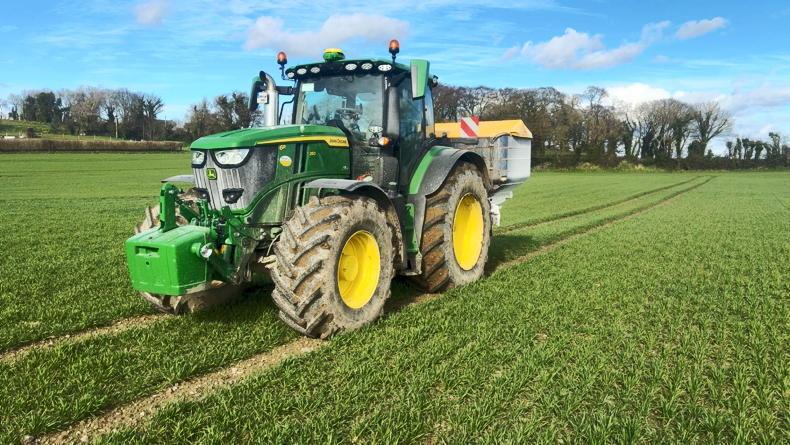
However, the ground was dry enough to get some fertiliser out on Saturday. The ground travelled quite easily but there were a few wet spots that Stephen just avoided completely.
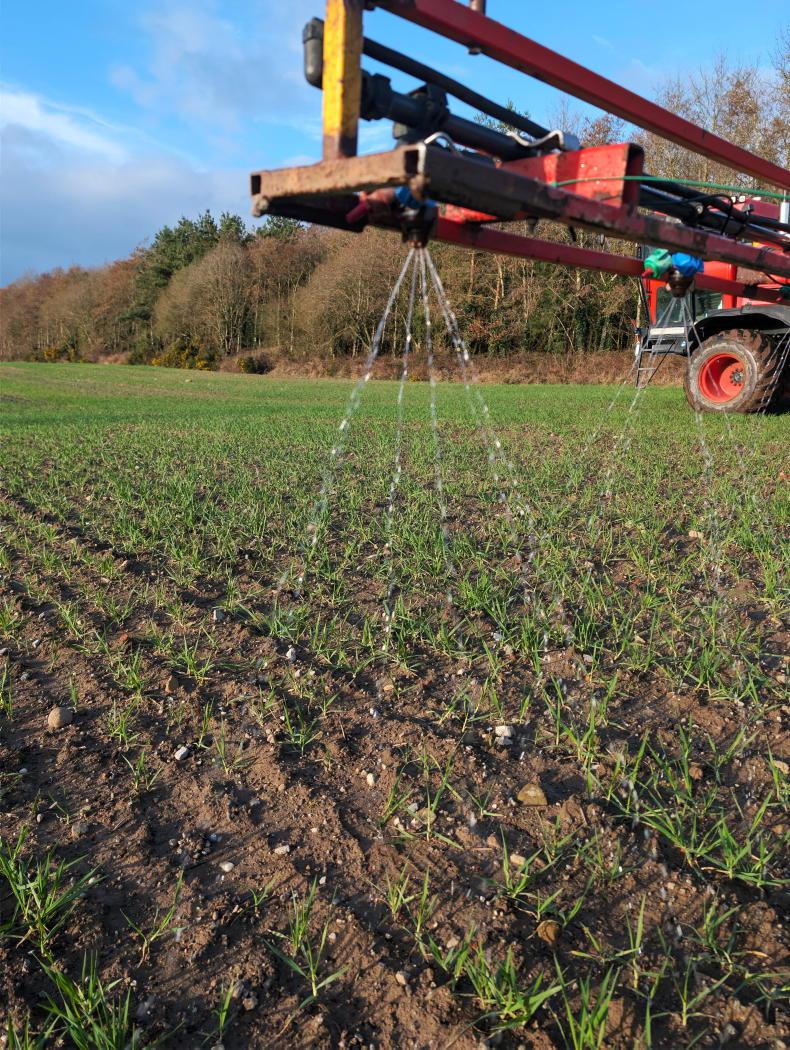
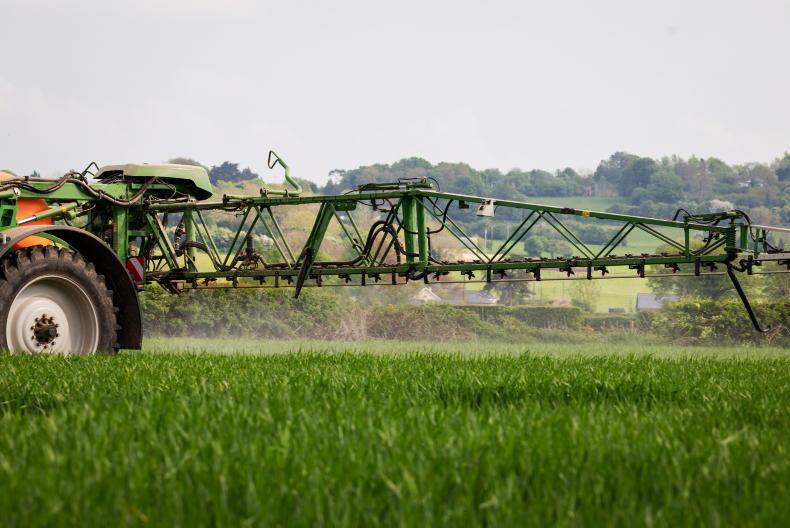
Stephen says he was really looking forward to getting back in the fields for the first time in a number of months. It was the first time he had ever used UAN liquid fertiliser, so it took a while to calibrate the sprayer. He applied 50kg/ha of nitrogen to the Belfry winter barley, KWS Tayo winter rye and RGT Hexton winter wheat. All of the cereals look quite well. They have not gone yellow at all like a lot of crops at present, something Stephen puts down to the digestate applied pre-sowing.
The LG Armada winter oilseed rape, planted on 20 September, is quite thin and the plants are very small. Despite this, Stephen is veering towards thinking that the crop is still viable. His only worry is that the oilseed rape roots are too small and will not allow the crop to grow quickly in the coming weeks.
He will keep a close eye on the oilseed rape in the next few weeks just in case the crop does not improve and it needs to be replanted.
Liquid nitrogen is being applied here too, with 60kg/ha of N going on to help the crop bounce back.
Michael Martin, Rathnure, Co Wexford
Ground conditions have been difficult for Michael to say the least, particularly for tractors pulling bulk fertiliser spreaders across soft headlands. He says there’s nothing quite like watching expensive tyres sink gently into a field to focus the mind.
So, in the interest of self-preservation and avoiding a rescue mission, a Bredal spreader was left parked safely in the shed and the old fertiliser spreader was dusted off. Michael says it might not turn heads at a machinery show but it got fertiliser out exactly where it was needed last week and sometimes that’s all that matters.
The KWS Cassia winter barley was beginning to look hungry for nitrogen, so it received three bags/ac of 10-10-20.
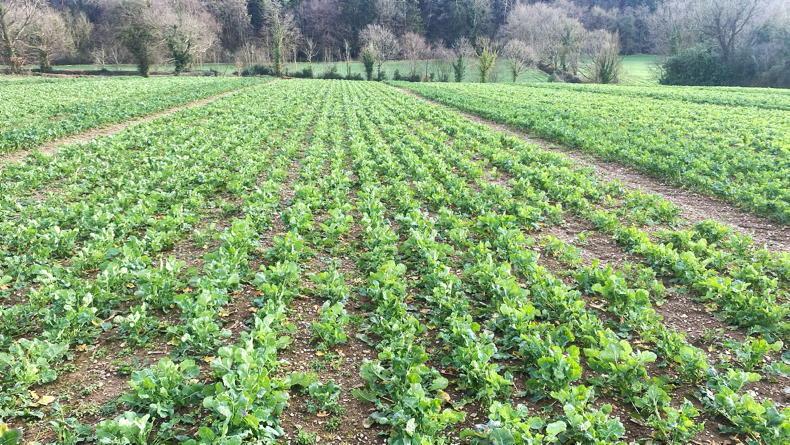
Winter oilseed rape being grown for seed on the Martin farm.
Michael says the aim was simple: give the crop the push it needs while hoping the nutrients stay in the crop rather than leaching out with the rainfall on Sunday. He adds that timing is everything in a year like this. The crop received its usual herbicide application back in November and thankfully it is looking clean with no real weed or disease pressure just yet, always a welcome sight in a challenging spring.
The winter oilseed rape received 2.8 bags/ac of 18-6-12+S, which should help maintain momentum as growth rates lift with improving temperatures. Despite the wet conditions, crops are looking remarkably well. Some of the farm’s land in New Ross, which has a dry, shingly soil type, has proven a real asset this season.
The tractor and spreader barely marked the surface, something Michael admits that many farmers around the country might look at with mild envy this week.
Soil temperatures in Wexford are hovering around 10°C and growth is evident. Once the weather dries up, Michael and the crew will be out with the ploughs.
Beans will be first into the ground, closely followed by spring barley. Michael comments that this spring may be soggy, but the crops are moving and that’s reason enough for optimism.
Donald Logue, Muff, Co Donegal
Land remains wet in Donegal and Donald is waiting patiently to get out into the fields. He says he is not blessed with the same soils and weather that is present in the southern parts of the country. He has been able to get some drainage done which will hopefully help the land to soak more quickly in future.
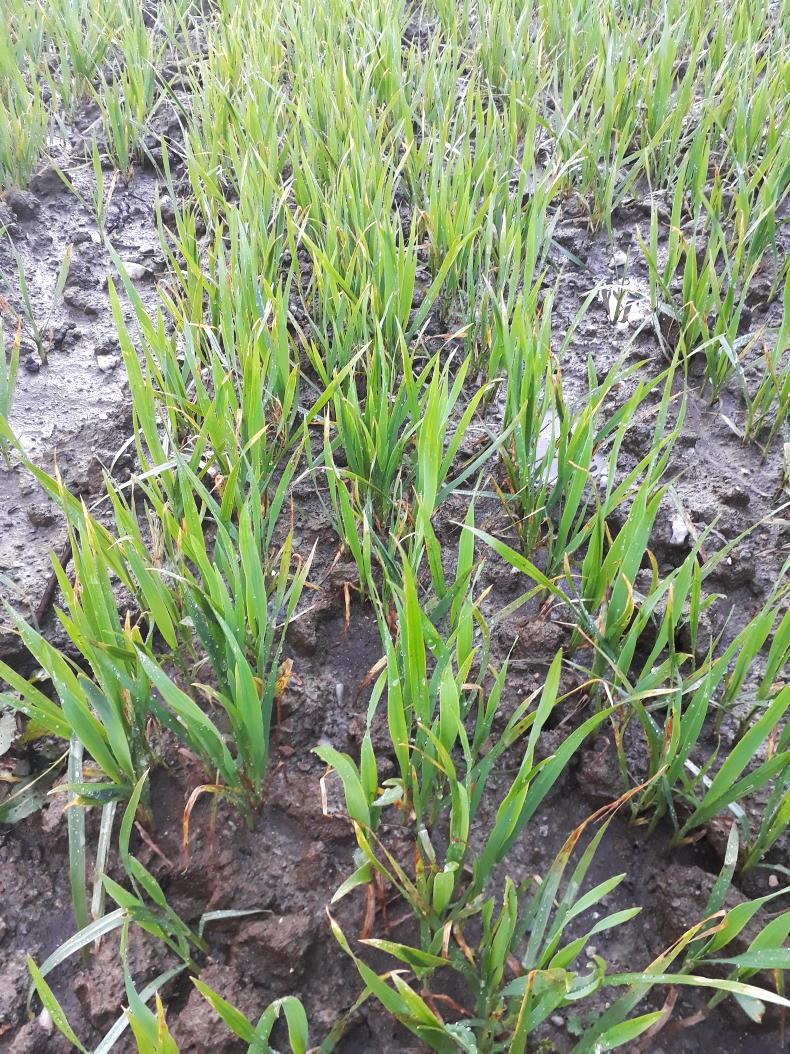
Donald's organic winter oats have no weeds in them but the soil remains saturated.
The organic winter oats are flying it despite the wet soils according to Donald. Growth has kicked off again with the soil temperature at the start of the week rising above 7°C. The canopy is starting to close in on the crop which should help to reduce the emergence of any weeds.
Donald is surprised at how clean the crop is at present. There won’t be any mechanical weeding of the crop so Donald is hoping that a full canopy will help to keep it this way.
Chicken manure pellets will be applied to the crop to give it a boost as soon as ground is trafficable.
If the weather stays dry for the next while, Donald says he hopes to get ploughing in ten days’ time. The first crop to be planted will be the potatoes if the seed potatoes arrive in time.
The variety Kelly has been the main variety on the farm in recent times, but Donald is thinking of trying out Setanta on the farm this year.
There will also be a change to his mixed crop. Beans will not be included as they held the crop back too long for harvest last year. This will leave barley, oats, and peas in the mix. The ratio of the three species will likely be 40:30:30 in barley’s favour.
The germination of vegetable seeds will begin in a couple of weeks in the propagation tunnel too.
Tomatoes, lettuce, spinach and spring onion will be the first crops to be germinated.
Stephen Wallace, Mountrath,
Co Laois
The rain has finally subsided in Laois but Stephen says it could take over a month for his land to dry out enough to get spring crops in, especially as some of it is wetter land. Therefore, he has made the decision not to plant beans this year; barley and oats will be planted instead. It would be too late getting the beans in, leading to a very late harvest in fields that are always a bit late in any given year.
However, the ground was dry enough to get some fertiliser out on Saturday. The ground travelled quite easily but there were a few wet spots that Stephen just avoided completely.
Stephen says he was really looking forward to getting back in the fields for the first time in a number of months. It was the first time he had ever used UAN liquid fertiliser, so it took a while to calibrate the sprayer. He applied 50kg/ha of nitrogen to the Belfry winter barley, KWS Tayo winter rye and RGT Hexton winter wheat. All of the cereals look quite well. They have not gone yellow at all like a lot of crops at present, something Stephen puts down to the digestate applied pre-sowing.
The LG Armada winter oilseed rape, planted on 20 September, is quite thin and the plants are very small. Despite this, Stephen is veering towards thinking that the crop is still viable. His only worry is that the oilseed rape roots are too small and will not allow the crop to grow quickly in the coming weeks.
He will keep a close eye on the oilseed rape in the next few weeks just in case the crop does not improve and it needs to be replanted.
Liquid nitrogen is being applied here too, with 60kg/ha of N going on to help the crop bounce back.
Michael Martin, Rathnure, Co Wexford
Ground conditions have been difficult for Michael to say the least, particularly for tractors pulling bulk fertiliser spreaders across soft headlands. He says there’s nothing quite like watching expensive tyres sink gently into a field to focus the mind.
So, in the interest of self-preservation and avoiding a rescue mission, a Bredal spreader was left parked safely in the shed and the old fertiliser spreader was dusted off. Michael says it might not turn heads at a machinery show but it got fertiliser out exactly where it was needed last week and sometimes that’s all that matters.
The KWS Cassia winter barley was beginning to look hungry for nitrogen, so it received three bags/ac of 10-10-20.
Winter oilseed rape being grown for seed on the Martin farm.
Michael says the aim was simple: give the crop the push it needs while hoping the nutrients stay in the crop rather than leaching out with the rainfall on Sunday. He adds that timing is everything in a year like this. The crop received its usual herbicide application back in November and thankfully it is looking clean with no real weed or disease pressure just yet, always a welcome sight in a challenging spring.
The winter oilseed rape received 2.8 bags/ac of 18-6-12+S, which should help maintain momentum as growth rates lift with improving temperatures. Despite the wet conditions, crops are looking remarkably well. Some of the farm’s land in New Ross, which has a dry, shingly soil type, has proven a real asset this season.
The tractor and spreader barely marked the surface, something Michael admits that many farmers around the country might look at with mild envy this week.
Soil temperatures in Wexford are hovering around 10°C and growth is evident. Once the weather dries up, Michael and the crew will be out with the ploughs.
Beans will be first into the ground, closely followed by spring barley. Michael comments that this spring may be soggy, but the crops are moving and that’s reason enough for optimism.
Donald Logue, Muff, Co Donegal
Land remains wet in Donegal and Donald is waiting patiently to get out into the fields. He says he is not blessed with the same soils and weather that is present in the southern parts of the country. He has been able to get some drainage done which will hopefully help the land to soak more quickly in future.
Donald's organic winter oats have no weeds in them but the soil remains saturated.
The organic winter oats are flying it despite the wet soils according to Donald. Growth has kicked off again with the soil temperature at the start of the week rising above 7°C. The canopy is starting to close in on the crop which should help to reduce the emergence of any weeds.
Donald is surprised at how clean the crop is at present. There won’t be any mechanical weeding of the crop so Donald is hoping that a full canopy will help to keep it this way.
Chicken manure pellets will be applied to the crop to give it a boost as soon as ground is trafficable.
If the weather stays dry for the next while, Donald says he hopes to get ploughing in ten days’ time. The first crop to be planted will be the potatoes if the seed potatoes arrive in time.
The variety Kelly has been the main variety on the farm in recent times, but Donald is thinking of trying out Setanta on the farm this year.
There will also be a change to his mixed crop. Beans will not be included as they held the crop back too long for harvest last year. This will leave barley, oats, and peas in the mix. The ratio of the three species will likely be 40:30:30 in barley’s favour.
The germination of vegetable seeds will begin in a couple of weeks in the propagation tunnel too.
Tomatoes, lettuce, spinach and spring onion will be the first crops to be germinated.





SHARING OPTIONS