


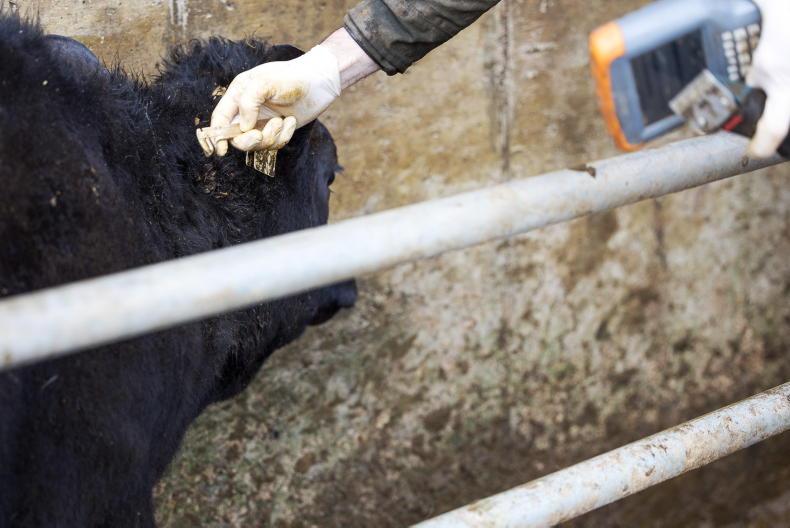
The Department of Agriculture expects that the number of cattle removed as a result of herd TB testing will rise initially with the introduction of revamped TB testing controls on 13 April.
Reactor numbers are expected to rise for a year or two as blood testing in larger breeding herds that see severe breakdowns will weed out cattle that have the disease, but which have not tested positive during skin tests.
The Department said that these removals are intended to reduce the overall levels of bovine TB and to improve the disease situation, leaving fewer TB-positive cattle remaining in herds and spreading the disease over subsequent years of the new testing regime.
The Department maintains that for every eight reactors identified during a skin test, two TB-positive cattle will not be identified as reactors
Its expectations are based off higher specificity in blood tests than skin tests, meaning that blood tests should pick up more TB-positive cattle than skin tests.
The Department maintains that for every eight reactors identified during a skin test, two TB-positive cattle will not be identified as reactors.
The benefit of keeping the skin test as the go-to method for herd tests rather than swapping entirely to blood testing as standard is that only one in every 5,000 reactors identified during the skin test will be false-positives, a figure far lower than blood testing.
Trends
The increase in reactor numbers expected with the introduction of the new testing regime follows 2025’s removal of 37,785 reactors, down on the previous year’s 41,630.
Reactor numbers roughly doubled in the three years that followed their decline in 2021.
Both reactor numbers and herd incidence rate declined for the first time since 2021 and 2022 respectively last year, although both metrics were still significantly higher in 2025 than they had been since their last decrease.
Reactor numbers roughly doubled in the three years that followed their decline in 2021.
TB’s 12-month herd incidence rate – the herds going down with TB having got the all-clear at their previous test as a proportion of all herds tested – also fell to 5.77% in 2025, having ended the previous year just over the 6% mark.


SHARING OPTIONS