


There is still lots for farmers and indeed veterinary professionals to learn about the bluetongue virus. Ireland is in somewhat of a fortunate position to be one of the last country’s in Europe to identify the virus in animals so we can gain some knowledge from the experience of other countries across Europe.
This in itself is not straightforward as the virus has hit with devastating effects in many continental European countries with Belgium, Netherlands and parts of Germany and France experiencing significant losses while on the face of it there has been a lower prevalence in England and Wales, although this could be also influenced by underreporting of cases.
It is therefore impossible to predict with any degree of certainty what lies ahead in 2026 for the virus in Ireland.
There are growing questions from farmers about the merit of vaccinating livestock.
Bovines can better withstand the clinical symptoms of the virus, often showing no classical signs of sickness.
However, compromised reproductive fertility appears to be an area where bovines experience significant issues with high empty rates, early embryonic deaths, calves with neurological issues, abortion and premature births reported
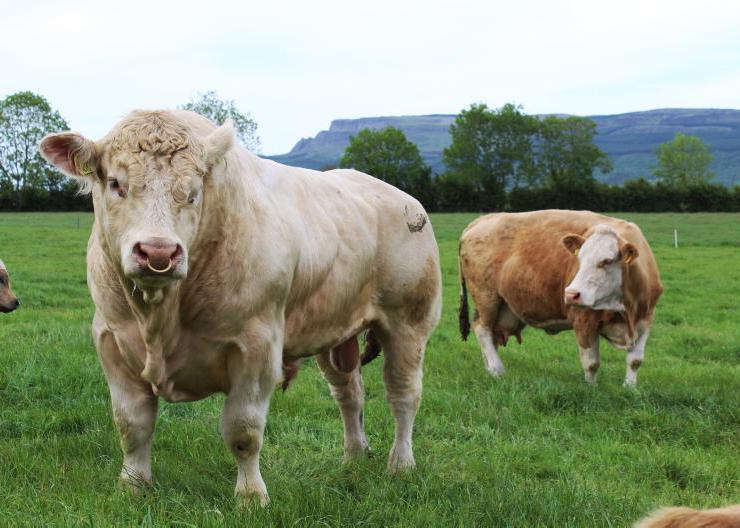
While many reports point to high empty rates and abortion in cows a significant contributor which is sometimes not afforded similar significance is fertility issues in bulls.
Doreen Corridan, CEO at the National Cattle Breeding Centre (NCBC), has offered her advice to farmers at a number of events in recent weeks.
There have been some queries from pedigree breeders about any possible implications of vaccinating young bulls which will be offered for sale in the coming months and whether vaccination would render a bull unsuitable to be purchased for AI, as is the case with IBR.
Doreen explains that there is no restrictions whatsoever arising out of vaccinating bulls for the bluetongue virus, provided farmers use one of the three vaccines approved by the Department of Agriculture or DAERA, and breeders are advised to vaccinate.
She says that right across Europe bulls in AI studs have been vaccinated to limit the consequences of bulls contracting the virus.
She says that a bull that contracts the virus without being vaccinated can be rendered infertile for a period ranging anywhere from two to six months after infection. Bulls can also test positive on a PCR test for a similar period of time.
As vaccination reduces the severity of disease in animals it provides a level of protection.
There is no certainty that animals that succumb the virus will be protected from fertility issues but it greatly reduces the risk.
There is also questions in an Irish content about the safety of using the vaccine in breeding bulls and if in fact administering the vaccine can trigger any fertility issues.
An absence of data regarding the vaccination of breeding bulls on the product characteristics for the three vaccines on the HPRA and Veterinary Medicines Directorate is fueling these queries.
However Doreen says there is no risk and that the vaccines have been used with good success across Europe with over 50m doses sold. She adds breeding bulls are now vaccinated as standard in areas where the virus hit.
The advice for farmers is to speak with their vets and to put a herd vaccination programme in place.
Last week’s announcement by Minister for Agriculture Martin Heydon regarding the inclusion of bluetongue virus vaccination in the 2026 National Beef Welfare Scheme was a welcome signal ahead of the terms and conditions being launched. The Department have confirmed that cows can be vaccinated instead of their progeny as a first line of defense for a herd.
A spokesperson for the Department of Agriculture said: “On the Beef Welfare Scheme, the farmer can seek advice from his/her vet as set out in the announcement. Where the priority is to vaccinate breeding stock ie cows, the farmer should ensure s/he vaccinates a number at least equivalent to the number of calves s/he has applied for under the 2026 Beef Welfare Scheme.
“They must retain that evidence, complete the action record sheets and provide that to the Department if requested”.



SHARING OPTIONS