Chocolate is important to the average Irish citizen. According to various sources including the World Population Review, we eat approximately 17g of chocolate per person, per day – or, around 7kg per person annually. If we look at chocolate consumption on a per capita basis, Ireland ranks in the top five chocolate consuming countries in the world.
With Easter just around the corner, we are heading into our heaviest chocolate consumption period and for Irish chocolate makers, this part of the year makes up a sizeable chunk of annual sales. According to recent research commissioned by Repak, this year the average Irish household with children will spend around €40 on chocolate eggs.
In recent times, there has been much talk about how standard chocolate brands have gone down in quality and flavour as they cut the cocoa content and replace it with fillers like palm butter.
Simultaneously, it seems we are bombarded with Easter chocolate earlier each year – almost as soon as Christmas is over.
Standard chocolate has never been so widely accessible, but is this a good thing, or – like so many other commodified foods – are we taking chocolate, cocoa and cacao for granted?
Cacao v cocoa
If you’ve ever heard someone discuss ‘cacao’ as opposed to ‘cocoa’, your ears didn’t deceive you – these are two different things.
Cocoa is processed to remove most of the fat from the cocoa beans before being milled into powder, while cacao is a raw (or minimally processed) product derived directly from cocoa beans. Through this lack of processing, more of the natural nutrients of the beans are preserved in the cacao.
Chocolate is not indigenous to Ireland, but it is still deeply ingrained in our everyday lives and consumption habits. In fact, we so revere chocolate that it’s hard to imagine a time in Irish history without it.
But just like another ubiquitous ‘Irish’ food – the potato – chocolate was first brought to Europe from the Americas in the 1500s. Prior to this, cocoa trees were first cultivated over 5,000 years ago, and chocolate was consumed by the indigenous populations of Central and South America.
The cacao tree’s Latin name is Theobroma cacao – or, food of the gods. To the Aztec, Maya or Olmec civilizations who were responsible for its cultivation, cacao was (and still is, for Indigenous groups throughout Latin America) a spiritually significant ingredient; highly valued as a symbol of fertility and renewal.
Initially, it was consumed as a drink. When it arrived in Europe, sugar and milk were added to make it sweeter and, eventually, it became the couverture and chocolate bars we see today.
The majority of cocoa now comes from west Africa, in countries like Côte d’Ivoire and Ghana. While there are up to 10 cultivar groups for cacao, 80% of chocolate production comes from just one type of tree, Forastero, which is hardy and naturally disease-resistant (ideal for the yield needed to meet the incredible global demand for chocolate).
Other types of cocoa trees, like the Criollo cultivar group, are less hardy but more highly regarded for the flavour and aroma of the resulting cacao.
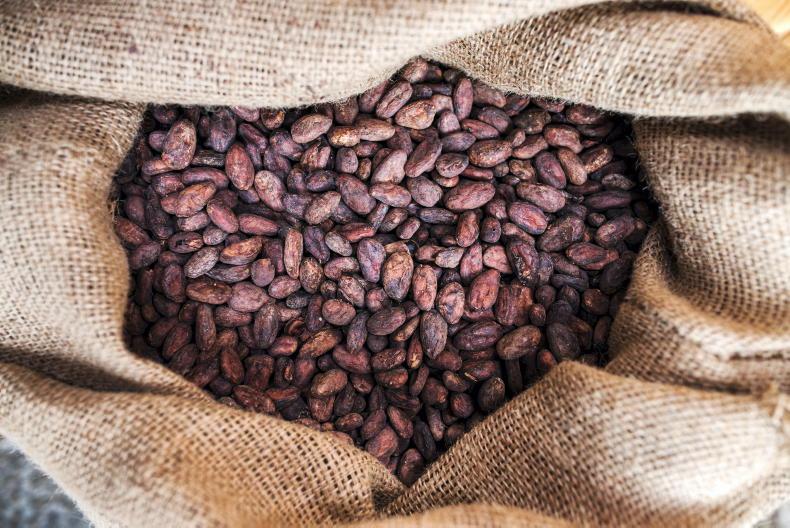
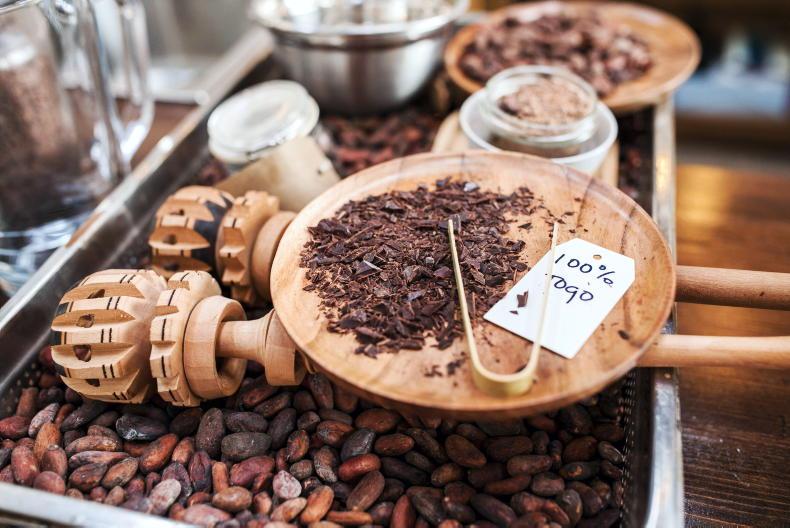
Cocoa beans are similar to coffee beans - depending on where and how they were grown, they will offer different aromas and flavours. \ Claire Nash
Wild Chocolate
In his 2024 book Wild Chocolate: Across the Americas in Search of Cacao’s Soul, award-winning journalist Rowan Jacobsen explores the idea that the chocolate we find in shops and supermarkets is truly nothing like the chocolate consumed in the Americas all those millennia ago.

Rowan Jacobsen is an American journalist who took an epic trip through the Americas in search of the soul of the cacao tree. His book, Wild Chocolate, shares how the chocolate we find in shops is far removed from its culturally symbolic roots.
He journeys to the deepest parts of the Amazon rainforest and Central America in search of authentic cacao production. Modern day plantations do not mimic how cocoa was traditionally grown, under the cover of rainforest canopy. Among other serious issues, demand for cocoa worldwide has led to unsustainable production practices.
In correspondence with Irish Country Living, he says his journey led to an appreciation of the regenerative power of specialised cocoa production.
“I’ve come to realise that agriculture and nature can be mutually supportive,” he explains. “The right crop in the right setting not only doubles as excellent habitat, but can actually help to restore degraded environments. Cacao is the ultimate example of this. Because it is so happy as an understory tree, growing in the shade of the rainforest giants, it’s one of the best ways to give people a sustainable income in a pristine tropical environment.
“I’m much more aware that I’m participating in an entire economic system, and its accompanying philosophy, each time I make a purchase,” he adds, reflecting on the effect his journey has had on his consumption habits.
“I’m also more cognisant of the incredible chain of livelihoods that goes into putting wholesome products on store shelves. This makes me more careful with what I buy and eat, but it also gives me a much richer experience of the flavours in those products and how they came to be. It gives me a much more satisfying level of participation in the great project of food production and enjoyment.”
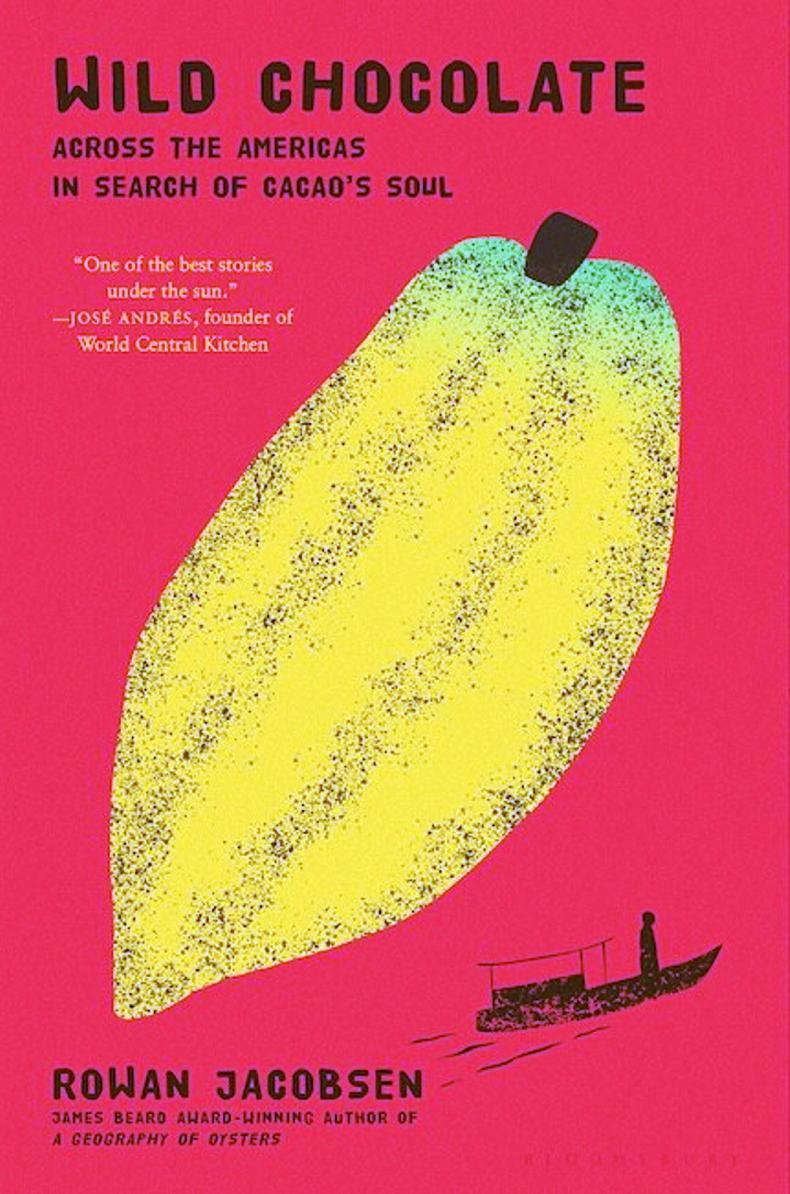
Wild Chocolate by Rowan Jacobsen.
Nibbed Cacao
Here in Ireland, there is a growing consumer base for drinking cacao in its purest form. Some drink it for spiritual or mindfulness reasons (it contains compounds like theobromine, a natural mood enhancer) while others look for cacao for its nutritional benefits. For Lisa Kleiner and Anna Kelly, who own and operate Nibbed Cacao, it was the latter which drew them to the drink.
Based in Athenry, Co Galway, Nibbed Cacao specialises in certified organic pure cacao drinks. Lisa is a qualified chef with a Master’s in Sport and Exercise Nutrition. She discovered the health benefits associated with cacao consumption during the COVID-19 pandemic and together with Anna, who has a background in design and wellness marketing, developed their bean-to-bar business in 2021.
“We love spreading the word about the benefits of cacao,” Anna says. “Our cacao is single origin and we only source our beans from certified organic social enterprises in Latin America.
It’s really important to us to know that the farmers we work with are able to support themselves and care for the environment. We just think cacao is the most amazing ingredient.”
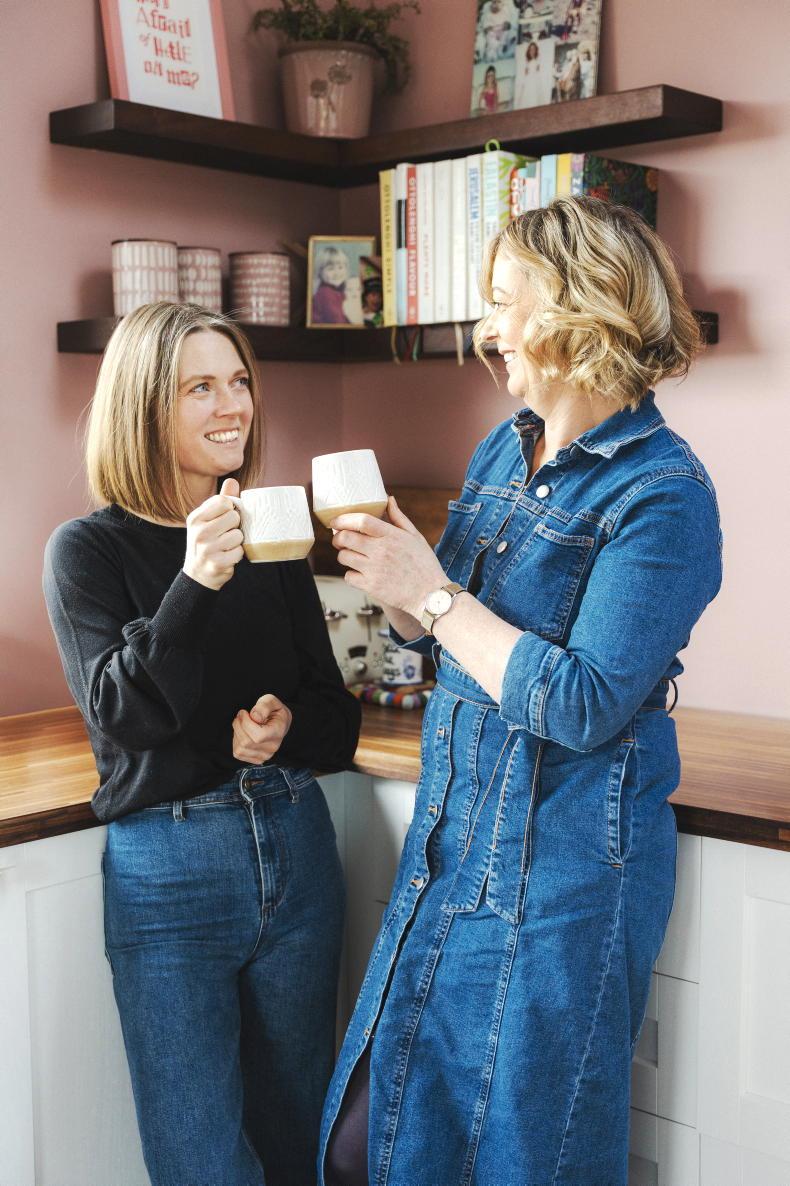
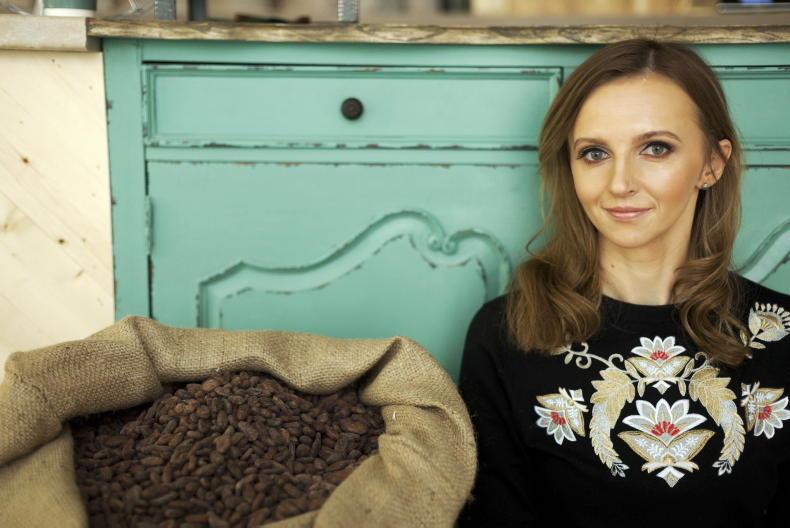
Anna Kelly and Lisa Kleiner launched Nibbed Cacao in 2021 after learning about the many nutritional benefits of drinking cacao.
Nibbed Cacao’s drinking cacao is nothing like the processed cocoa powder or drinking chocolate you find in supermarkets. You can purchase their cacao in a bar, to be grated at home (€22.95 for a 300g block), in pre-grated pouches (€35.50 for 500g/25 cups). The cacao is unsweetened and has a small amount of caffeine. It is naturally high in fibre, magnesium and chromium, which helps control sugar cravings. Anna and Lisa regularly have their beans tested to ensure they are offering the full range of nutritional benefits. They deliver nationwide, or you’ll find their products in health food shops throughout the country.
A simple way to prepare cacao at home is to heat up some milk or Irish oat drink before adding two tablespoons of the grated cacao with a pinch of sea salt. If you like, a drizzle of Irish honey or pure maple syrup will add a touch of sweetness. Anna and Lisa recommend having a cup of cacao for an afternoon pick-me-up, or if you are trying to cut back on coffee, have a cup of cacao in the morning instead.
“The gorgeous thing about drinking cacao is it’s not a ‘one size fits all’,” Lisa says. “There are so many ways to drink and prepare it, and the same way we all like our coffee done a certain way [Americano, latte, etc], we all like our cacao a certain way. It’s just experimenting at home and discovering what you like.
“We provide guidance and serving recommendations, but there are unlimited combinations out there and so many different ways to enjoy it. It’s a superfood; it’s so good for you, but it’s also a really lovely daily ritual – take five minutes, give yourself that time each day, and really enjoy the process.”
See nibbedcacao.com
Three to buy – bean to bar
The Proper Chocolate Company: Patrick and Kelli Marjolet have been operating this Dublin-based bean-to-bar chocolate company since 2016. Their Easter collection features single origin chocolate in milk or dark eggs, €24.95. The eggs come packaged in a reusable and recyclable canister. See properchocolatecompany.com
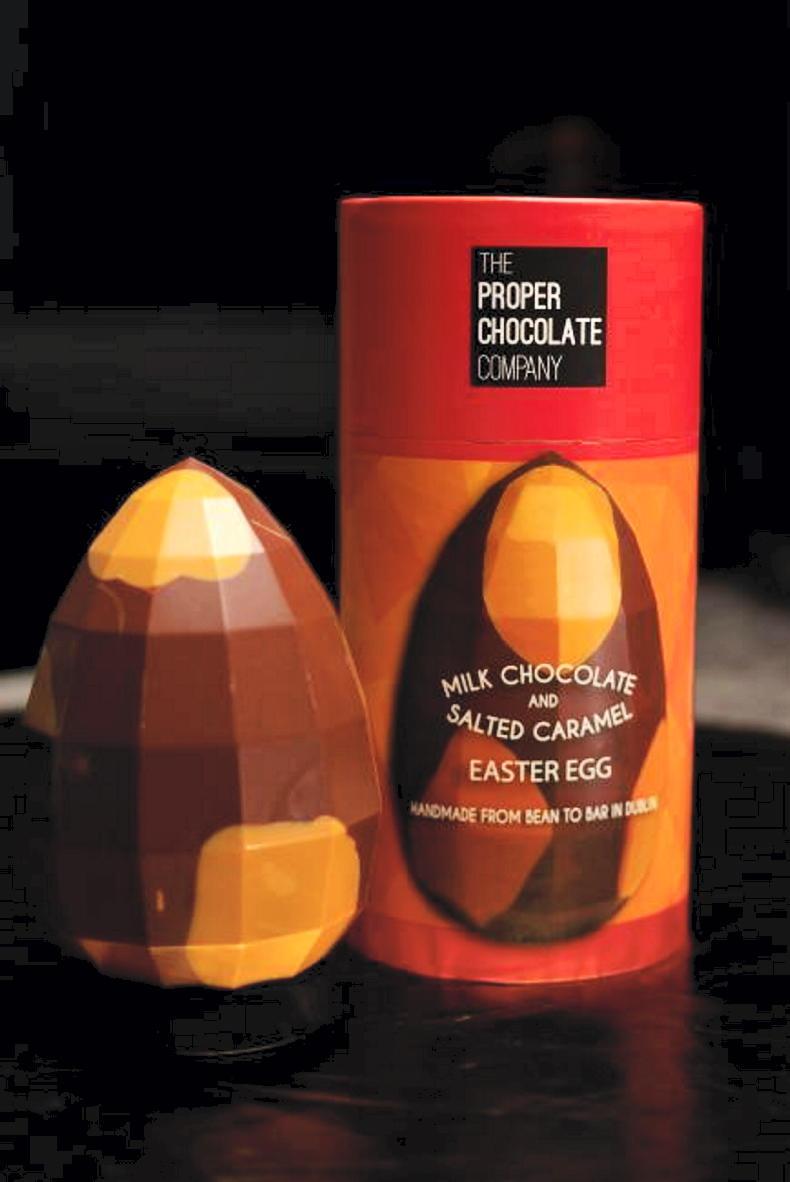
The Proper Chocolate Company 2026 Easter Egg Collection (€24.95).
Hazel Mountain Chocolate: the Easter lineup is as dreamy as its stunning Burren locale, with a pretty chocolate pistachio wreath (€28.95) on offer alongside their stunning Wild Atlantic Easter Egg, (€32.95). See hazelmountainchocolate.com
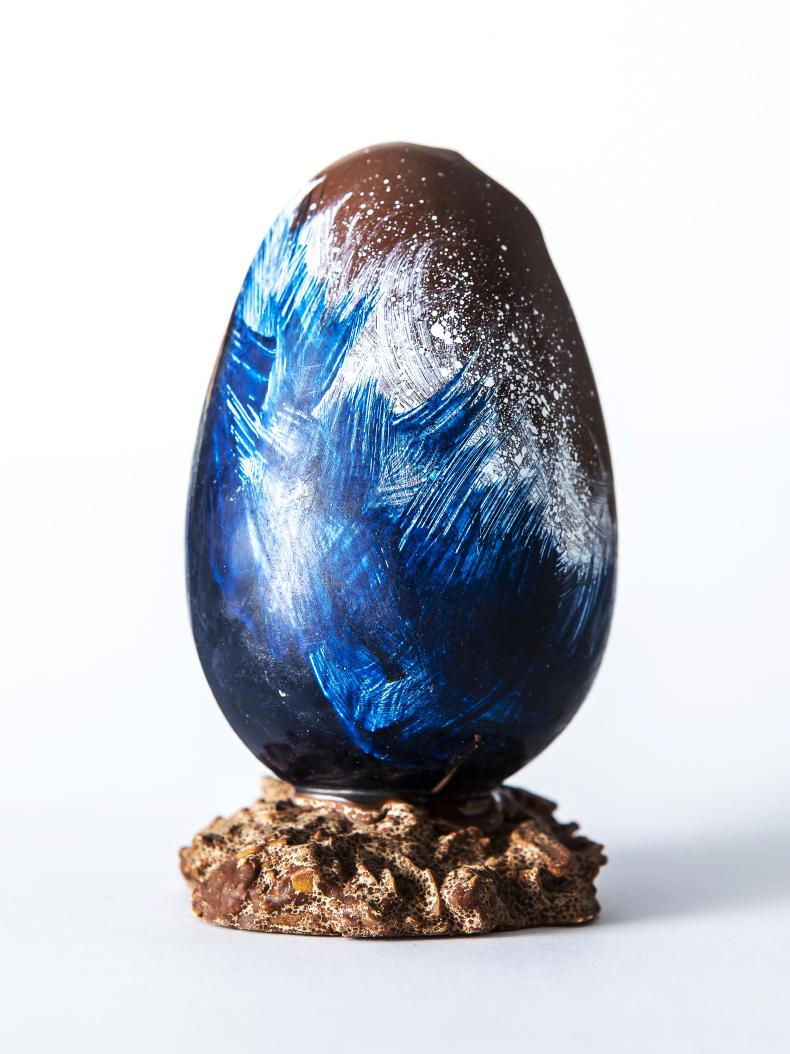
Hazel Mountain Chocolate's Wild Atlantic Easter Egg (€32.95). / Philip Doyle
NearyNógs Stone Ground Chocolate: handmade in small batches on the stunning Mourne coastline in Co Down. Their Easter offerings include their ‘Some Bunny Loves You’ – three very cute chocolate caramel filled bunnies nestled in a box, (€9.95). See nearynogs.com
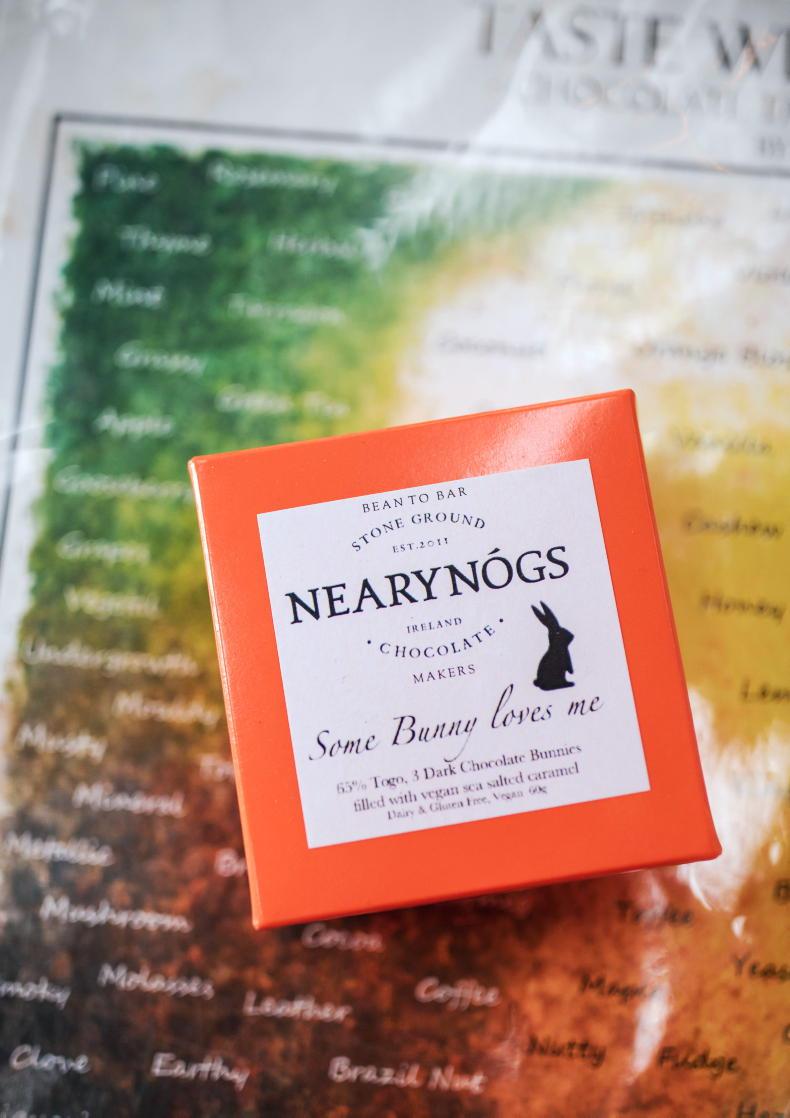
NearyNógs Stoneground Chocolate, Some Bunny Loves You (€9.95). \ Claire Nash
Read more
Go all-Irish for your Easter choccie treat
Investigating your food: who grew your Easter egg?
Chocolate is important to the average Irish citizen. According to various sources including the World Population Review, we eat approximately 17g of chocolate per person, per day – or, around 7kg per person annually. If we look at chocolate consumption on a per capita basis, Ireland ranks in the top five chocolate consuming countries in the world.
With Easter just around the corner, we are heading into our heaviest chocolate consumption period and for Irish chocolate makers, this part of the year makes up a sizeable chunk of annual sales. According to recent research commissioned by Repak, this year the average Irish household with children will spend around €40 on chocolate eggs.
In recent times, there has been much talk about how standard chocolate brands have gone down in quality and flavour as they cut the cocoa content and replace it with fillers like palm butter.
Simultaneously, it seems we are bombarded with Easter chocolate earlier each year – almost as soon as Christmas is over.
Standard chocolate has never been so widely accessible, but is this a good thing, or – like so many other commodified foods – are we taking chocolate, cocoa and cacao for granted?
Cacao v cocoa
If you’ve ever heard someone discuss ‘cacao’ as opposed to ‘cocoa’, your ears didn’t deceive you – these are two different things.
Cocoa is processed to remove most of the fat from the cocoa beans before being milled into powder, while cacao is a raw (or minimally processed) product derived directly from cocoa beans. Through this lack of processing, more of the natural nutrients of the beans are preserved in the cacao.
Chocolate is not indigenous to Ireland, but it is still deeply ingrained in our everyday lives and consumption habits. In fact, we so revere chocolate that it’s hard to imagine a time in Irish history without it.
But just like another ubiquitous ‘Irish’ food – the potato – chocolate was first brought to Europe from the Americas in the 1500s. Prior to this, cocoa trees were first cultivated over 5,000 years ago, and chocolate was consumed by the indigenous populations of Central and South America.
The cacao tree’s Latin name is Theobroma cacao – or, food of the gods. To the Aztec, Maya or Olmec civilizations who were responsible for its cultivation, cacao was (and still is, for Indigenous groups throughout Latin America) a spiritually significant ingredient; highly valued as a symbol of fertility and renewal.
Initially, it was consumed as a drink. When it arrived in Europe, sugar and milk were added to make it sweeter and, eventually, it became the couverture and chocolate bars we see today.
The majority of cocoa now comes from west Africa, in countries like Côte d’Ivoire and Ghana. While there are up to 10 cultivar groups for cacao, 80% of chocolate production comes from just one type of tree, Forastero, which is hardy and naturally disease-resistant (ideal for the yield needed to meet the incredible global demand for chocolate).
Other types of cocoa trees, like the Criollo cultivar group, are less hardy but more highly regarded for the flavour and aroma of the resulting cacao.
Cocoa beans are similar to coffee beans - depending on where and how they were grown, they will offer different aromas and flavours. \ Claire Nash
Wild Chocolate
In his 2024 book Wild Chocolate: Across the Americas in Search of Cacao’s Soul, award-winning journalist Rowan Jacobsen explores the idea that the chocolate we find in shops and supermarkets is truly nothing like the chocolate consumed in the Americas all those millennia ago.
Rowan Jacobsen is an American journalist who took an epic trip through the Americas in search of the soul of the cacao tree. His book, Wild Chocolate, shares how the chocolate we find in shops is far removed from its culturally symbolic roots.
He journeys to the deepest parts of the Amazon rainforest and Central America in search of authentic cacao production. Modern day plantations do not mimic how cocoa was traditionally grown, under the cover of rainforest canopy. Among other serious issues, demand for cocoa worldwide has led to unsustainable production practices.
In correspondence with Irish Country Living, he says his journey led to an appreciation of the regenerative power of specialised cocoa production.
“I’ve come to realise that agriculture and nature can be mutually supportive,” he explains. “The right crop in the right setting not only doubles as excellent habitat, but can actually help to restore degraded environments. Cacao is the ultimate example of this. Because it is so happy as an understory tree, growing in the shade of the rainforest giants, it’s one of the best ways to give people a sustainable income in a pristine tropical environment.
“I’m much more aware that I’m participating in an entire economic system, and its accompanying philosophy, each time I make a purchase,” he adds, reflecting on the effect his journey has had on his consumption habits.
“I’m also more cognisant of the incredible chain of livelihoods that goes into putting wholesome products on store shelves. This makes me more careful with what I buy and eat, but it also gives me a much richer experience of the flavours in those products and how they came to be. It gives me a much more satisfying level of participation in the great project of food production and enjoyment.”
Wild Chocolate by Rowan Jacobsen.
Nibbed Cacao
Here in Ireland, there is a growing consumer base for drinking cacao in its purest form. Some drink it for spiritual or mindfulness reasons (it contains compounds like theobromine, a natural mood enhancer) while others look for cacao for its nutritional benefits. For Lisa Kleiner and Anna Kelly, who own and operate Nibbed Cacao, it was the latter which drew them to the drink.
Based in Athenry, Co Galway, Nibbed Cacao specialises in certified organic pure cacao drinks. Lisa is a qualified chef with a Master’s in Sport and Exercise Nutrition. She discovered the health benefits associated with cacao consumption during the COVID-19 pandemic and together with Anna, who has a background in design and wellness marketing, developed their bean-to-bar business in 2021.
“We love spreading the word about the benefits of cacao,” Anna says. “Our cacao is single origin and we only source our beans from certified organic social enterprises in Latin America.
It’s really important to us to know that the farmers we work with are able to support themselves and care for the environment. We just think cacao is the most amazing ingredient.”
Anna Kelly and Lisa Kleiner launched Nibbed Cacao in 2021 after learning about the many nutritional benefits of drinking cacao.
Nibbed Cacao’s drinking cacao is nothing like the processed cocoa powder or drinking chocolate you find in supermarkets. You can purchase their cacao in a bar, to be grated at home (€22.95 for a 300g block), in pre-grated pouches (€35.50 for 500g/25 cups). The cacao is unsweetened and has a small amount of caffeine. It is naturally high in fibre, magnesium and chromium, which helps control sugar cravings. Anna and Lisa regularly have their beans tested to ensure they are offering the full range of nutritional benefits. They deliver nationwide, or you’ll find their products in health food shops throughout the country.
A simple way to prepare cacao at home is to heat up some milk or Irish oat drink before adding two tablespoons of the grated cacao with a pinch of sea salt. If you like, a drizzle of Irish honey or pure maple syrup will add a touch of sweetness. Anna and Lisa recommend having a cup of cacao for an afternoon pick-me-up, or if you are trying to cut back on coffee, have a cup of cacao in the morning instead.
“The gorgeous thing about drinking cacao is it’s not a ‘one size fits all’,” Lisa says. “There are so many ways to drink and prepare it, and the same way we all like our coffee done a certain way [Americano, latte, etc], we all like our cacao a certain way. It’s just experimenting at home and discovering what you like.
“We provide guidance and serving recommendations, but there are unlimited combinations out there and so many different ways to enjoy it. It’s a superfood; it’s so good for you, but it’s also a really lovely daily ritual – take five minutes, give yourself that time each day, and really enjoy the process.”
See nibbedcacao.com
Three to buy – bean to bar
The Proper Chocolate Company: Patrick and Kelli Marjolet have been operating this Dublin-based bean-to-bar chocolate company since 2016. Their Easter collection features single origin chocolate in milk or dark eggs, €24.95. The eggs come packaged in a reusable and recyclable canister. See properchocolatecompany.com
The Proper Chocolate Company 2026 Easter Egg Collection (€24.95).
Hazel Mountain Chocolate: the Easter lineup is as dreamy as its stunning Burren locale, with a pretty chocolate pistachio wreath (€28.95) on offer alongside their stunning Wild Atlantic Easter Egg, (€32.95). See hazelmountainchocolate.com
Hazel Mountain Chocolate's Wild Atlantic Easter Egg (€32.95). / Philip Doyle
NearyNógs Stone Ground Chocolate: handmade in small batches on the stunning Mourne coastline in Co Down. Their Easter offerings include their ‘Some Bunny Loves You’ – three very cute chocolate caramel filled bunnies nestled in a box, (€9.95). See nearynogs.com
NearyNógs Stoneground Chocolate, Some Bunny Loves You (€9.95). \ Claire Nash
Read more
Go all-Irish for your Easter choccie treat
Investigating your food: who grew your Easter egg?






SHARING OPTIONS