Grain prices are back and input costs are high. Growers are in tough positions at present – how much money will they spend and how much will they get back? Will the spend give a return?
There’s a balancing act to play, but I think people have to stand back and ask what happens if I reduce my inputs? If I apply less nitrogen, what happens? Yield reduces.
If I apply less phosphorus (P) and potassium (K) what happens? Yield reduces, and P and K indices reduce over time. P and K indices will decline quickly, but it can take years to build them back up, so cutting now can adds cost in the long-run.
Basic principles point to a decline in yield, with a reduction in fertiliser use. What this decline will be, will depend on the size of the cut, the weather and the crop condition.
However, growers should be applying optimum fertiliser rates. If you are applying too much nitrogen, for example, then it can be wasted. The nitrogen response curve shows where the optimum level of nitrogen use is and what gives you the most return on yield.
Tillage farms are extremely efficient at nitrogen use. Figures now suggest that most tillage farms have a nitrogen use efficiency of 75% or over.
Figures from the Signposts Programme placed some farms at over 95%. Teagasc reported that tillage farms had a nitrogen surplus of 35kg N/ha in 2024.

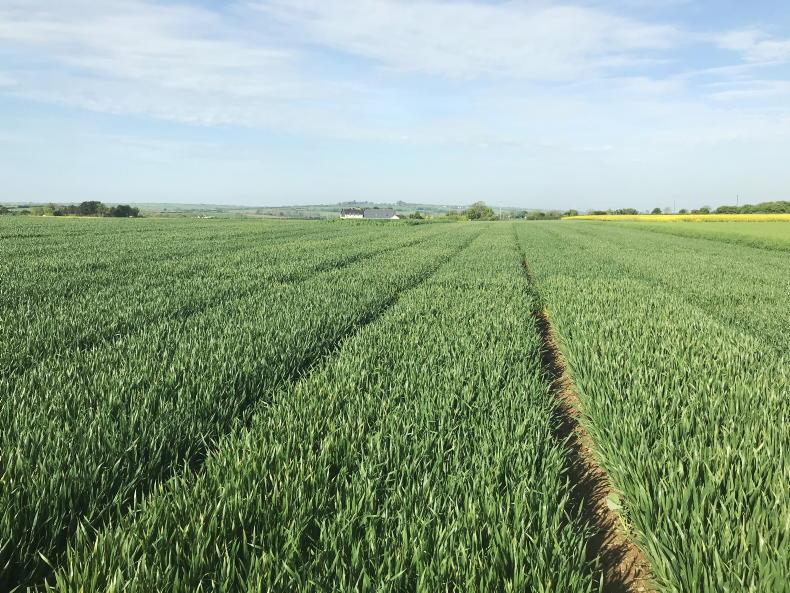
Winter wheat plots at the Goldcrop trial site at GS32.
This compared to 157kg N/ha for dairy, 49kg N/ha for cattle and 35kg N/ha for sheep farms.
So, tillage has an extremely high efficiency when it comes to nitrogen use.
You just have to make sure it is being applied at the right rate and at the right time. This isn’t always easy to implement. Some growers won’t be able to get onto winter cereal or oilseed rape crops early. Spring cereals may get nitrogen and see it left on the ground in dry weather, or be faced with a late season and end up having to front-load it.
Every season is different, but in general, the nitrogen rates that are outlined in the nitrates directive are optimum.
Reference yields
Growers hitting yields above the reference yields, in Table 9, can apply more nitrogen. For example, if you traditionally produce 7.5t/ha of spring barley and you are in index 1 for nitrogen you can apply 135kg N/ha or 108 units of nitrogen/acre.
If in the past three years they have produced 1t/ha over the reference yield, then they can apply another 20kg N/ha.
If they have produced 0.5t/ha over the reference yield, then they can apply another 10kg N/ha. You must be able to show proof of yields.
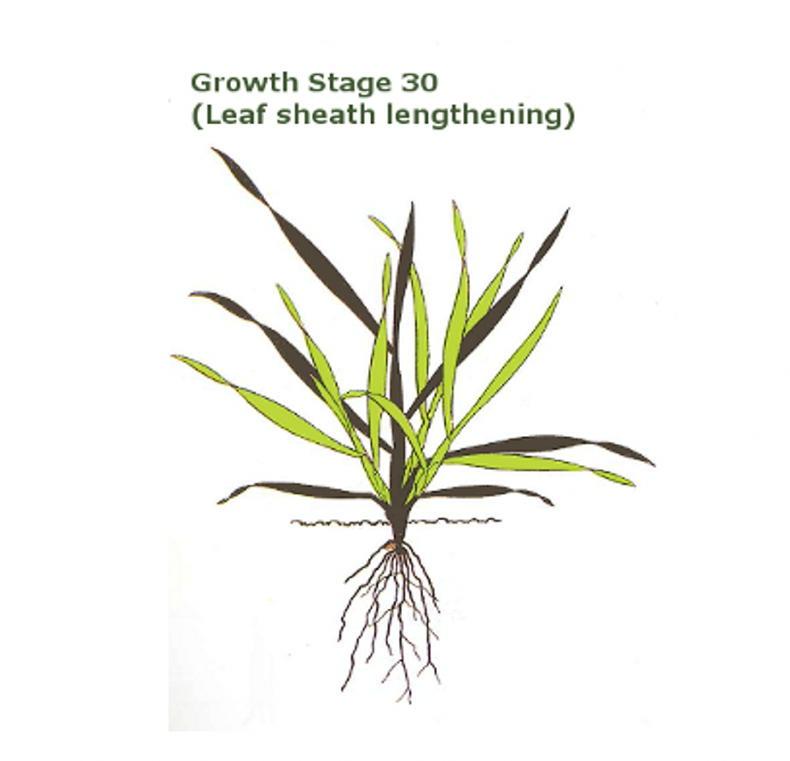
GS30. \ Teagasc side by side to the other pic.
Timing
Teagasc timing suggestions are included in the tables. You have to aim for the right stages of growth when applying nitrogen.
For example, spring barley needs all its nitrogen by GS30. The tables suggest the seedbed and mid-tillering as the timings here.
However, malting barley crops would ideally get it earlier than this, to reduce the risk of nitrogen contributing to grain protein content. It should be in the seedbed and then when the tramlines are up, to keep protein content down later in the season.
Nitrogen, P and K in the seedbed are ideal for spring crops, but not allowed for winter crops, apart from potassium. You can apply slurry or manure before 1 October and incorporate it into the soil straight away. This can give crops a boost at emergence and also help soil health.

GS30. \ Teagasc side by side to the other picture.
Grain prices are back and input costs are high. Growers are in tough positions at present – how much money will they spend and how much will they get back? Will the spend give a return?
There’s a balancing act to play, but I think people have to stand back and ask what happens if I reduce my inputs? If I apply less nitrogen, what happens? Yield reduces.
If I apply less phosphorus (P) and potassium (K) what happens? Yield reduces, and P and K indices reduce over time. P and K indices will decline quickly, but it can take years to build them back up, so cutting now can adds cost in the long-run.
Basic principles point to a decline in yield, with a reduction in fertiliser use. What this decline will be, will depend on the size of the cut, the weather and the crop condition.
However, growers should be applying optimum fertiliser rates. If you are applying too much nitrogen, for example, then it can be wasted. The nitrogen response curve shows where the optimum level of nitrogen use is and what gives you the most return on yield.
Tillage farms are extremely efficient at nitrogen use. Figures now suggest that most tillage farms have a nitrogen use efficiency of 75% or over.
Figures from the Signposts Programme placed some farms at over 95%. Teagasc reported that tillage farms had a nitrogen surplus of 35kg N/ha in 2024.
Winter wheat plots at the Goldcrop trial site at GS32.
This compared to 157kg N/ha for dairy, 49kg N/ha for cattle and 35kg N/ha for sheep farms.
So, tillage has an extremely high efficiency when it comes to nitrogen use.
You just have to make sure it is being applied at the right rate and at the right time. This isn’t always easy to implement. Some growers won’t be able to get onto winter cereal or oilseed rape crops early. Spring cereals may get nitrogen and see it left on the ground in dry weather, or be faced with a late season and end up having to front-load it.
Every season is different, but in general, the nitrogen rates that are outlined in the nitrates directive are optimum.
Reference yields
Growers hitting yields above the reference yields, in Table 9, can apply more nitrogen. For example, if you traditionally produce 7.5t/ha of spring barley and you are in index 1 for nitrogen you can apply 135kg N/ha or 108 units of nitrogen/acre.
If in the past three years they have produced 1t/ha over the reference yield, then they can apply another 20kg N/ha.
If they have produced 0.5t/ha over the reference yield, then they can apply another 10kg N/ha. You must be able to show proof of yields.
GS30. \ Teagasc side by side to the other pic.
Timing
Teagasc timing suggestions are included in the tables. You have to aim for the right stages of growth when applying nitrogen.
For example, spring barley needs all its nitrogen by GS30. The tables suggest the seedbed and mid-tillering as the timings here.
However, malting barley crops would ideally get it earlier than this, to reduce the risk of nitrogen contributing to grain protein content. It should be in the seedbed and then when the tramlines are up, to keep protein content down later in the season.
Nitrogen, P and K in the seedbed are ideal for spring crops, but not allowed for winter crops, apart from potassium. You can apply slurry or manure before 1 October and incorporate it into the soil straight away. This can give crops a boost at emergence and also help soil health.
GS30. \ Teagasc side by side to the other picture.





SHARING OPTIONS