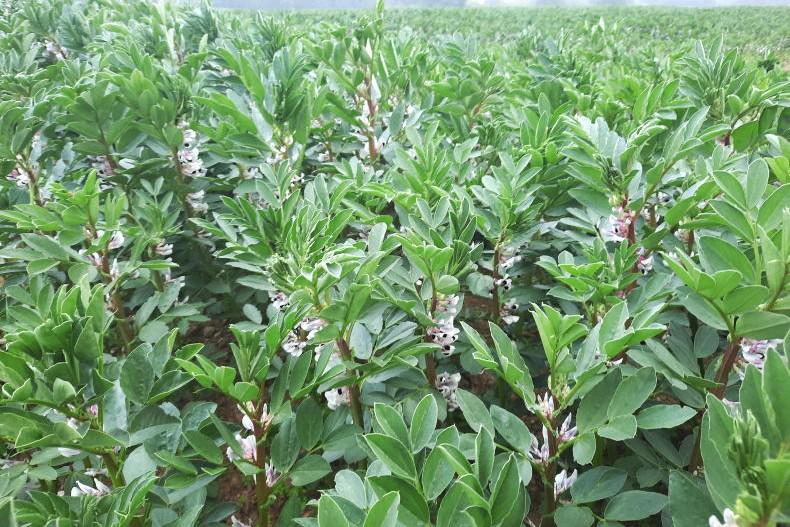
The two- and three-crop rule remains in place for the majority of farmers. Under the CAP, farmers must comply with crop diversification requirements.
If you have 30ha or more you must grow at least three crops and if you have between 10 and 30ha you must grow two crops.
If you have 10-30ha of tillage and your total holding is under 30ha then you have some leeway.
The rules are still in place, but if you don’t comply you will not be penalised, but this affects very few people. Remember it’s the total holding size that gets you the leeway, not the area of crops. If you have 20ha of crops and your total holding is 32ha then you still have to comply with the rule.
Recap of crop diversification requirements:
30ha or more
Grow at least three crops.Largest crop area not greater than 75% of total crop area.Two largest crops cannot by greater than 95% of the total area.Smallest crop area must be at least 5% of the area.Farmers can have more than three crops, just make sure the smallest crop isn’t less than 5% of the area.10-20ha
Grow at least two crops.Largest crop cannot take up more than 75% of the total area.Can grow more than two crops, but not practical to do so10ha or less.
You don’t have to do anything.Equivalence
Farmers that don’t want to grow two or three crops can carry out equivalence. This is where a farmer plants 50% of their total cropping area in a catch crop. This crop must remain in place until 1 December and the farmer must be signed up for it. They must continue to do so for the remainder of the current CAP.
Catch crops grown for equivalence cannot also be grown for ACRES or the Farming for Water Programme.
Comment
Ireland has the EU presidency for the second half of 2026 and a priority for the tillage sector has to be to remove the crop diversification requirements.
These rules are made for countries which are mainly arable and traditional had a lot of monocropping. Ireland has less than 6% tillage crops on the total agricultural area. Farmers implement crop rotation.
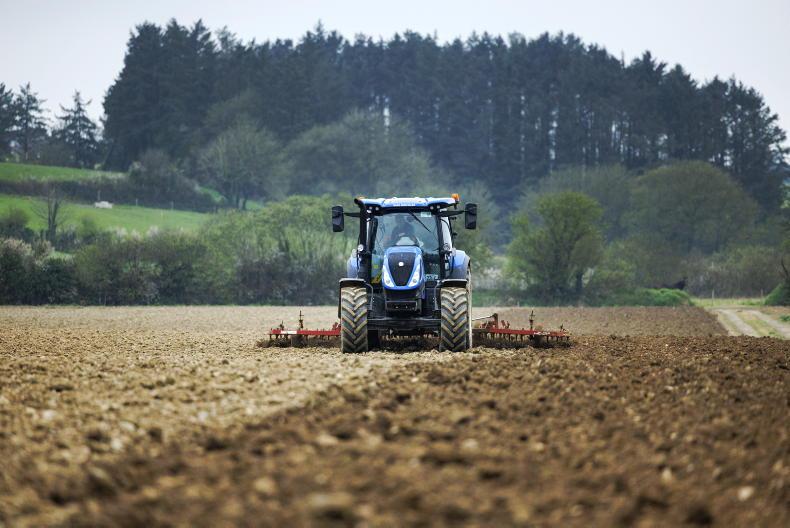
These rules are not allowing farmers to farm to markets and grow the most profitable crops. They are adding to workload and are turning contractors off of tillage work as they have to accommodate small areas. The rules have resulted in a decline in tillage area as people reduce the cropping area on their farms so that they do not have to comply.
The two- and three-crop rule remains in place for the majority of farmers. Under the CAP, farmers must comply with crop diversification requirements.
If you have 30ha or more you must grow at least three crops and if you have between 10 and 30ha you must grow two crops.
If you have 10-30ha of tillage and your total holding is under 30ha then you have some leeway.
The rules are still in place, but if you don’t comply you will not be penalised, but this affects very few people. Remember it’s the total holding size that gets you the leeway, not the area of crops. If you have 20ha of crops and your total holding is 32ha then you still have to comply with the rule.
Recap of crop diversification requirements:
30ha or more
Grow at least three crops.Largest crop area not greater than 75% of total crop area.Two largest crops cannot by greater than 95% of the total area.Smallest crop area must be at least 5% of the area.Farmers can have more than three crops, just make sure the smallest crop isn’t less than 5% of the area.10-20ha
Grow at least two crops.Largest crop cannot take up more than 75% of the total area.Can grow more than two crops, but not practical to do so10ha or less.
You don’t have to do anything.Equivalence
Farmers that don’t want to grow two or three crops can carry out equivalence. This is where a farmer plants 50% of their total cropping area in a catch crop. This crop must remain in place until 1 December and the farmer must be signed up for it. They must continue to do so for the remainder of the current CAP.
Catch crops grown for equivalence cannot also be grown for ACRES or the Farming for Water Programme.
Comment
Ireland has the EU presidency for the second half of 2026 and a priority for the tillage sector has to be to remove the crop diversification requirements.
These rules are made for countries which are mainly arable and traditional had a lot of monocropping. Ireland has less than 6% tillage crops on the total agricultural area. Farmers implement crop rotation.
These rules are not allowing farmers to farm to markets and grow the most profitable crops. They are adding to workload and are turning contractors off of tillage work as they have to accommodate small areas. The rules have resulted in a decline in tillage area as people reduce the cropping area on their farms so that they do not have to comply.






SHARING OPTIONS